For years, beauty brands have promoted hair straighteners with hydrating steam technology as the holy grail of hair smoothing. They claim that steam protects hair while straightening it, offering a silky, damage-free finish. However, this promise contradicts basic physical principles. Far from hydrating, the combination of water and extreme heat generates a devastating thermal shock on the hair cuticle, triggering a phenomenon known as bubble hair.
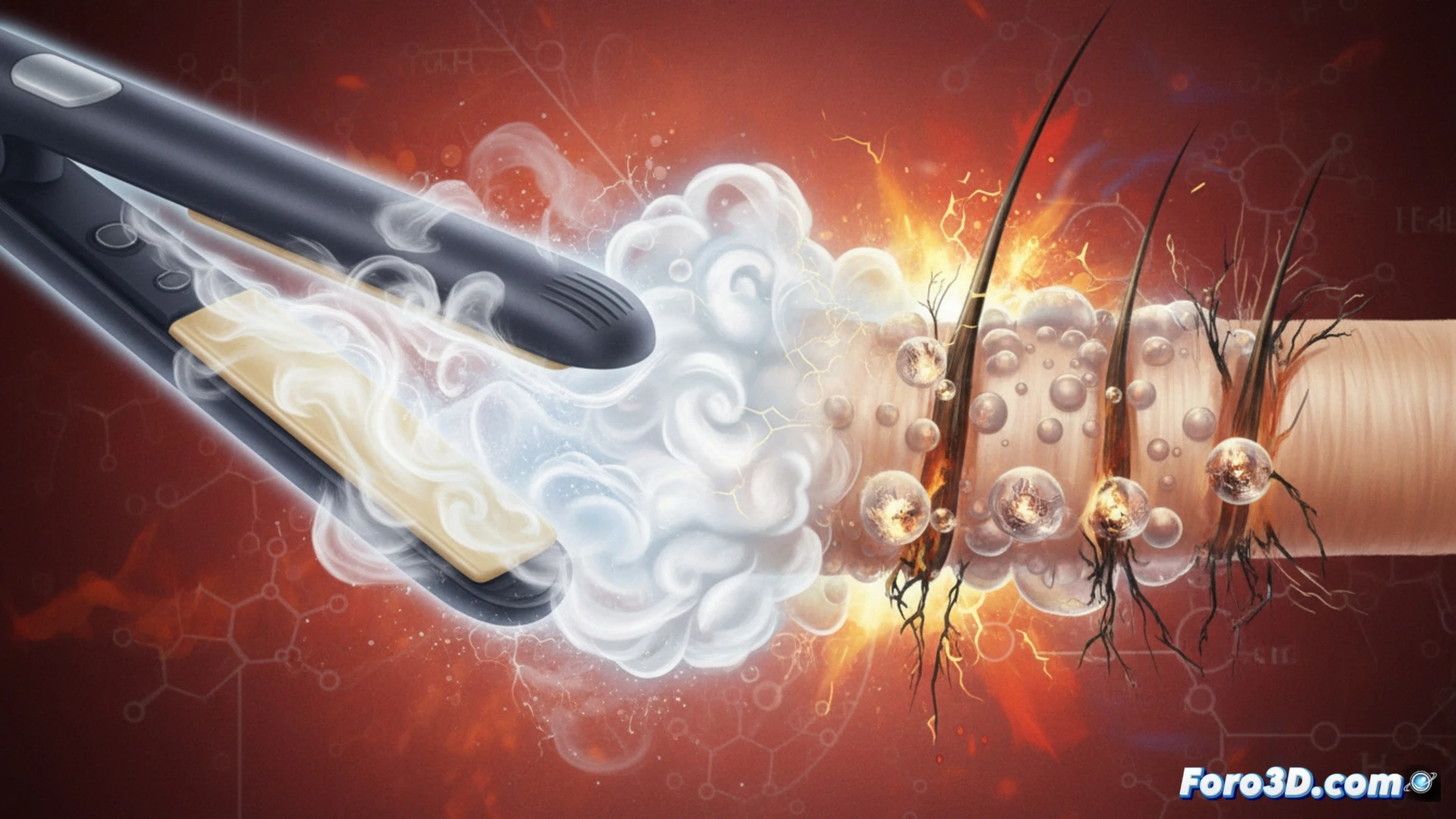
Physics of Disaster: The Bubble Hair Effect and Thermal Shock 🔥
The term bubble hair describes the formation of steam bubbles inside the hair fiber. It occurs when water trapped inside the hair is heated above 100 degrees Celsius, typical of a straightener at 180-230°C. The water expands violently, creating internal bubbles that fracture the hair's protein structure. Brands market this technology as hydrating, but in reality, the steam does not penetrate to hydrate; it is generated instantly upon contact with the hot plate, causing micro-explosions that weaken the hair shaft. This is a clear case of technological misinformation where the consumer's lack of understanding of thermodynamics is exploited.
The Online Community as an Antidote to Technological Fraud 🛡️
Digital platforms and specialized forums play a crucial role in debunking these myths. While brands invest in pseudoscientific marketing to sell innovation, communities of users, dermatologists, and amateur physicists expose the deception through laboratory analysis and slow-motion videos. Content moderation on social media must prioritize the verification of technical claims, especially when they involve risks to hair health. If this type of advertising is not regulated, hydrating steam will continue to be a perfect example of how misunderstood technology becomes a reputational crisis for the consumer sector.
From the perspective of algorithmic manipulation and misinformation in the digital society, how do beauty brands manage to position hydrating steam as a revolutionary technology through paid reviews and search engine biases, while scientific evidence debunks it as a fraud that damages hair?
(PS: trying to ban a nickname on the internet is like trying to cover the sun with a finger... but in digital)