The most advanced aircraft carrier of the U.S. Navy, the USS Gerald R. Ford, docked in Norfolk, Virginia, on May 16, after nearly a year of deployment. Its 3,500 sailors were greeted by thousands of family members. The mission spanned from Venezuela to the Red Sea, with air operations in support of the conflict against Iran, covering a distance equivalent to three trips around the Earth.
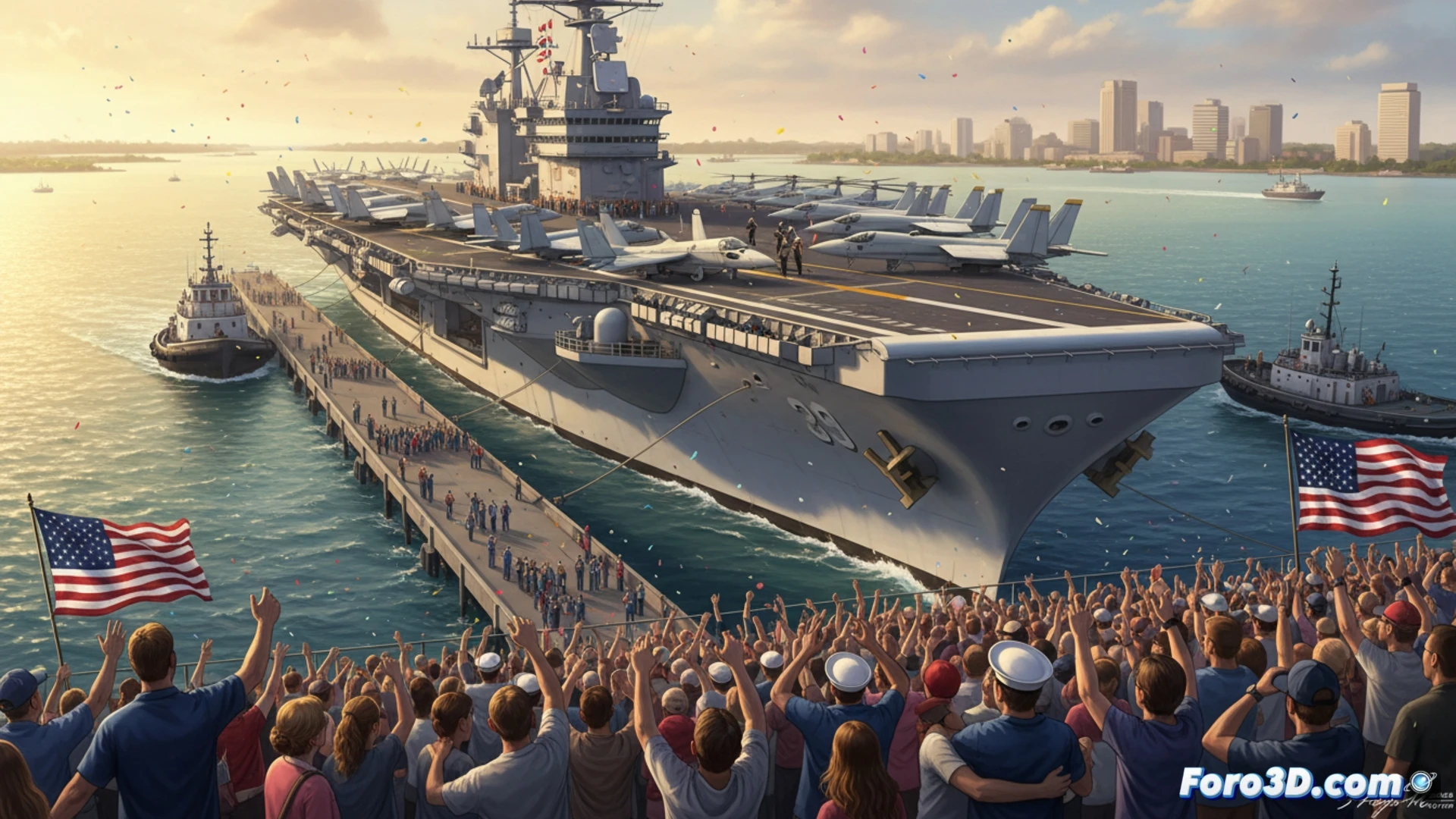
Cutting-edge technology in an extreme deployment 🚀
The USS Ford incorporates systems never before tested in a real conflict, such as the EMALS electromagnetic launch system and the new A1B nuclear reactor. For 334 days, these systems operated non-stop, launching and recovering F/A-18 fighters in combat conditions. The hull's resilience and the logistics of fuel and ammunition were tested in an operational theater with high demand, demonstrating the modular design's ability to sustain an intense pace.
334 days at sea and the ship didn't break down ⚓
That the Ford was at sea for almost a year without major technical stops is an achievement. But what's most surprising is that, after sailing the equivalent of three trips around the planet, the crew didn't organize a collection to buy a new GPS. With so much sea traveled, the sailors surely already know where the Caribbean is even with their eyes closed. What they don't know is how real food is cooked.