Research published in Quercus reveals that a pair of magpies can bury over a thousand acorns per season. This behavior, far from being a simple food store, becomes a key mechanism for the regeneration of holm oaks. The birds forget part of their pantry, allowing new trees to sprout in areas where natural dispersal is scarce.
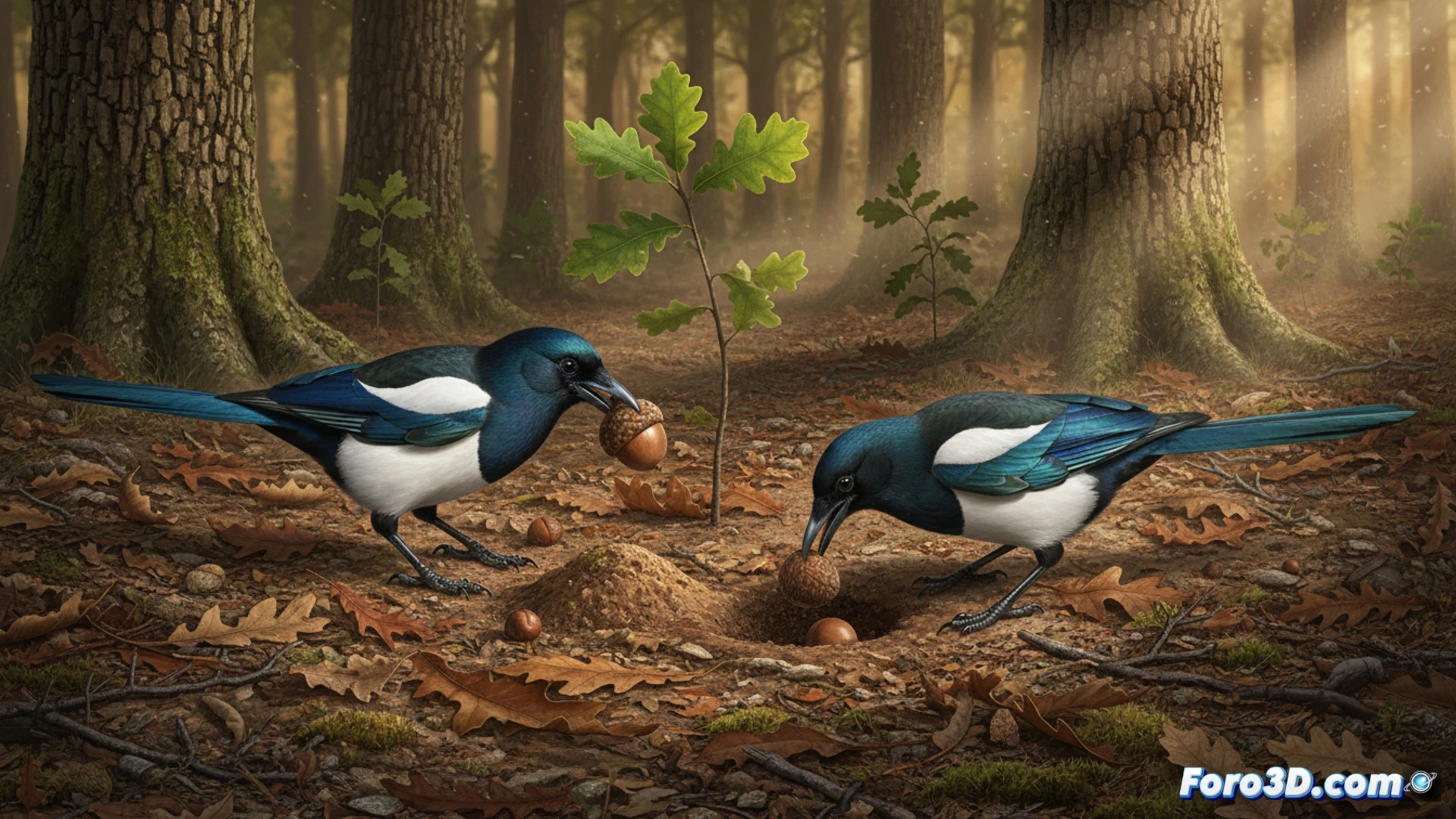
The forest's natural algorithm: distributed seeding without servers 🌿
From a technical perspective, this process works like a distributed seeding system with high redundancy. Each magpie acts as an autonomous node that selects random locations, digs a hole, and deposits an acorn. The forgetting rate, close to 30%, acts as a controlled failure mechanism that benefits the ecosystem. It requires no centralized planning or maintenance, surpassing any manual reforestation method in efficiency on rugged terrain.
Meanwhile, we're paying to plant a tree 😅
While humanity invests in expensive reforestation drones and apps to plant trees, these birds have been doing the job for free and with better precision for centuries. That said, they don't issue invoices or ask for subsidies. The only thing they demand in return is that you don't steal their acorns. If you ever see a magpie staring at you, maybe it's just evaluating whether you're worth it as a seed store.