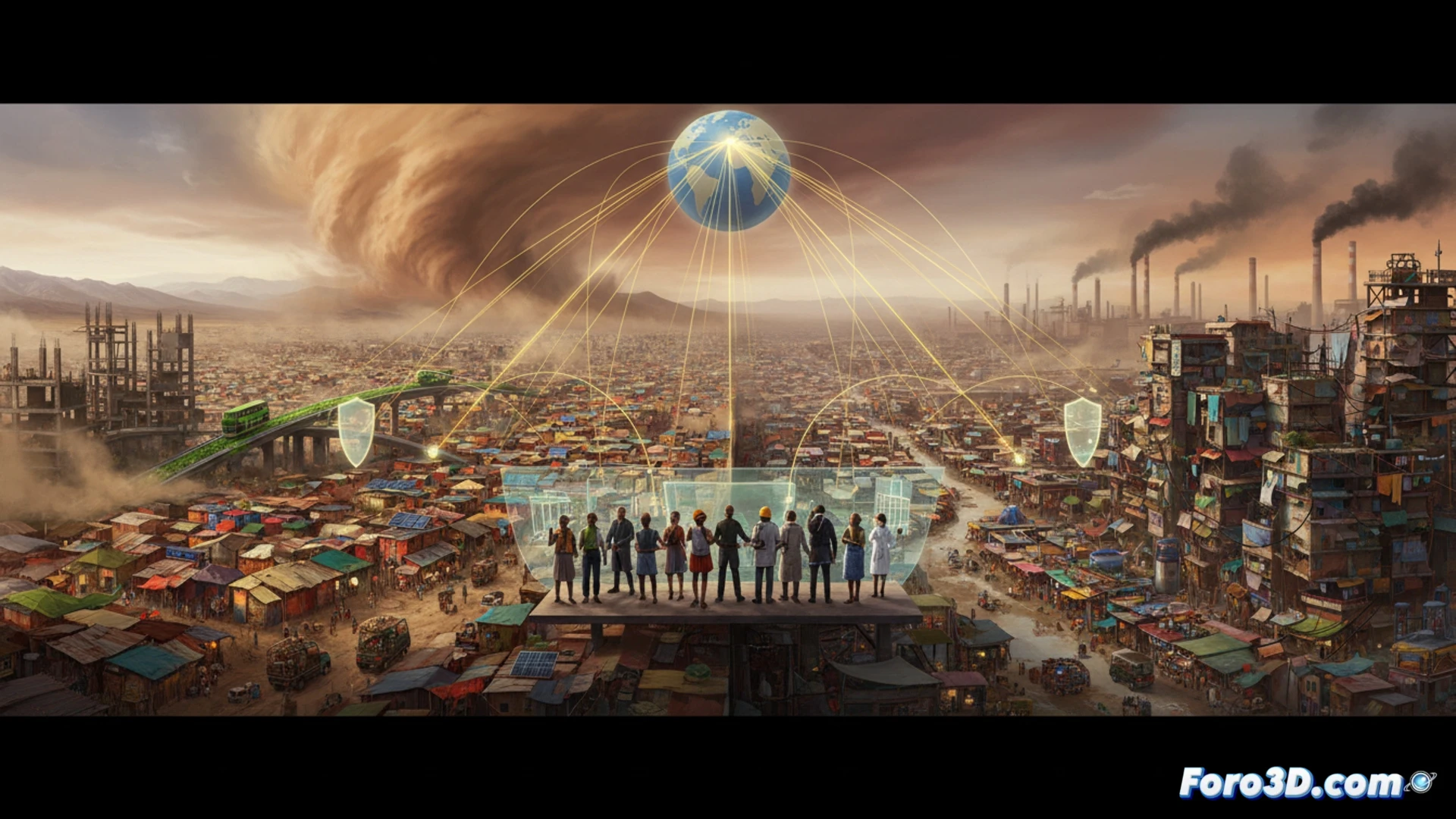
Experts like Moges Tadesse, from Addis Ababa, warned at the World Urban Forum that rapid and poorly managed urbanization in Africa and South Asia generates informal settlements, inequality, and environmental degradation. Government response capacity is overwhelmed, and Tadesse called for greater international investment so that vulnerable countries can face climate costs caused by wealthier nations. The thirteenth session of the forum, in Baku, urged viewing urban growth as guided progress, not as a problem.
Urban technology: sensors and data to plan resilient cities 🌍
Faced with urban chaos, technical solutions such as IoT sensors, geographic information systems (GIS), and climate simulation models allow mapping informal settlements and forecasting risks. These tools, combined with resource optimization algorithms, help governments with limited budgets prioritize basic infrastructure like drainage and housing. However, their implementation requires investment in training and hardware, something Tadesse pointed out as a debt of industrialized countries towards those most exposed to climate change.
The forum talks about progress, but the neighborhoods grow on their own 🏚️
While experts discuss guided urbanization in Baku, on the outskirts of Nairobi or Dhaka, houses made of sheet metal and cardboard multiply without anyone's permission. Tadesse calls for international investment, but rich countries respond with impact studies and good intentions. In any case, the next forum will be in two years, and by then the informal settlements might already have their own fiber optic network, installed by the neighbors to watch Netflix while they wait for running water.