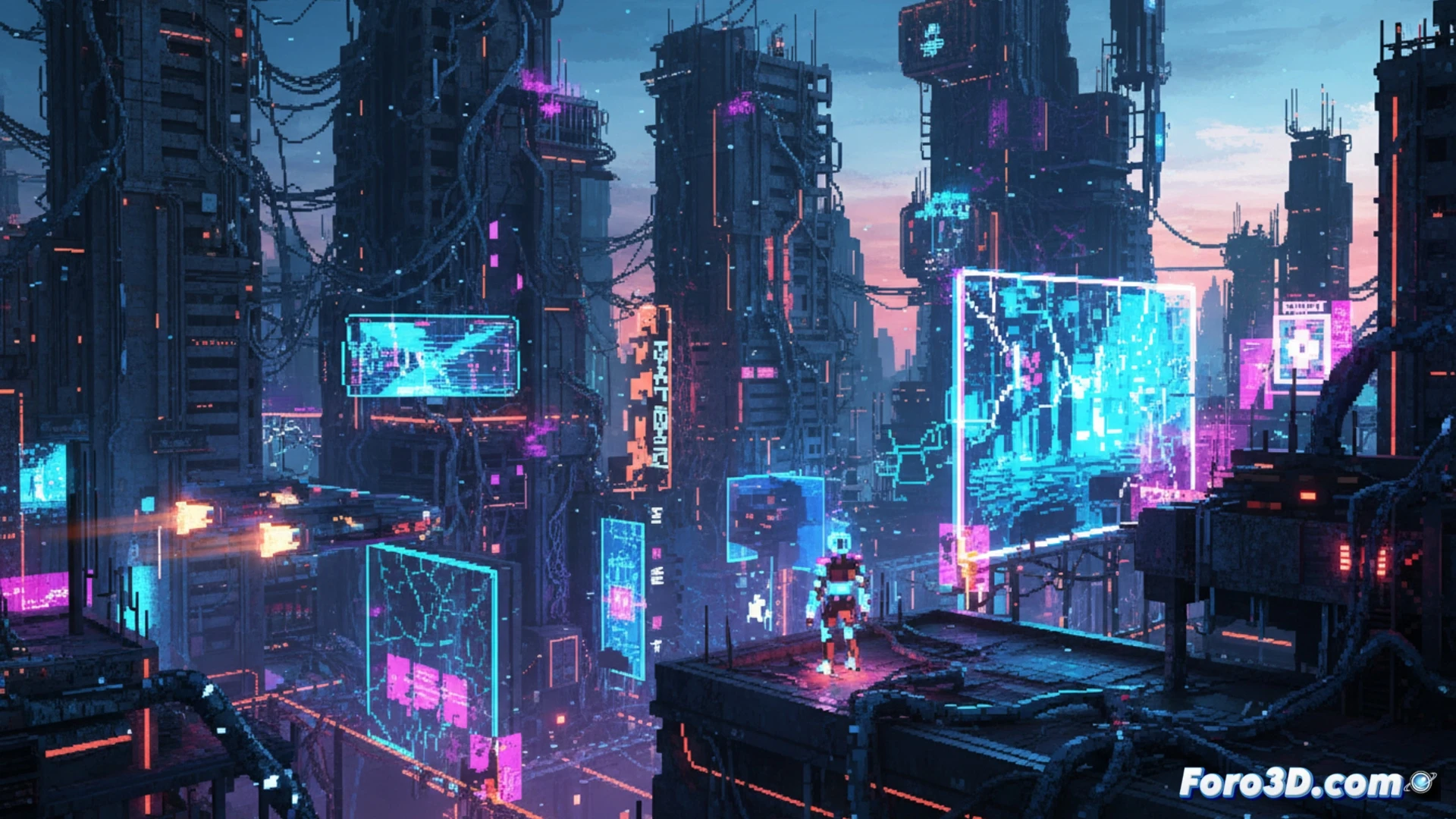
Independent game development often faces the challenge of building a unique visual identity with limited resources. Unsighted, a top-down action-adventure, solves this dilemma by combining the Unity engine with the Aseprite pixel editor. The result is a vibrant world where post-apocalyptic desolation contrasts with a neon-filled user interface and 2D lighting effects, demonstrating that sprite optimization and strategic lighting can define a game's atmosphere.
Sprite Optimization and 2D Lighting Effects in Unity 🎮
To achieve its aesthetic, Unsighted uses Aseprite to generate sprites with limited color palettes, which facilitates smooth animation without overloading memory. When importing these assets into Unity, it is recommended to use texture compression in PNG format with an alpha channel, and to group sprites into atlases to reduce draw calls. The key technical trick lies in the integrated neon UI elements: instead of using costly 3D lights, the game employs emissive sprites overlaid with an Unlit/Transparent material. Applying a soft bloom effect from the 2D camera (using Unity's Post Processing package) makes these elements shine against the dark background, creating an immersive atmosphere without the need for complex shaders. For top-down pixel art, it is vital to disable mipmapping and set the filter to Point (no smoothing) to preserve pixel sharpness.
Lessons for Indie Developers: Visual Identity with Few Resources 💡
Unsighted demonstrates that you don't need an AAA engine or a large team to create a memorable world. The key lies in understanding the strengths of each tool: Unity handles lighting and logic, while Aseprite takes care of the artisanal essence of pixel art. If you are developing a top-down game, prioritize color coherence and use neon not just as decoration, but as a visual guide for the player. This approach, combining technical optimization with intentional design, is the path for your indie project to stand out in a saturated market.
How Unsighted manages to integrate Aseprite's pixel art with Unity's neon effects to create a post-apocalyptic aesthetic without sacrificing performance on modest hardware
(PS: a game developer is someone who spends 1000 hours making a game that people complete in 2)