The return of the cooperative horror saga No More Room in Hell 2 marks a technical milestone by combining the power of Unreal Engine 5 with an artistic pipeline based on Maya, ZBrush, and Adobe Substance. The result is a photorealistic horror experience where the dynamic dismemberment of zombie hordes is not a simple effect, but a complex system that relies on material physics and global illumination to generate tension.
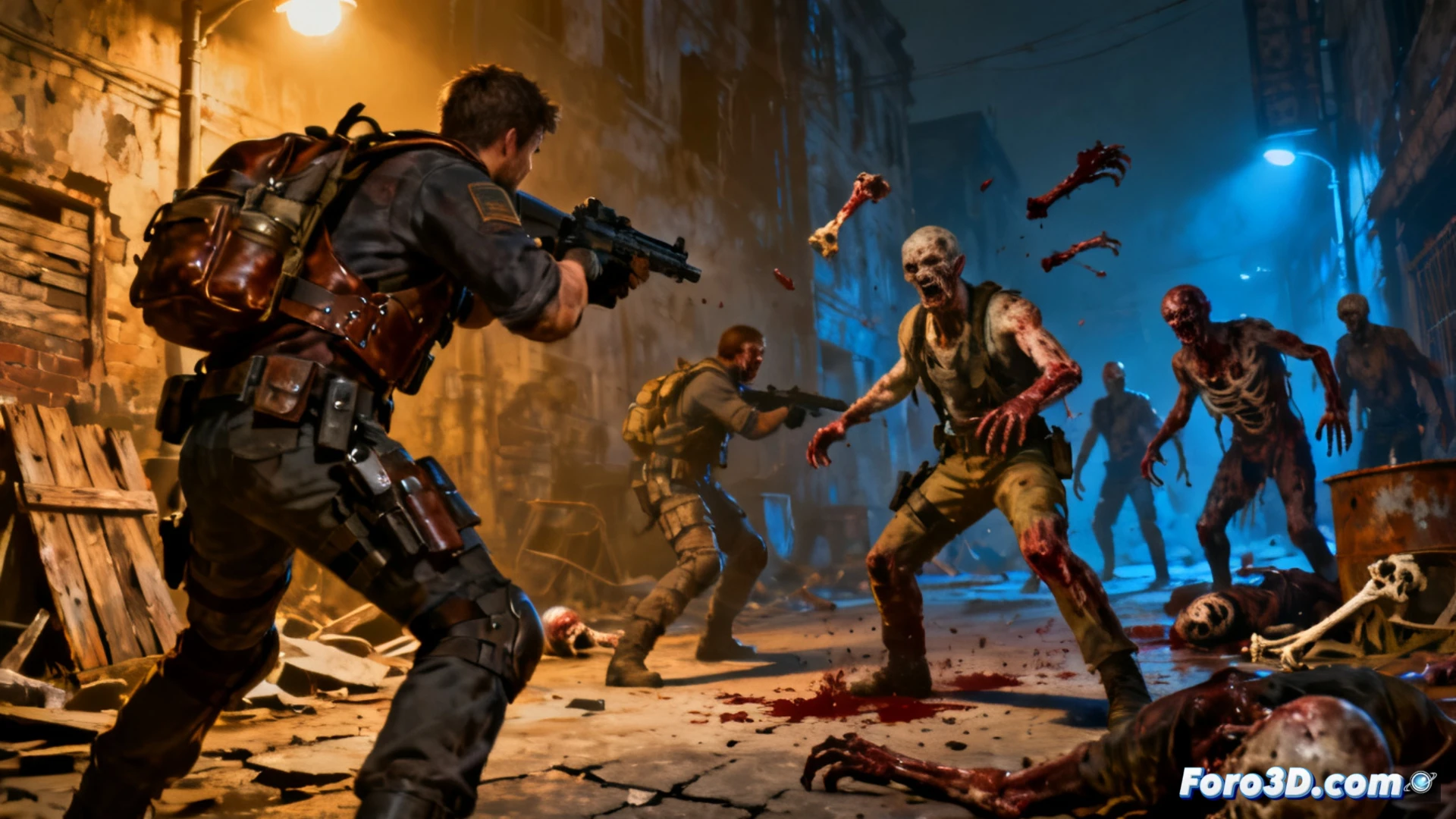
Creation Pipeline: From ZBrush to Real-Time Digital Flesh 🧟
The process of creating enemies in No More Room in Hell 2 follows a classic route but optimized for the high level of detail required by Ray Tracing. Modelers begin by sculpting high-polygon organic forms in ZBrush, capturing pores, tears, and putrid skin textures. This high-poly is retopologized in Maya to generate efficient game meshes, maintaining key geometry for the dismemberment system. The key lies in the integration with Adobe Substance 3D, where intelligent materials that respond to damage are created. When a weapon impacts, the material doesn't just change color; Unreal Engine 5's system activates Vertex Animation masks to physically separate the geometry, while ray tracing calculates new shadows and reflections on the open wound, anchoring the horror to visual reality.
Light as the Enemy: Ray Tracing in the Cooperative Atmosphere 🔦
The photorealism in the dark rural environments seeks not beauty, but oppression. The use of ray tracing for shadows and reflections is crucial: it allows a teammate's flashlight to cast dynamic, precise shadows on mutilated bodies, hiding threats in the gloom. This volumetric lighting, powered by Unreal Engine 5, turns every enclosed space into a visual trap, where the lack of light is as lethal as the enemies. The artistic pipeline here demonstrates that optimization is not at odds with detail; the assets from Maya and Substance are designed to maintain stable 60 FPS even when Ray Tracing dissects the scene.
Considering the implementation of tactile mechanics in Unreal Engine 5 for No More Room in Hell 2, how does the technical pipeline manage to translate the feeling of vulnerability and physical contact with enemies without resorting to traditional combat systems?
(PS: game jams are like weddings: everyone is happy, nobody sleeps, and you end up crying)