The remake of The Witcher, under the code name Canis Majoris and developed by Fool's Theory, promises a total reinvention of Geralt's world. The key to this transformation lies in the use of Unreal Engine 5, whose Lumen and Nanite technologies allow for rendering dynamic global illumination and detailed geometry without performance loss, elevating forests and medieval cities to a level of fidelity never before seen in the saga.
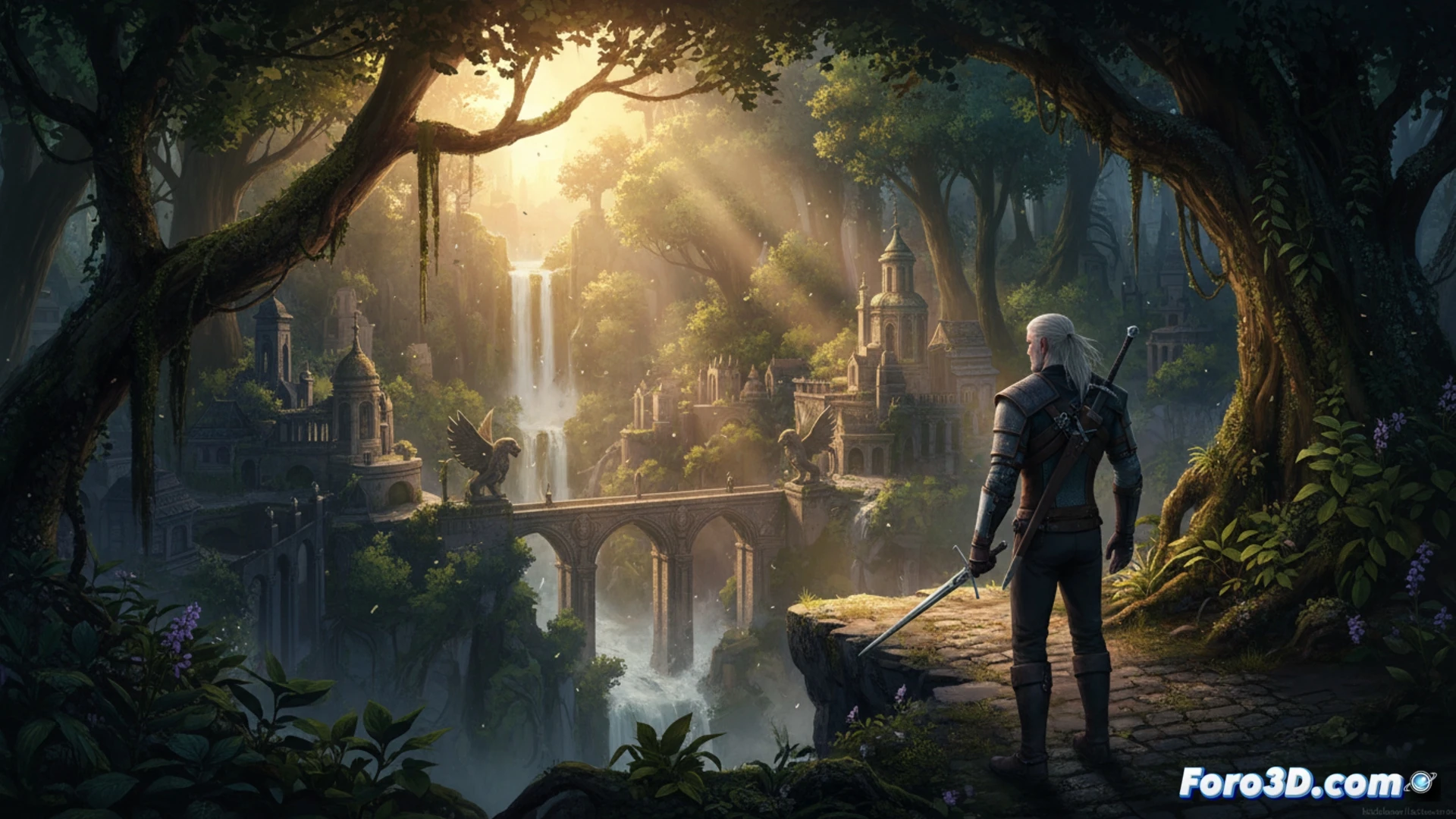
Technical Pipeline: From Maya to Quixel for Next-Gen Assets 🎨
To achieve this visual reinvention, the art team employs a modern pipeline that combines leading industry tools. High-polygon modeling is done in Maya, while organic details and character sculptures are created in ZBrush. Texturing relies on Substance Painter, which allows for creating complex PBR materials, and on Quixel Megascans for photorealistic surfaces. This workflow, optimized for Unreal Engine 5, ensures that every asset, from a rusty armor to a tree's bark, maintains visual coherence and a level of detail that fully leverages Nanite's power to load millions of polygons in real-time.
Challenges and Opportunities of the Graphic Reinvention ⚙️
The main technical challenge lies in balancing graphical fidelity with smooth gameplay, especially in open-world scenarios. Lumen allows for reactive lighting that changes with the day-night cycle, but its implementation in interiors and dense forests requires fine-tuning to avoid artifacts. However, the advantage is clear: the remake will not only improve textures but will offer an immersive experience where light and geometry react coherently, setting a new standard for cult remakes.
How does the combined use of Lumen and Nanite in Unreal Engine 5 affect the design of the high-fidelity pipeline for a remake like The Witcher, considering the performance and optimization challenges on current-generation consoles?
(PS: game jams are like weddings: everyone is happy, no one sleeps, and you end up crying)