Vic Game Studios has unveiled Breakers: Limit Zero, a title that aims to break the barrier between traditional Japanese animation and real-time 3D graphics. Developed in Unity, the project stands out not only for its gameplay but also for a technical pipeline that merges Maya for character modeling and Photoshop for concept art. The real challenge has been translating the 2D aesthetic of anime into a 3D engine without losing its cinematic essence.
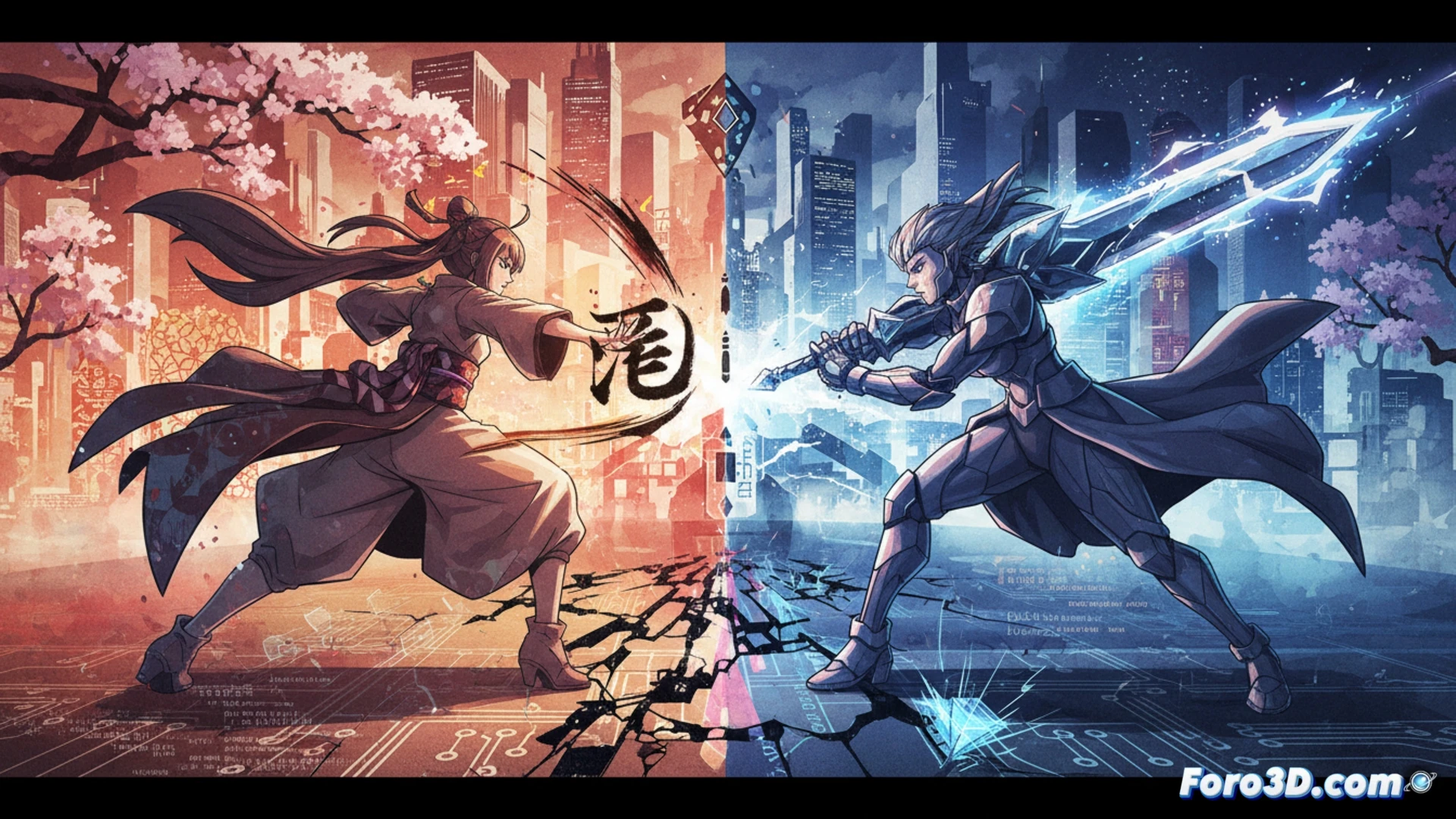
Technical Pipeline: From 2D Concept to Post-Processing in Unity 🎨
The workflow begins in Photoshop, where color palettes and the thick contour lines characteristic of anime are defined. These designs are then passed to Maya, where modelers create assets with clean geometry and topology optimized for Unity's toon shader. The key lies in the materials: custom shaders are used that mimic the flat lighting of cel shading, but with subtle gradients. To achieve high fidelity, post-processing effects such as motion blur and chromatic aberration are applied, replicating the lens of a real camera. Additionally, dynamic depth of field is implemented to focus attention on characters during cinematics.
Visual Optimization Without Sacrificing Artistic Identity ⚡
Achieving a game with an anime aesthetic that looks cinematic without consuming all GPU resources is a challenge. Vic Game Studios has opted for low-resolution textures combined with a high-pass filter to maintain edge sharpness. They have also limited the number of dynamic lights, using baked lighting schedules from Maya. The result is a title that runs at 60 fps on mid-range consoles, demonstrating that visual composition technique, rather than raw power, is what defines artistic quality in video game development.
How can the traditional Japanese animation style seen in Breakers: Limit Zero be achieved in Unity using Maya models without sacrificing real-time performance fluidity?
(PS: optimizing for mobile is like trying to fit an elephant into a Mini Cooper)