The recent release of Star Ocean: The Second Story R has reignited the debate about the technical viability of 2.5D in the era of modern engines. Far from being a simple remaster, the title represents a fascinating case study on how Unity can manage a hybrid pipeline. By combining high-resolution 2D sprites with three-dimensional polygonal geometry, the team has achieved an aesthetic that respects the original art without sacrificing the advantages of real-time global illumination.
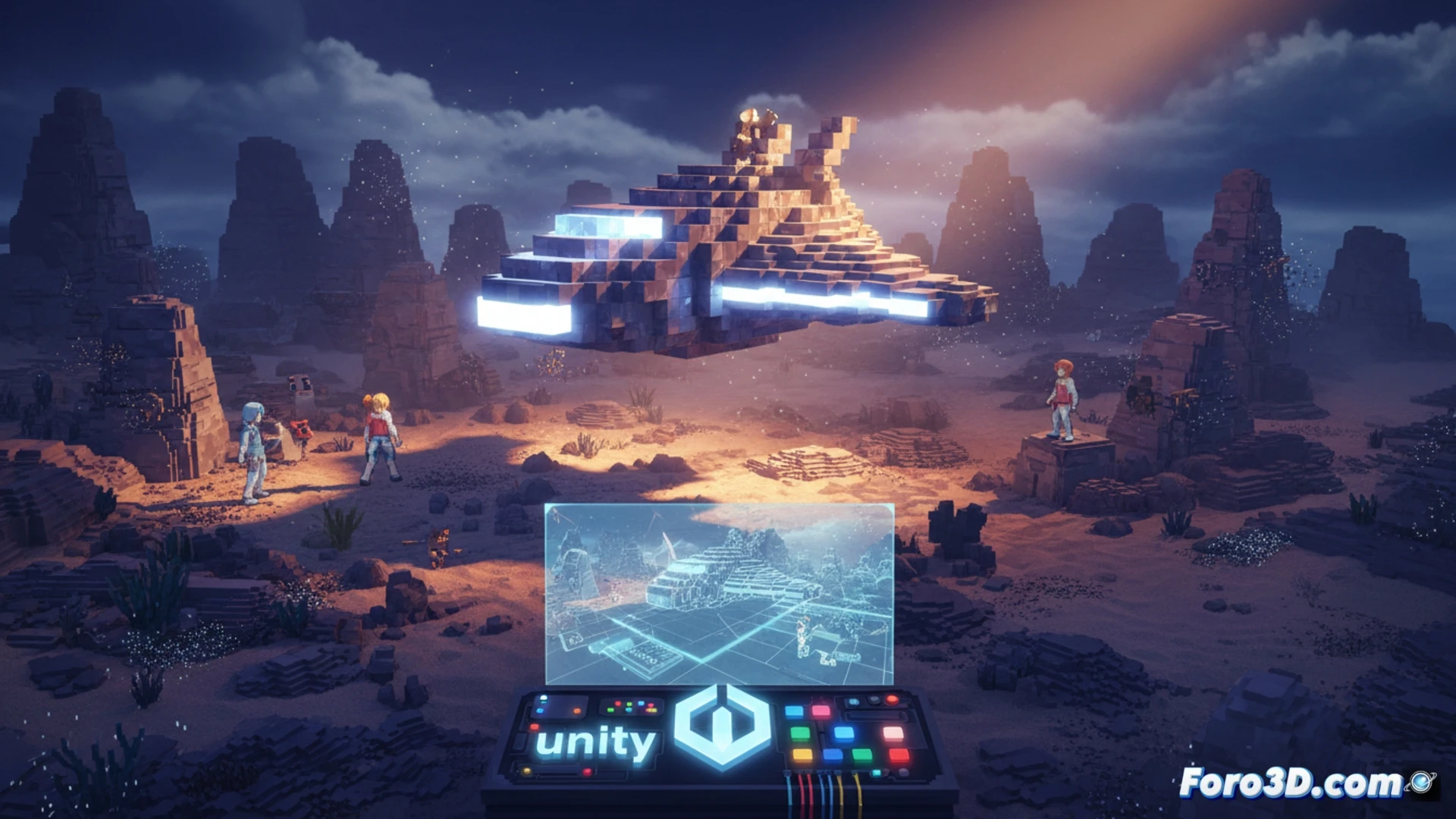
Technical Pipeline: From Blender to the GPU in Real Time 🎮
The workflow behind this aesthetic begins in Blender, where 3D environments are modeled with topology optimized for the fixed isometric camera. These assets are textured in Photoshop, applying matte painting techniques to simulate the depth of the original backgrounds. The magic happens in Unity: the characters, rendered as refined 2D sprites, are integrated into the three-dimensional scene. The engine then applies its global illumination system, calculating light bounces that affect both the 3D models and the 2D sprites, unifying the scene. To maintain smoothness, texture atlases and LODs (Levels of Detail) are employed to reduce the polygon load in areas far from the frame, a crucial technique to avoid performance drops when exploring extensive dungeons.
The Balance Between Nostalgia and Performance ⚖️
The decision to use Unity for this project is not trivial. The engine allows granular control over lighting through Light Probes, preventing 2D sprites from looking like flat cutouts on the 3D stage. This approach demonstrates that modernizing a classic does not require abandoning its essence; on the contrary, current technology allows enhancing the original art direction. For developers, this game is proof that 2.5D remains a viable niche, as long as composition techniques are mastered and the pipeline is optimized to avoid the computational cost of rendering two visual systems simultaneously.
Is it possible to replicate the 2.5D visual style of Star Ocean The Second Story R in Unity using exclusively free tools from the engine, or do you depend on paid assets to achieve the same 3D pixel art finish with dynamic lighting?
(PS: a game developer is someone who spends 1000 hours making a game that people complete in 2)