Mediterranea Inferno is a fascinating case study on how the combination of accessible tools can generate a groundbreaking visual identity. The project uses Unity as its backbone, relying on Blender for minimalist 3D modeling and Adobe Photoshop for creating flat 2D textures. The result is not a simple game, but an interactive experience that seeks to immerse the player in a state of feverish daydreaming through a cutting-edge, saturated visual language.
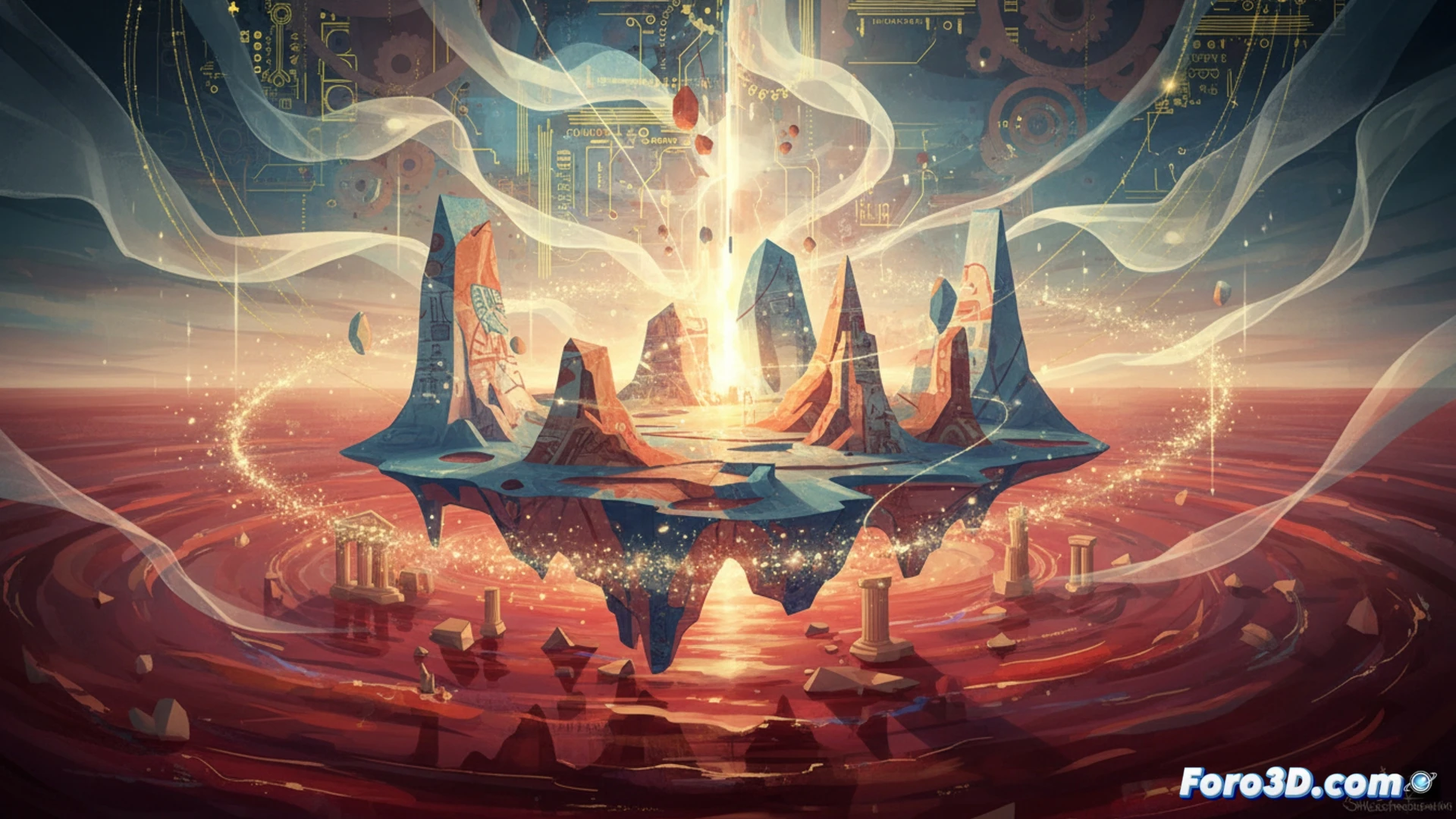
Managing the saturated palette and the hybrid 2D/3D space in Unity 🎨
The biggest technical challenge for the team was making the fever-dream aesthetic work in real-time without breaking the illusion. To achieve this, a non-realistic lighting system was implemented in Unity, prioritizing flat directional lights and post-processing with high chromatic saturation. The 3D assets, modeled in Blender with extremely low topology, are combined with 2D sprites rendered from Photoshop. The key lies in the use of custom shaders in Unity that treat 3D objects as if they were flat, eliminating complex dynamic shadows and applying an outline filter that unifies both worlds. This allows a simple polygonal model and a 2D sprite to share the same visual space without technical friction, optimizing performance to maintain the fluidity of the dreamlike atmosphere.
Optimization as a narrative tool, not a limitation ⚙️
It is often thought that optimization is an enemy of artistic expressiveness. Mediterranea Inferno proves the opposite. By consciously limiting polygonal complexity in Blender and using low-resolution textures from Photoshop, the team not only ensured solid performance in Unity but also reinforced the feeling of unreality. The flat, minimalist appearance is not a technical flaw, but a design decision that enhances the player's sensory disconnection. In this case, technical restriction becomes the pillar supporting the visual narrative of the fever dream.
What specific modeling techniques in Blender and shaders in Unity were used in Mediterranea Inferno to distort visual reality and achieve its surreal aesthetic?
(PS: shaders are like mayonnaise: if they break, you start all over again)