In the Seoul of a reunified Korea, the discovery of an abandoned robot in a scrapyard raises questions about the past and the future. Its unique design and ability to emit a faint light distinguish it from any known machine. This discovery not only raises doubts about its origin but also invites reflection on memory, identity, and the bonds between humans and technology in a transformed world.
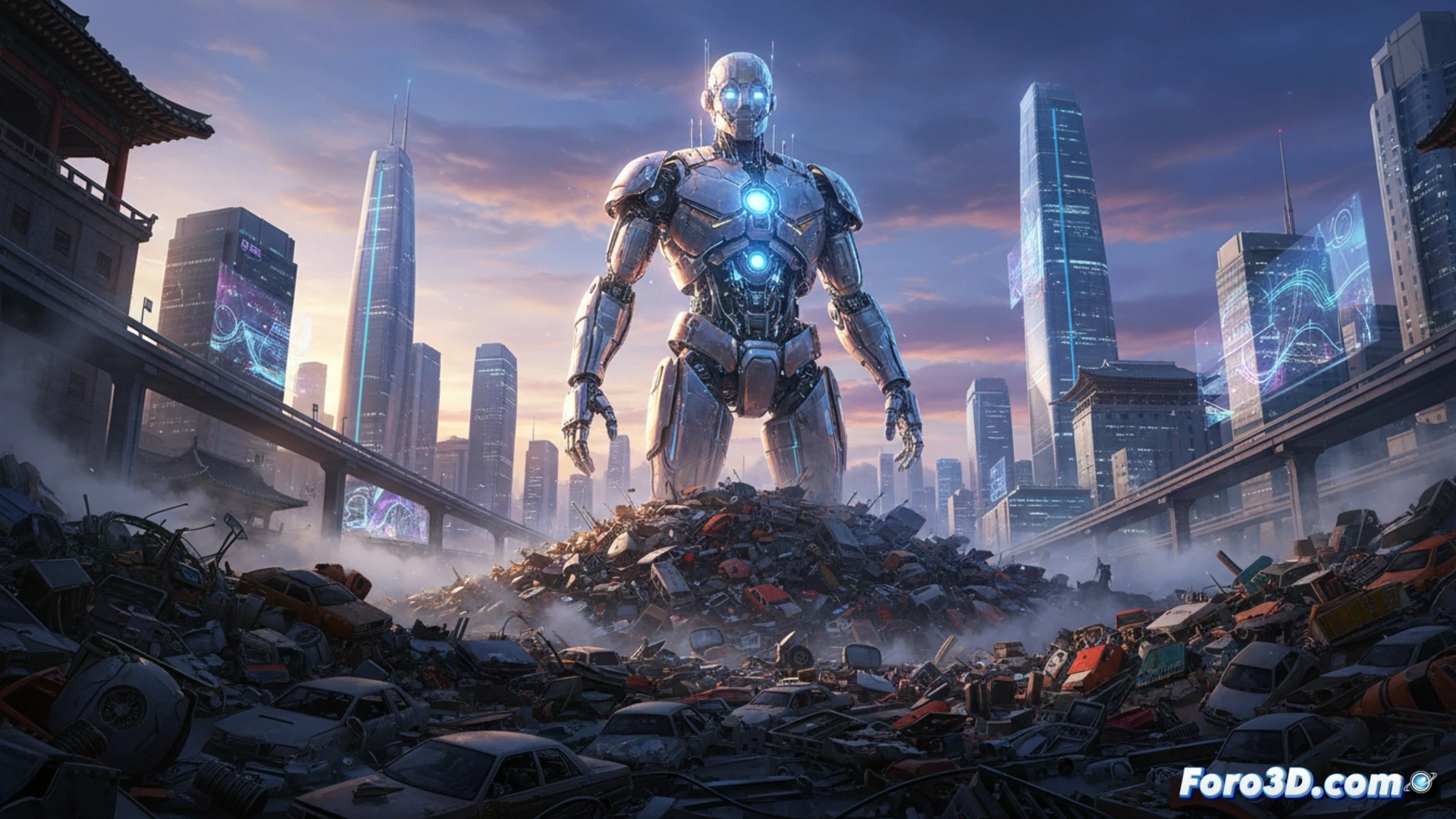
The internal architecture of the discovery: between circuits and memory 🤖
The robot features a structure that combines recycled materials with high-precision components, suggesting a non-industrial origin. Its lighting system appears to respond to environmental stimuli, indicating a basic level of artificial consciousness. The characters who find it speculate that it could be an experimental prototype or a remnant from an era before reunification. The narrative explores how this machine, by interacting with its surroundings, might contain data records or experiences that challenge the line between the programmed and the lived.
The robot that came to the scrapyard to ask questions 🛠️
Of course, instead of scrapping it for spare parts, the protagonists get tangled up in existential dilemmas. Because, naturally, in a city full of real problems, what was missing was a robot with an identity crisis that glows like a burnt-out lightbulb. Now all that's left is for it to start writing poetry or complaining about the price of kimchi. Good thing at least it doesn't ask for a raise, because reunification already brought enough headaches.