The depths of the Pacific hide creatures that defy the imagination. Scientists have identified a new species of tiny blue octopus, named Microeledone galapagensis. It was discovered near Darwin Island, 1,768 meters below sea level. The finding, based on a single specimen sighted in 2015, reveals how vast the marine territory we still do not know is.
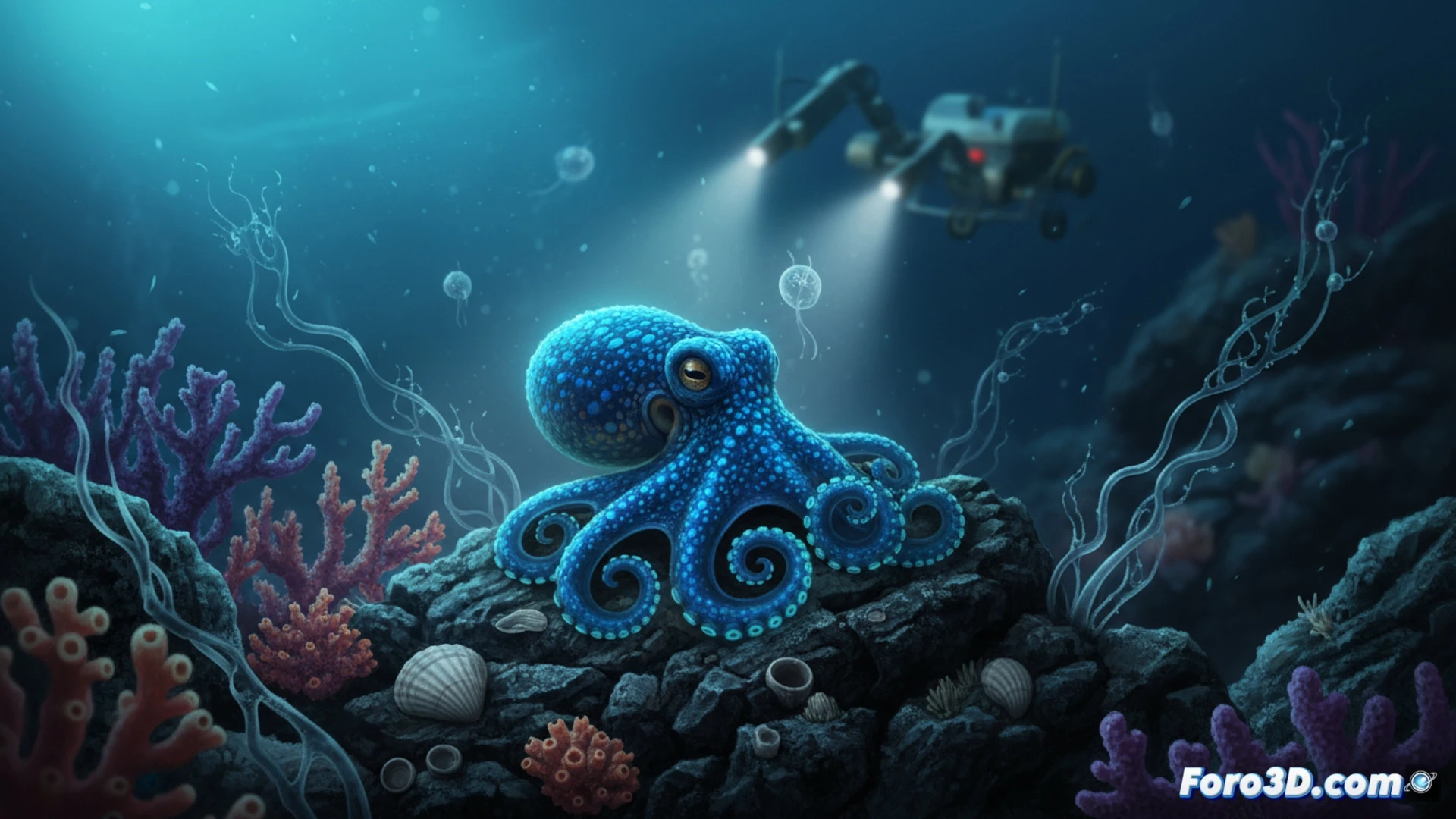
Microtomography and 3D model to avoid damaging the sample 🐙
To analyze this small cephalopod without destroying the only collected specimen, researchers turned to high-resolution computed microtomography. This allowed them to obtain a detailed image of its internal anatomy. Additionally, a digital three-dimensional model of the octopus was generated. This technique, common in paleontology, avoids physical dissection and preserves the sample for future genetic or morphological studies.
The octopus that doesn't want to come out of the oceanic closet 🦑
The creature, the size of a golf ball, has decided to live almost two kilometers deep. An impeccable strategy to avoid being bothered by tourists or underwater photographers. Scientists had to use a robot to find it and then a scanner to study it. It seems this blue octopus masters the art of evasion better than any politician on the campaign trail.