Researchers have identified an organelle called the hydrogenosome in ciliated protozoa that inhabit the rumen of cows and other ruminants. This discovery could be relevant for mitigating methane emissions, a greenhouse gas that accounts for nearly 30% of agricultural methane. The hydrogenosome produces hydrogen, which in turn stimulates other microbes to generate methane.
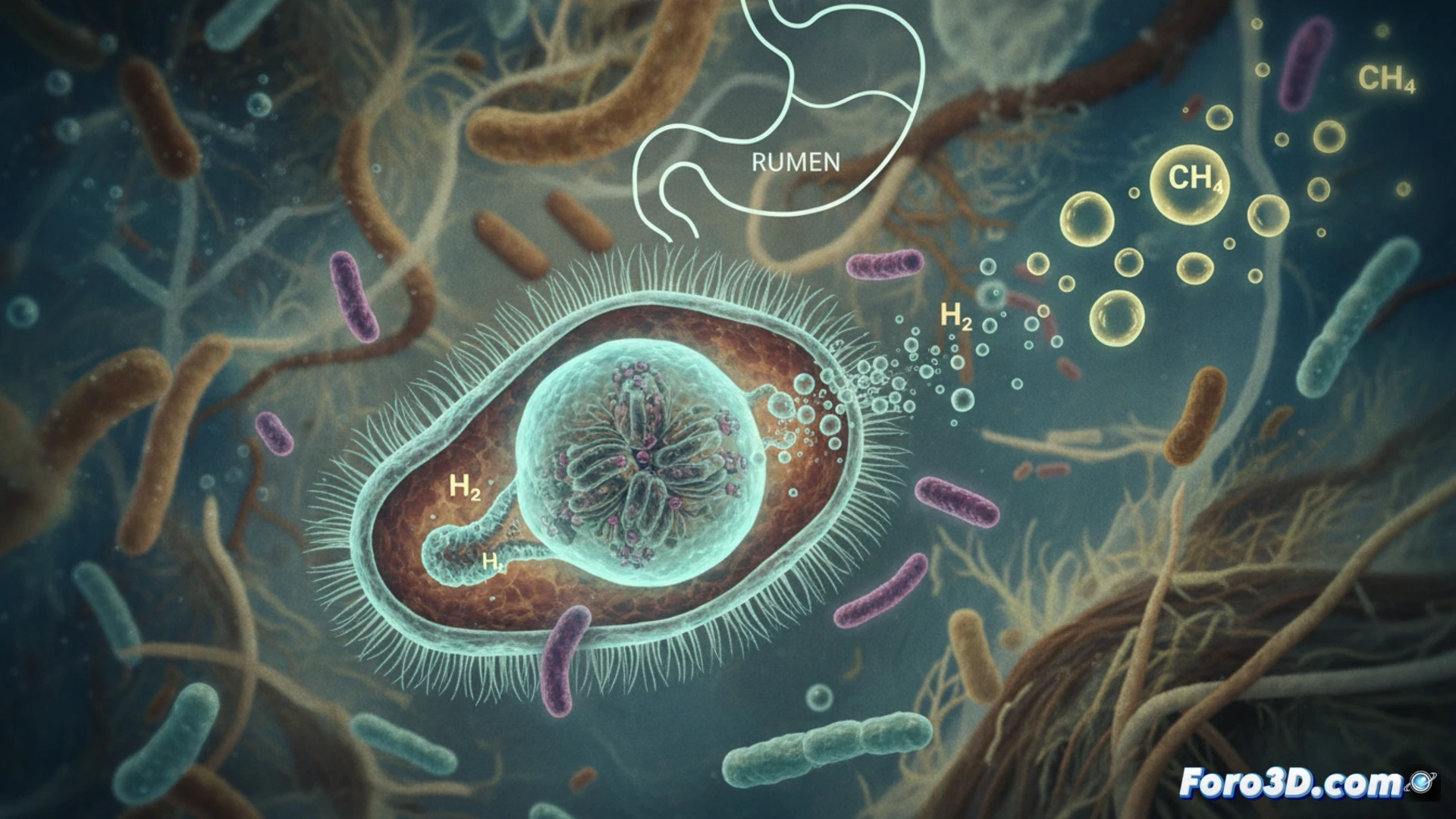
Technical development: how the hydrogenosome works 🔬
The hydrogenosome acts as a small power plant inside the protozoa. Instead of mitochondria, these organisms use this organelle to generate energy under anaerobic conditions, releasing molecular hydrogen as a byproduct. This hydrogen is then used by methanogenic archaea present in the rumen to produce methane. Understanding this metabolic pathway allows exploring strategies to interfere with hydrogen production or redirect its consumption towards other less harmful compounds.
The cow's fart now has someone to overshadow it 💨
It turns out the real culprit of global warming was not the cow, but its single-celled tenant eager to produce hydrogen. Now scientists want to convince these protozoa to take a vacation and stop making life easy for methanogenic archaea. Meanwhile, the cows ruminate calmly, unaware that their digestion has become a case study for saving the planet.