MIT has revived a forgotten 1985 invention to create the Y-zipper, a 3D-printed closure with three sides. This device, conceived by William Freeman and rejected in its day, allows camping gear, medical splints, or robots to switch between flexible and rigid states in seconds, using plastic as the base material.
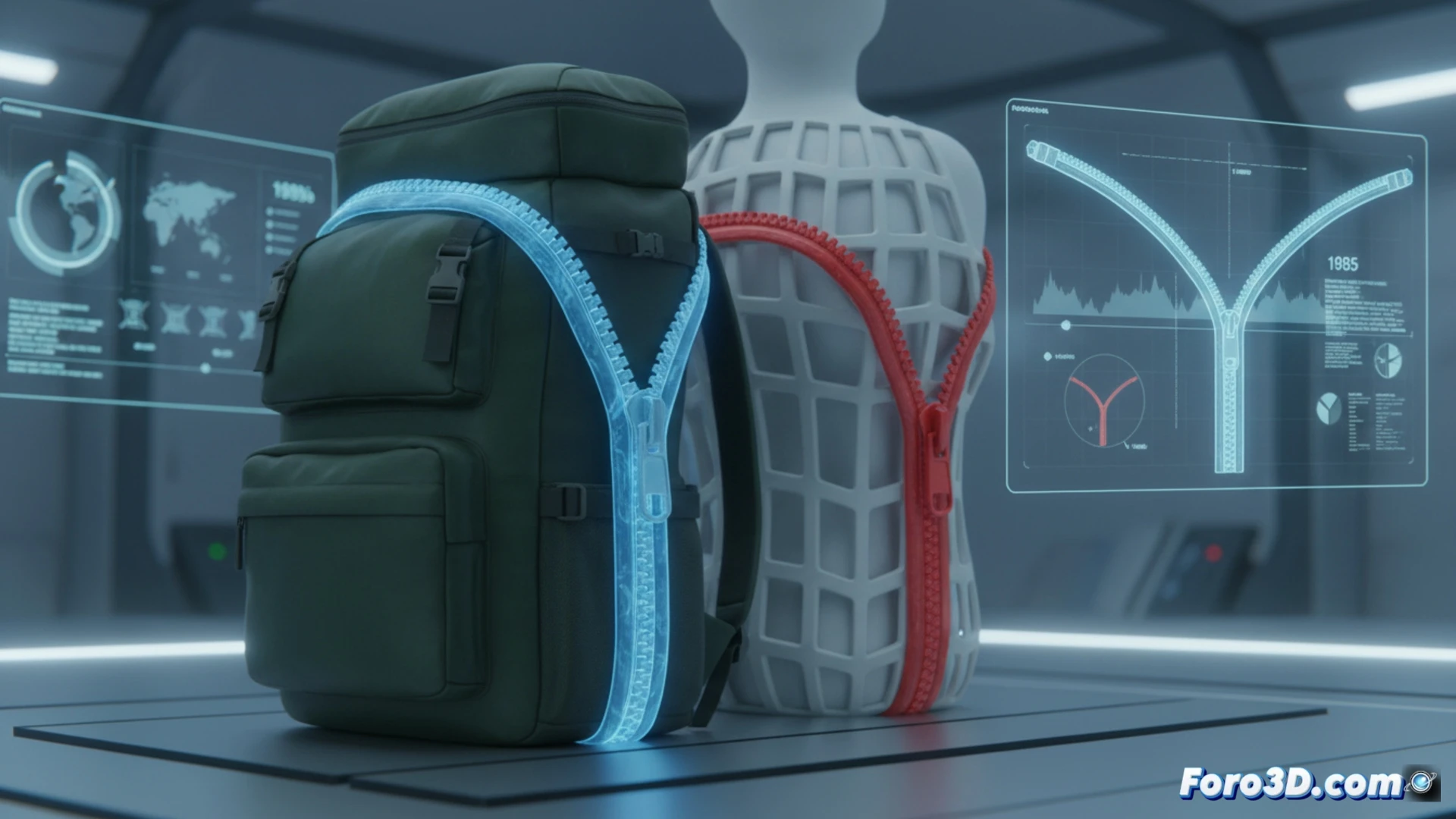
Automated software customizes curvature and movement of the closure 🛠️
Researchers at MIT's Computer Science and Artificial Intelligence Laboratory have developed a software tool that automates the design of these closures. The user selects length, curvature angle, and desired movements (straight, bent, spiral, or twisted). A 3D printer produces them using polylactic acid or thermoplastic polyurethane. Freeman's original patent, stored for nearly four decades, now allows the manufacture of parts that adapt to specific needs without complex manual intervention.
The idea no one wanted in the 80s now prints tents ⛺
William Freeman presented his idea in 1985 and was rejected. He patented it and kept it in a drawer for 38 years, waiting for the world to catch up with his vision. Now, MIT has rescued it so we can print splints that bend like spaghetti or tents that suddenly become rigid. It almost seems like technology likes to make good ideas wait until no one remembers who had them.