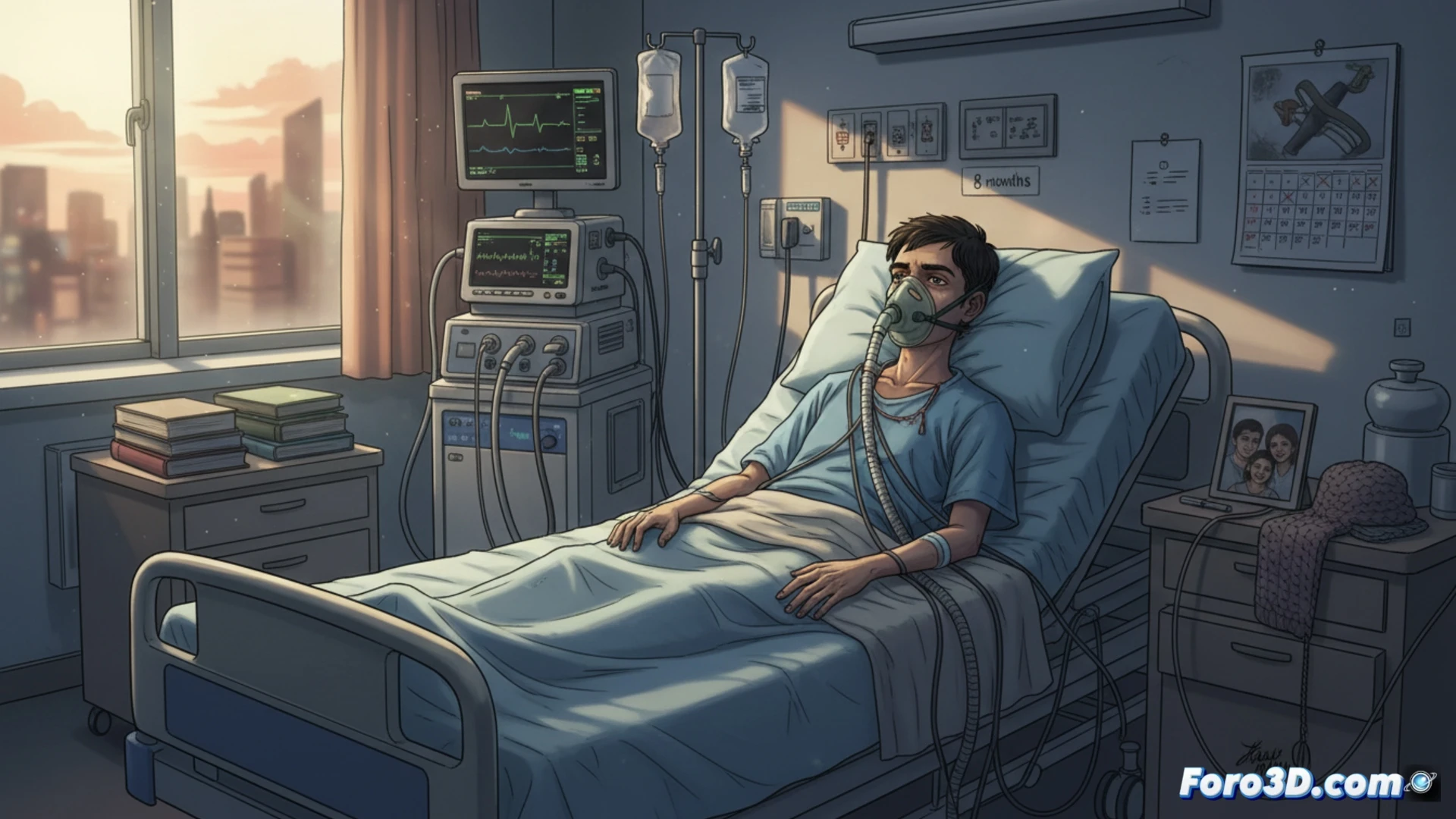
Ravi Mehta, 36, with Duchenne muscular dystrophy, was admitted to a London hospital for a routine ventilator adjustment. The discharge was scheduled for three days, but he has been trapped there for eight months. The reason is not medical, but bureaucratic: his personal health budget, which paid for two 24-hour assistants, was canceled by the local integrated care board.
The technological cost of a bureaucracy without patches 🖥️
In the field of software development, when a system fails, a patch is deployed or the code is reviewed. In the NHS, when a patient's budget is canceled, the system is not updated; it simply leaves the user in an infinite loop. Ravi is the equivalent of a program that works correctly but cannot run due to a permissions error in the administrative cloud. Healthcare technology advances, but the management logic remains anchored in a 1980s mainframe.
The hospital hotel: room service, but no minibar 🏨
Eight months in a hospital without being able to leave. Ravi has constant medical assistance, but what he really needs is his own bed and his own TV. The hospital offers him three meals a day and an intercom to call the nurse, but he doesn't have the remote control from his home. At least, in the hospital he doesn't have to worry about the smoke detector battery. That said, the electricity bill remains a mystery.