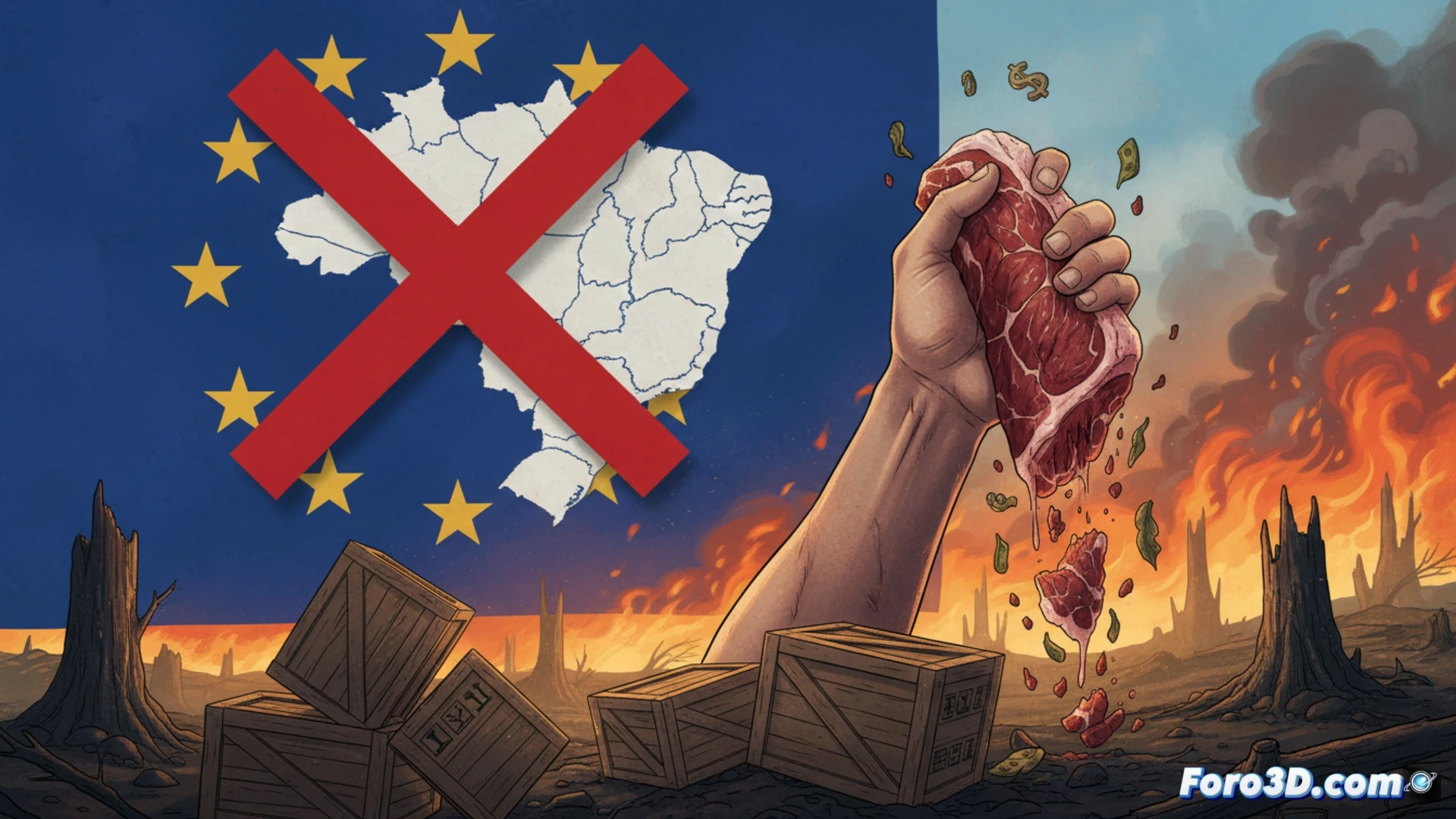
The European Union has announced its intention to block the import of meat from Brazil starting in September. The measure responds to concerns about deforestation and sanitary standards. The Brazilian meat sector, one of the largest global exporters, faces a significant economic impact. The decision sparks debate on food sovereignty and international trade agreements.
Blockchain to trace the origin of meat 🔗
Faced with the ban, some Brazilian companies are exploring technological solutions to verify the traceability of their livestock. Blockchain-based systems would allow recording each stage, from the animal's birth to slaughter, guaranteeing immutable data on origin and the absence of illegal deforestation. IoT sensors in pastures and satellite analysis would complement the audit. However, implementing this technology on a massive scale requires investment in rural infrastructure and training. The window of time until September is narrow for widespread adoption.
Brazil: from exporting meat to exporting resumes 🥩
The news has landed like a frozen steak in the Brasilia offices. While ministers negotiate, ranchers are already updating their LinkedIn profiles: sustainable grazing specialists seek employment in Uruguay. It is rumored that the next big business will not be selling steaks, but selling online courses on how not to deforest the Amazon. At least, Europeans can sleep soundly knowing their hamburger didn't come with a piece of the jungle.