The European Union is intensifying its trade offensive in the face of the unstoppable advance of Chinese industry. After applying tariffs on electric cars with mixed results, Brussels is now targeting the chemical, mechanical, and automotive sectors. Vice President Stéphane Séjourné has issued a clear warning: without urgent action, Europe could lose 29 million jobs. Asian competition, backed by strong state subsidies, threatens to leave key industries of the continent in the dust. The EU's response seeks to halt a collapse that would hit the economy and citizens' pockets hard.
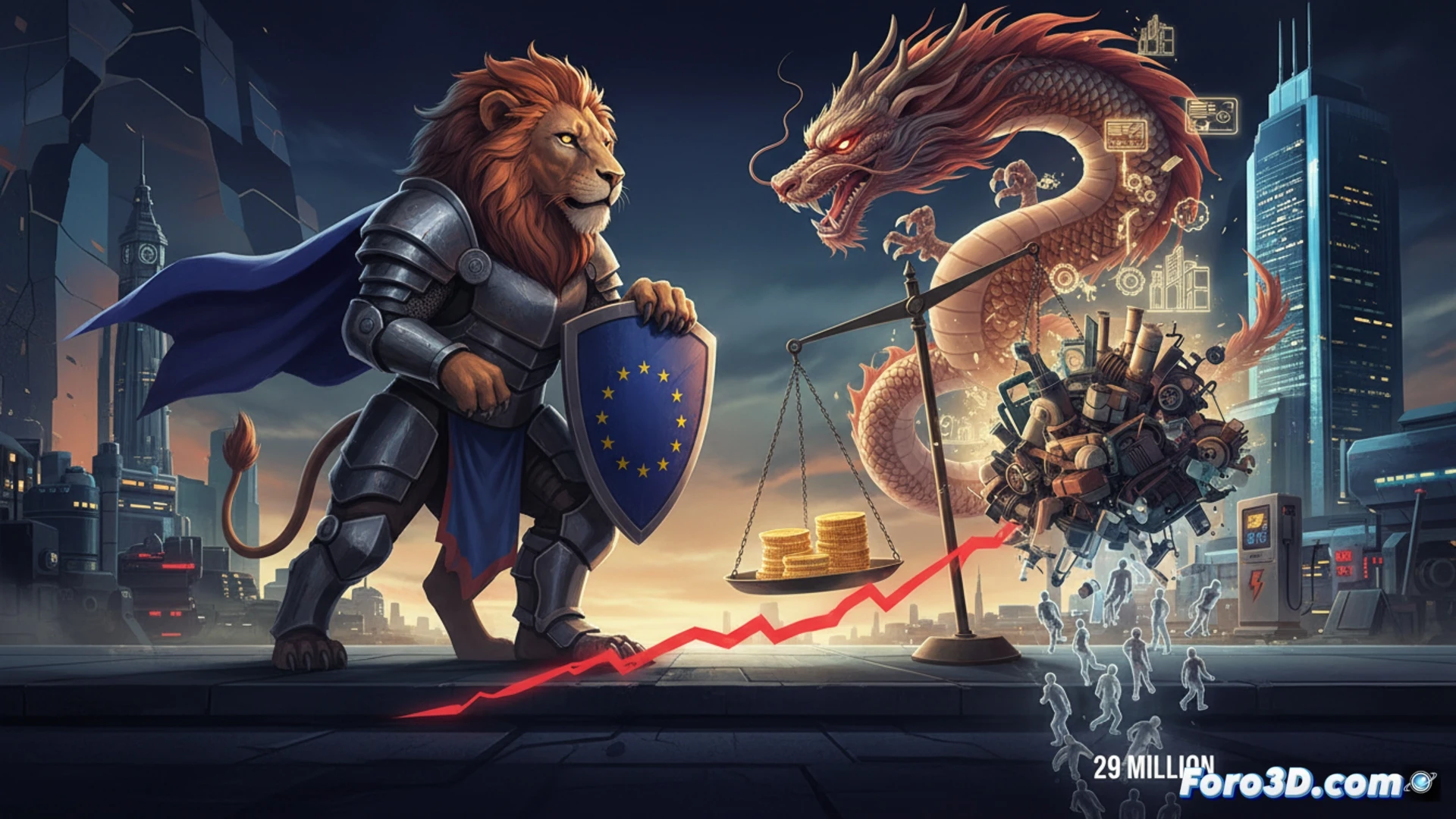
European technology vs. the subsidized Asian giant 🏭
To counter China's advantage, the EU proposes a strategy based on innovation and cost control. Sectors like fine chemicals and precision machinery, where Europe still holds a leadership position, need an injection of R&D and a review of their supply chains. The key lies in developing more efficient manufacturing processes and reducing dependence on raw materials controlled by Beijing. However, the price gap is enormous: while Chinese factories operate with cheap energy and tax exemptions, European ones face skyrocketing energy bills. The solution involves a coordinated industrial policy that prioritizes technological autonomy without falling into isolationist protectionism.
Europe discovers that tariffs are not a magic potion 🧙
It turns out that imposing tariffs on Chinese cars has not made European manufacturers sell more. On the contrary, some have had to raise prices, and others have lost market share. Now Brussels wants to protect the chemical and mechanical sectors, like plugging holes in a sinking ship with a finger. The irony is that while bureaucrats debate new rates, Chinese companies are setting up in Europe to bypass the barriers. Perhaps the next measure will be to tariff the air that Chinese engineers breathe. Or better yet, subsidize citizens to buy only European products, even if they cost twice as much.