The European Parliament and the EU Council have reached a political agreement to implement the trade pact with the United States. The EU renounces retaliation against Washington's generalized tariffs, provided the additional cost does not exceed 15%. A conditional truce seeking stability in transatlantic relations.
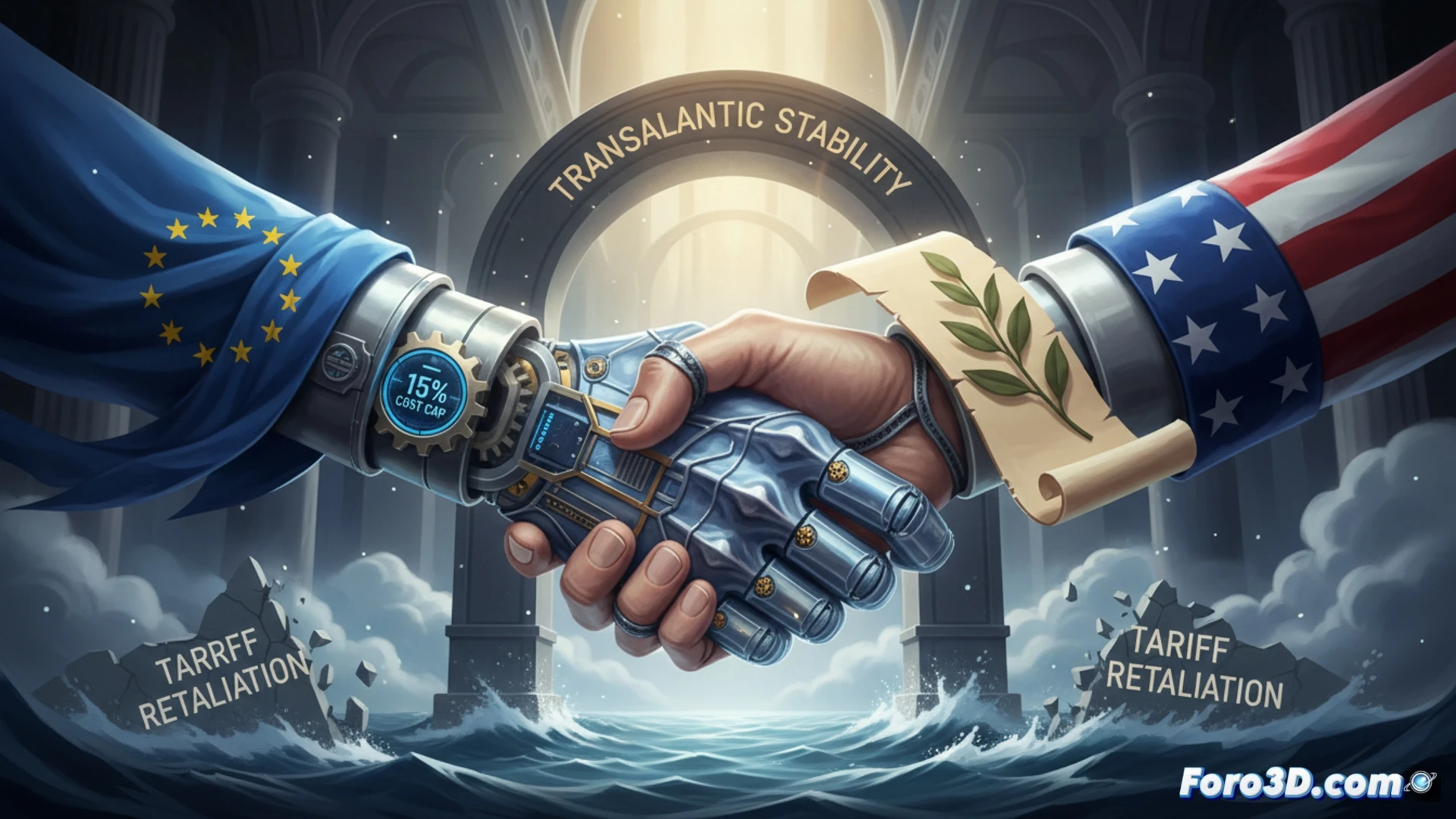
How the 15% cap affects the technology supply chain 🔧
The 15% limit on additional costs forces technology companies to recalculate their margins. Components such as semiconductors and servers, subject to tariffs, now have an additional spending ceiling. This forces them to optimize logistics and seek alternative suppliers within the EU to prevent the extra cost from eroding competitiveness. Inventory management becomes critical.
The 15% truce: less drama, more calculation 🧮
So the EU says: no problem, as long as they don't raise the price by more than 15%. It's like going to a market and accepting that the seller charges you a bit more, but with a limit. Bureaucrats have discovered the art of negotiating with a price tag. Meanwhile, companies will juggle to ensure that 15% doesn't become the new standard.