The Belgian company Twikit started by manufacturing scale mannequins using selective laser sintering (SLS). To manage the mass production of unique parts, they developed an internal digital platform that automates the workflow, from parametric design to final printing. The system proved so efficient that they decided to offer it as a service to other industries, demonstrating that the true innovation was not in the product, but in the software that orchestrated the manufacturing.
SLS Workflow Automation and Customization Platform 🛠️
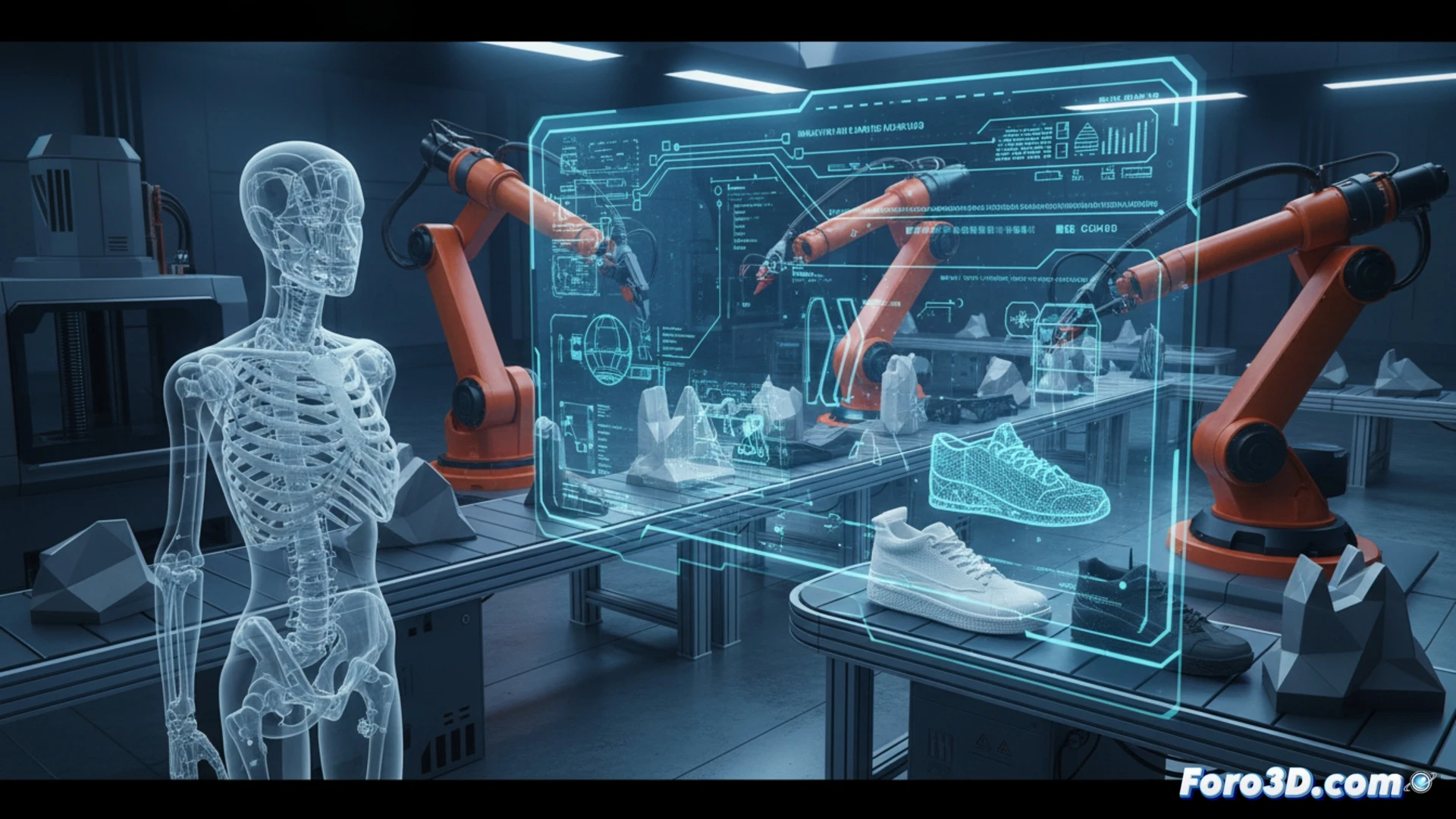
The technical core of Twikit lies in the integration of a customization engine with industrial 3D printing hardware. Instead of relying on physical molds, the platform receives customer input data, generates unique geometries through parametric rules, and sends the files directly to SLS machines. This closed loop eliminates manual intervention in design and part nesting, optimizing the build chamber volume. The key is the middleware that translates order variability into manufacturing instructions without the need for retooling, allowing batches of one to be scaled without time penalty.
Lessons for Industry 4.0: Software as the Assembly Line ⚙️
The Twikit case demonstrates that additive manufacturing reaches industrial maturity when software manages complexity. By eliminating molds and automating the workflow, any company can replicate this model to produce everything from prosthetics to spare parts on demand. The lesson is clear: the true enabler of flexible production is not the printer, but the digital system that orchestrates design, logistics, and manufacturing into a single scalable ecosystem.
What technological and logistical challenges does Twikit's transition from SLS mannequin manufacturing to a moldless digital factory entail, and how do these changes affect the scalability of industrial 3D production?
(PS: bottlenecks in 3D are like traffic jams: you see them coming but you can't avoid them)