The release of Turok 3: Shadow of Oblivion Remastered by Nightdive Studios represents a fascinating case study in video game preservation and modernization. Using the powerful KEX Engine, the team managed to extract the original Nintendo 64 code and apply a layer of modern technology without losing the essence of the 1999 shooter. This article breaks down the technical process behind this remaster, from asset recreation to optimization for current hardware. 🎮
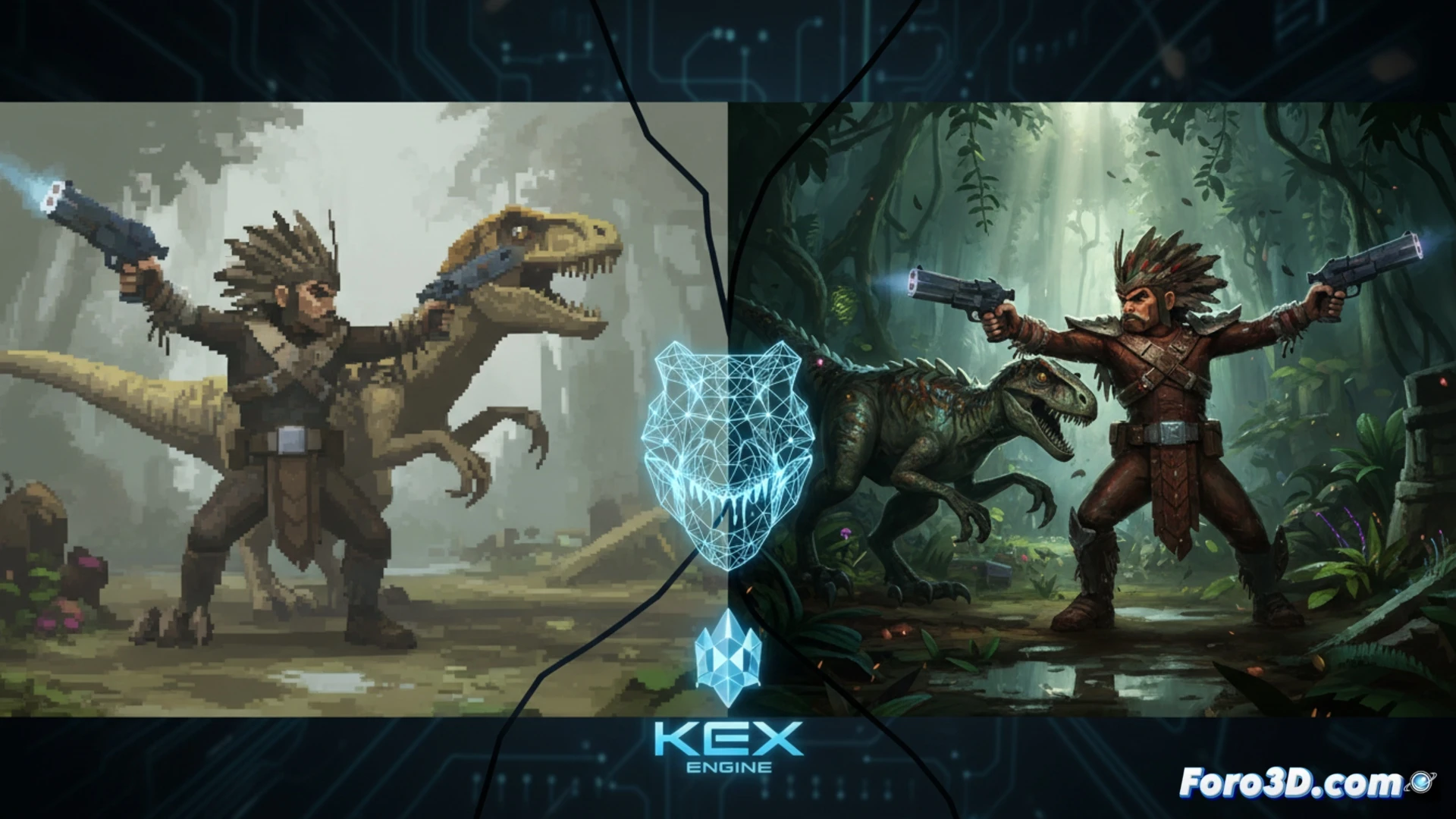
From N64 fog to crisp 4K: Recreation pipeline 🛠️
The biggest technical challenge was the quality of the original assets. The character and weapon models from the N64, built with extremely low polygon counts and blurry textures, could not withstand modern resolution. Nightdive's team used Blender to completely redo the geometry of each weapon and enemy, maintaining the original silhouettes but adding details that were previously impossible. In parallel, Adobe Photoshop was the key tool for painting high-definition (HD) textures from scratch, applying normal and specular maps that give depth to the surfaces. The KEX Engine handled integrating these new assets, enabling advanced dynamic lighting that replaces the static, flat lighting of the original game, all running at stable 4K and 60 FPS on consoles and PC.
The balance between nostalgia and modern performance ⚡
Beyond aesthetics, the remaster's success lies in optimization. Nightdive did not simply stuff 4K textures into an emulator; they rewrote the rendering systems within the KEX Engine to manage the high level of detail without sacrificing performance. The key was a texture streaming system that loads only what the player sees, avoiding VRAM bottlenecks. This approach demonstrates that remastering an old title is not just painting over an old canvas, but rewriting the graphical logic so that current hardware runs it smoothly, while maintaining the gameplay that fans remember.
How does Nightdive Studios' KEX Engine manage to preserve the original gameplay of Turok 3 on N64 while implementing technical improvements like dynamic lighting and high-definition textures without breaking the classic experience?
(PS: 90% of development time is polishing, the other 90% is fixing bugs)