An archaeological discovery in China has unearthed the country's oldest ceramic pipe network, dated to 4,000 years ago. This two-level urban drainage system was built by a community of about 500 people who, according to researchers, operated without a structure of ruling elites. The discovery challenges the idea that only hierarchical societies could undertake complex public works.
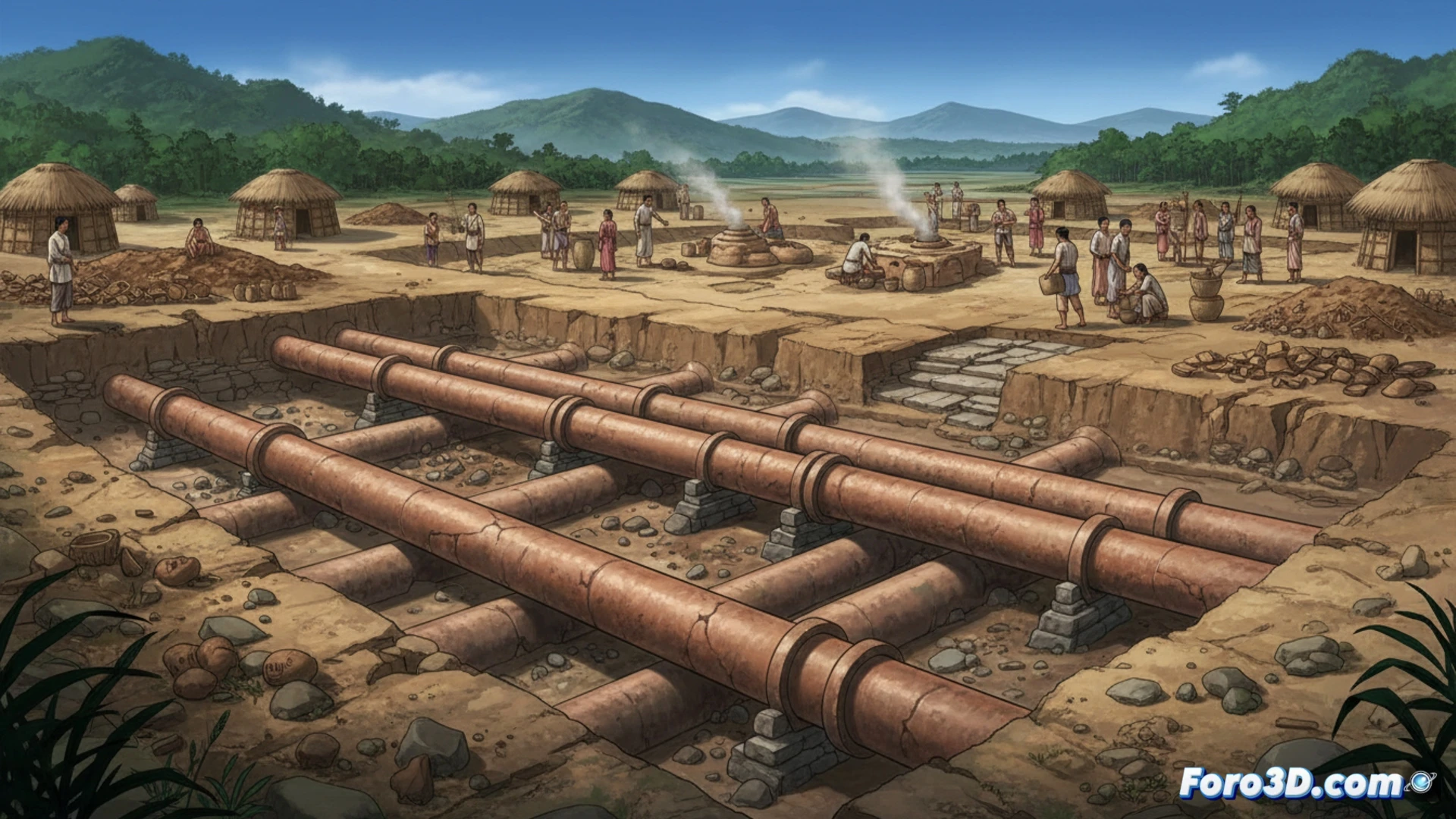
Two-level hydraulic engineering without central planning 🏗️
The drainage system, located at the Pingliangtai site, consists of interlocking ceramic pipes that channeled rainwater and wastewater. Its two-level design suggests coordinated planning to prevent flooding and manage waste. Archaeologists note that the community, dedicated to agriculture, achieved this work through collective agreements, with no evidence of palaces or elite tombs. This indicates that social cooperation may have been sufficient for basic infrastructure projects.
With 500 neighbors and no mayor: how the work got done 😄
Imagine having to organize 500 people to dig trenches and make clay pipes without anyone shouting orders from an office. At Pingliangtai they managed it, and without visible bosses. While today we need three layers of bureaucracy to change a pipe, this Neolithic community showed that neighborhood consensus can achieve more than a town council. Of course, some neighbor probably complained that the work was going slowly and that the mud was staining their sandals.