Living near the sea has its advantages, but for your computer it's a death sentence. Saline humidity seeps into every corner of the hardware, creating salt deposits that conduct electricity where it shouldn't. The risk of short circuits multiplies, and we're not talking about a simple blackout, but a sudden death of the motherboard or power supply.
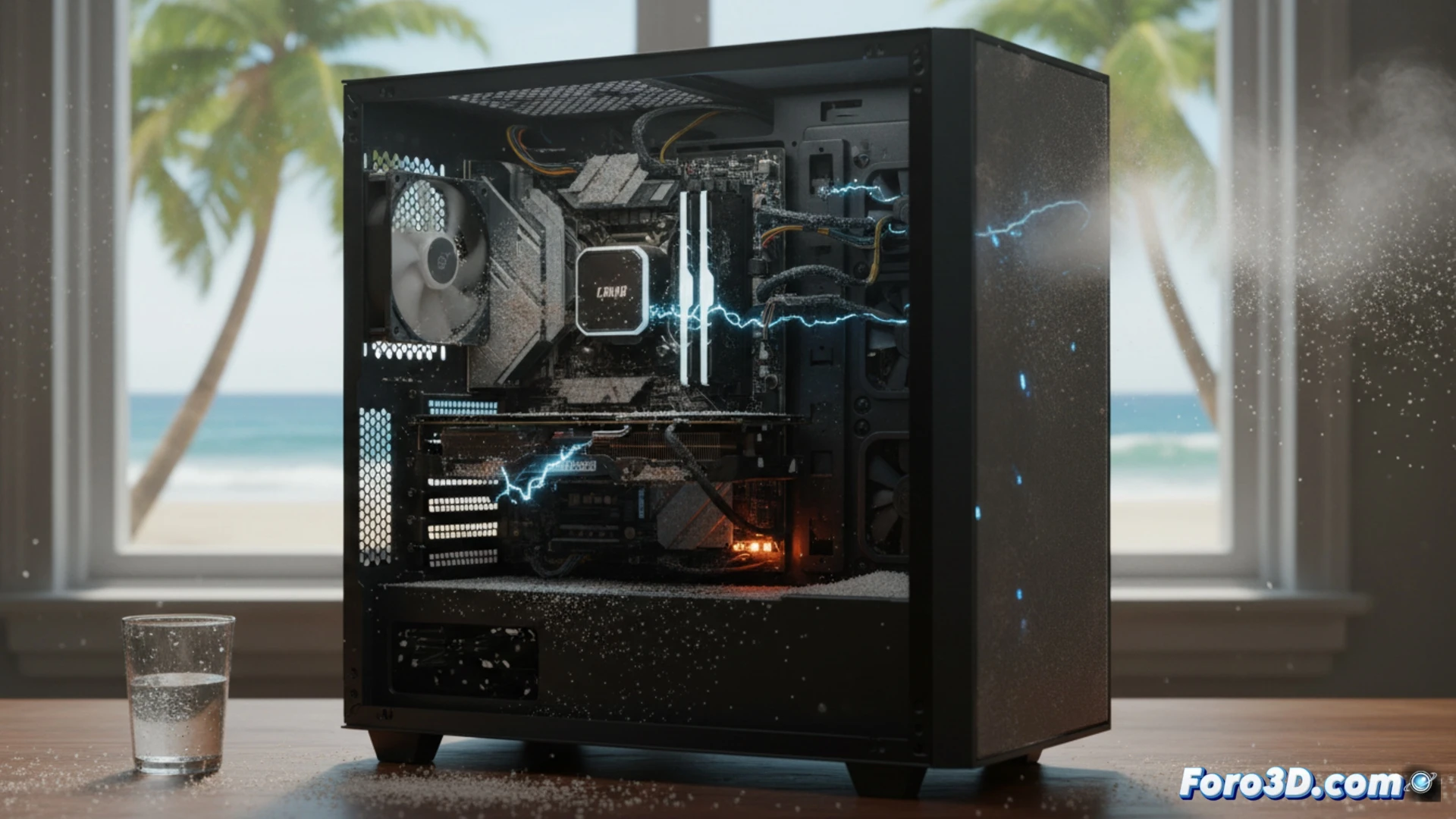
Technical shielding against coastal corrosion 🌊
The key lies in passive and active prevention. First, place the tower away from windows and sea air currents. Use fine mesh filters on the fans, but change them frequently. Ceramic thermal paste is preferable to metallic, as it does not conduct residual electricity. Apply a dielectric insulating spray to exposed connectors and traces. A dehumidifier in the room reduces relative humidity below 50%, the critical threshold for corrosion.
The salt bath you didn't ask for for your GPU 🧂
Your graphics card isn't a french fry, but the beach environment is seasoning it without your permission. If you see the connectors shining brighter than the day you bought them, it's not magic: it's crystallized salt. Soon you'll have a motherboard with a taste of the sea, ready to fry with the next voltage spike. The cheap solution is to put a dry sock over the air intake, but don't tell anyone I suggested it.