WiFi light bulbs, thermostats, and security cameras have turned our homes into internet branches. But there's an uncomfortable detail: these devices are small computers designed to be cheap, not secure. Their main function is to save you steps, regardless of leaving the door open to anyone with a laptop and free time.
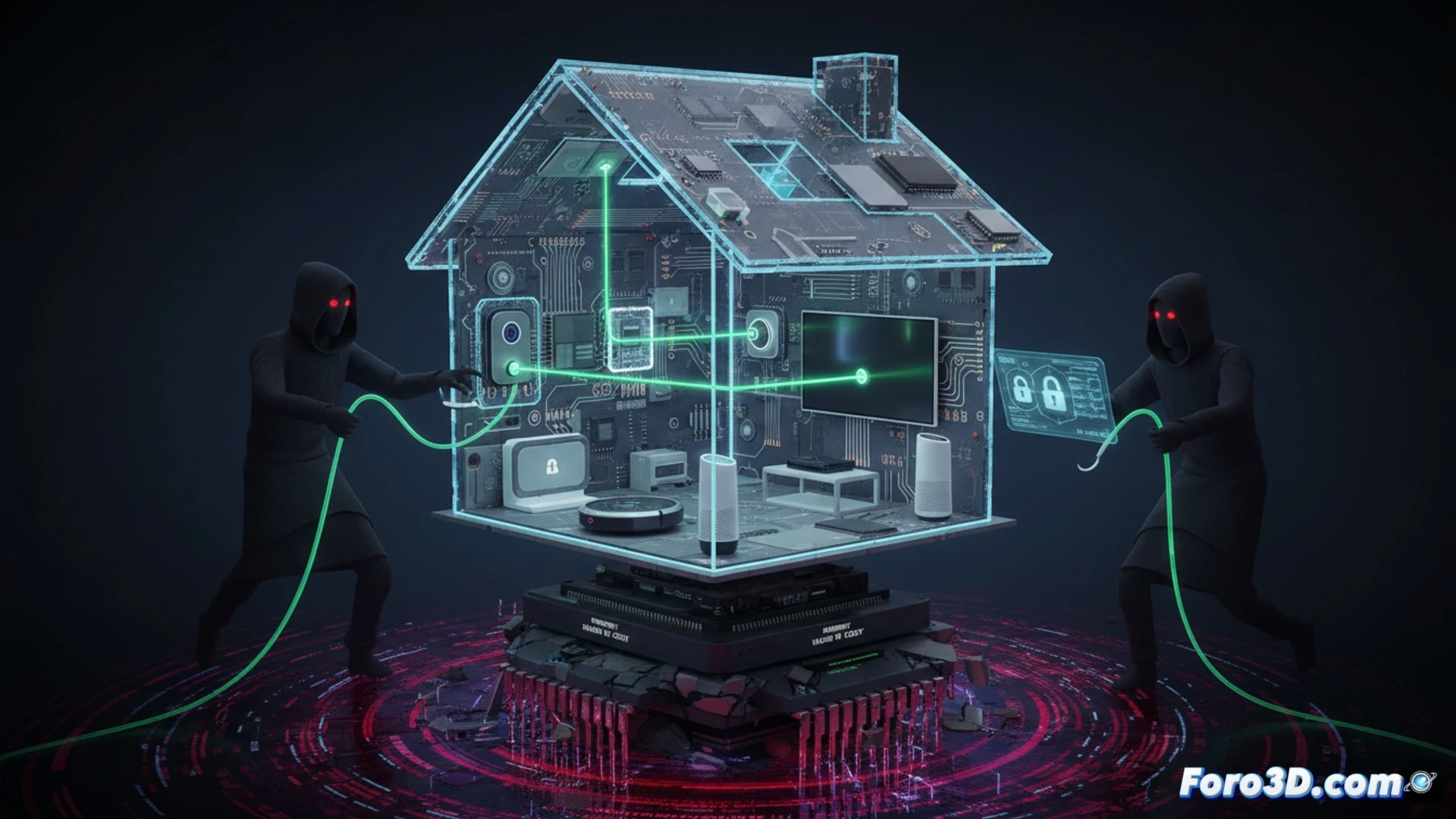
The Fragile Architecture of Home IoT 🔓
Many manufacturers prioritize cost over protection. Devices often run old versions of Linux, lack solid encryption, and use generic passwords like admin/1234. Once connected to your network, they act as an open portal. An attacker doesn't need to be a genius; just scan open ports to take control of your camera or use your light bulb as an entry point to the router.
The Light Bulb That Betrayed Your Routine 💡
Imagine a hacker turning your living room lamp on and off at 3 AM. It's not black magic; it's unupdated firmware. Meanwhile, your thermostat could be silently mining cryptocurrency. The worst part is, when you call technical support, they'll tell you to turn the device off and on again. As if that would fix a stranger controlling your coffee maker from the other side of the world.