The recent summit between Donald Trump and Xi Jinping evoked the spirit of the historic handshake between Nixon and Zhou Enlai in 1972. However, the setting changed: the diplomatic dinner replaced the traditional Huaiyang menu with BBQ ribs to suit the American president's taste. The meeting, laden with symbolism, unfolded under a cloak of extreme security and unprecedented digital control for the Washington delegation.
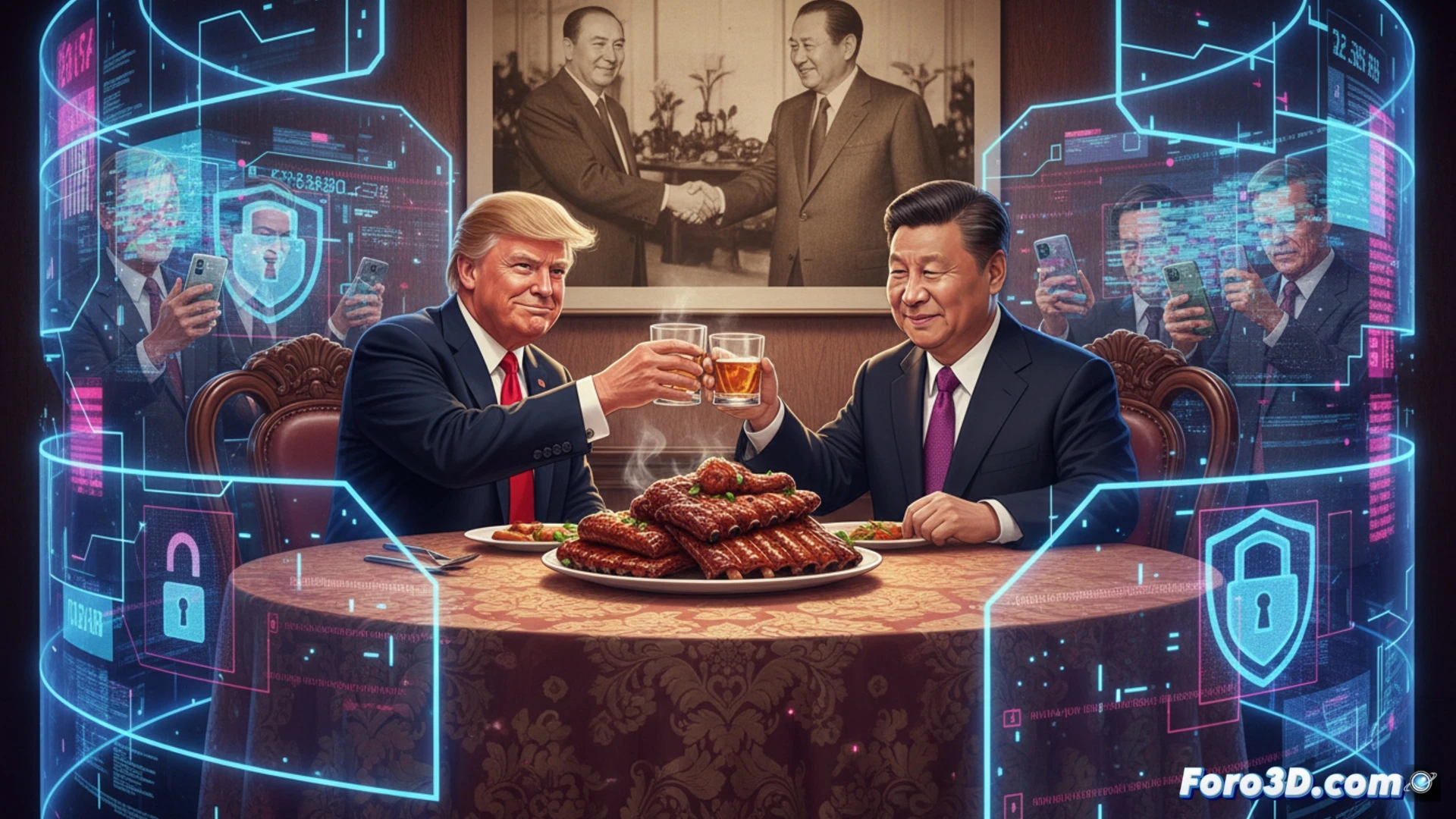
Firewall 2.0: connectivity as a diplomatic tool 🔒
The U.S. delegation experienced limited connectivity during their stay in Beijing. Sources close to the matter indicate that advisors' phones operated on restricted local networks, preventing access to services like Google, WhatsApp, or X. This measure, common for visitors in China, was intensified for the presidential entourage. While Trump dined, his technical team debated how to send reports without violating the host's rules. Technology, in this case, became an instrument of silent pressure.
From Zhou Enlai to the Trump menu: the evolution of protocol 🍖
They say diplomacy is forged at the table. In 1972, Zhou Enlai toasted with maotai; in 2025, Trump savored ribs bathed in barbecue sauce. The menu change is not trivial: if before the aim was to impress with high Chinese cuisine, now negotiations take place over a dish that doesn't require chopsticks. At least, the delegation spared themselves the debate over whether to use the cloth napkin or not.