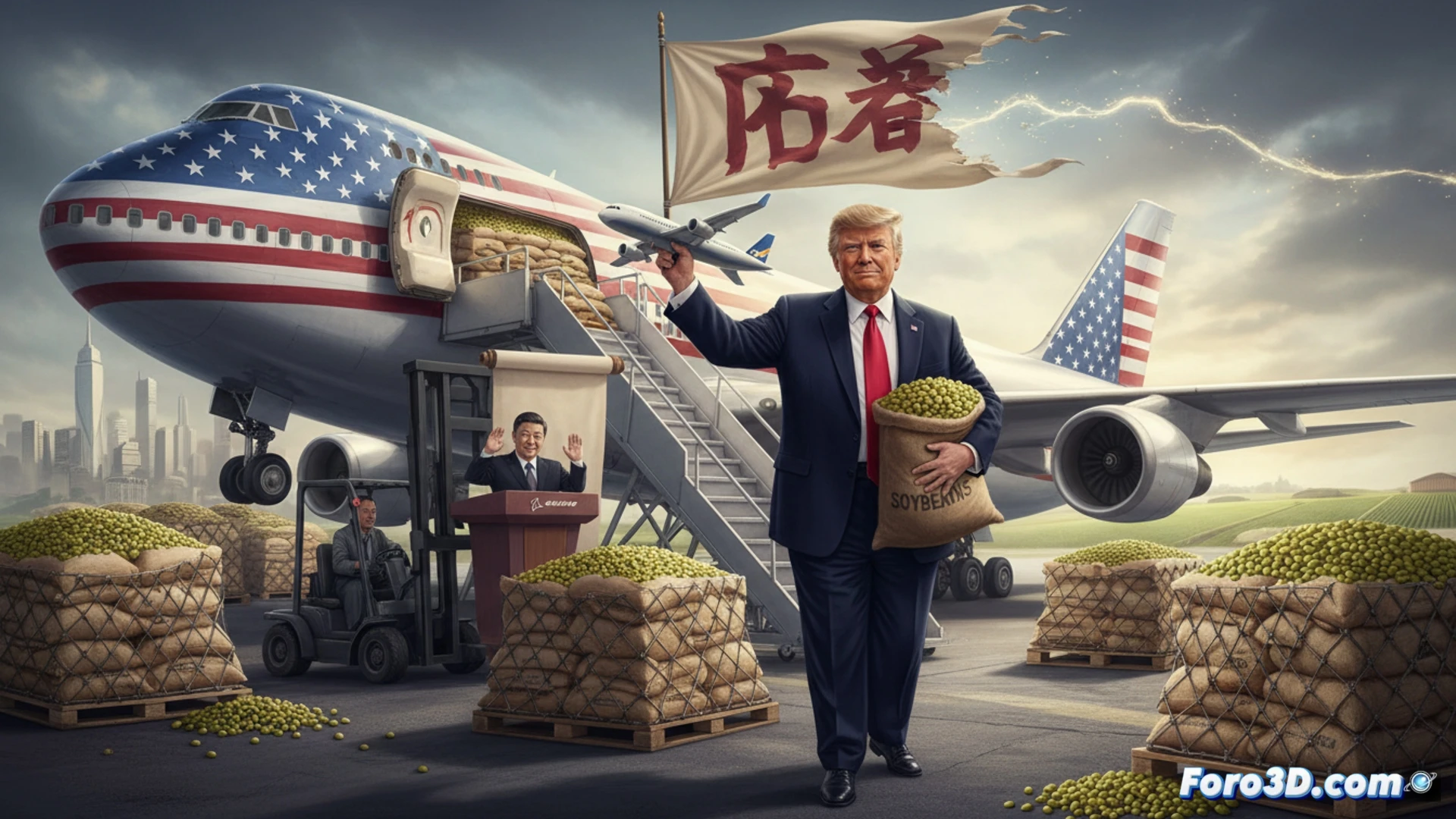
President Donald Trump returned to the United States after a two-day visit to China, where the Chinese government announced commitments to purchase soybeans and Boeing aircraft. With no formal agreements on the table, both leaders reinforced a previous truce amid trade tensions. The meeting with Xi Jinping served to address international issues, although concrete details remained up in the air.
The role of technology in bilateral trade diplomacy 🤖
Beyond soybeans and Boeing, technology remains a field of silent dispute. China seeks to reduce its dependence on American chips and software, while the U.S. maintains restrictions on the export of advanced semiconductors. The truce does not halt the parallel development of Chinese alternatives in artificial intelligence and 5G, areas where both nations compete relentlessly. The future of the global supply chain hangs by a thread.
Soybeans and aircraft: Trump's shopping basket in Beijing 🛒
Trump came to China, saw, and… bought. Or at least he tried. Soybeans to feed pigs and aircraft to fly, a combination that sounds more like a grocery list than a diplomatic summit. The problem is that without signed contracts, Chinese promises resemble January diets: they sound nice but no one knows if they will be kept. At least the trade truce provides a breather so markets don't collapse while they decide who pays the bill.