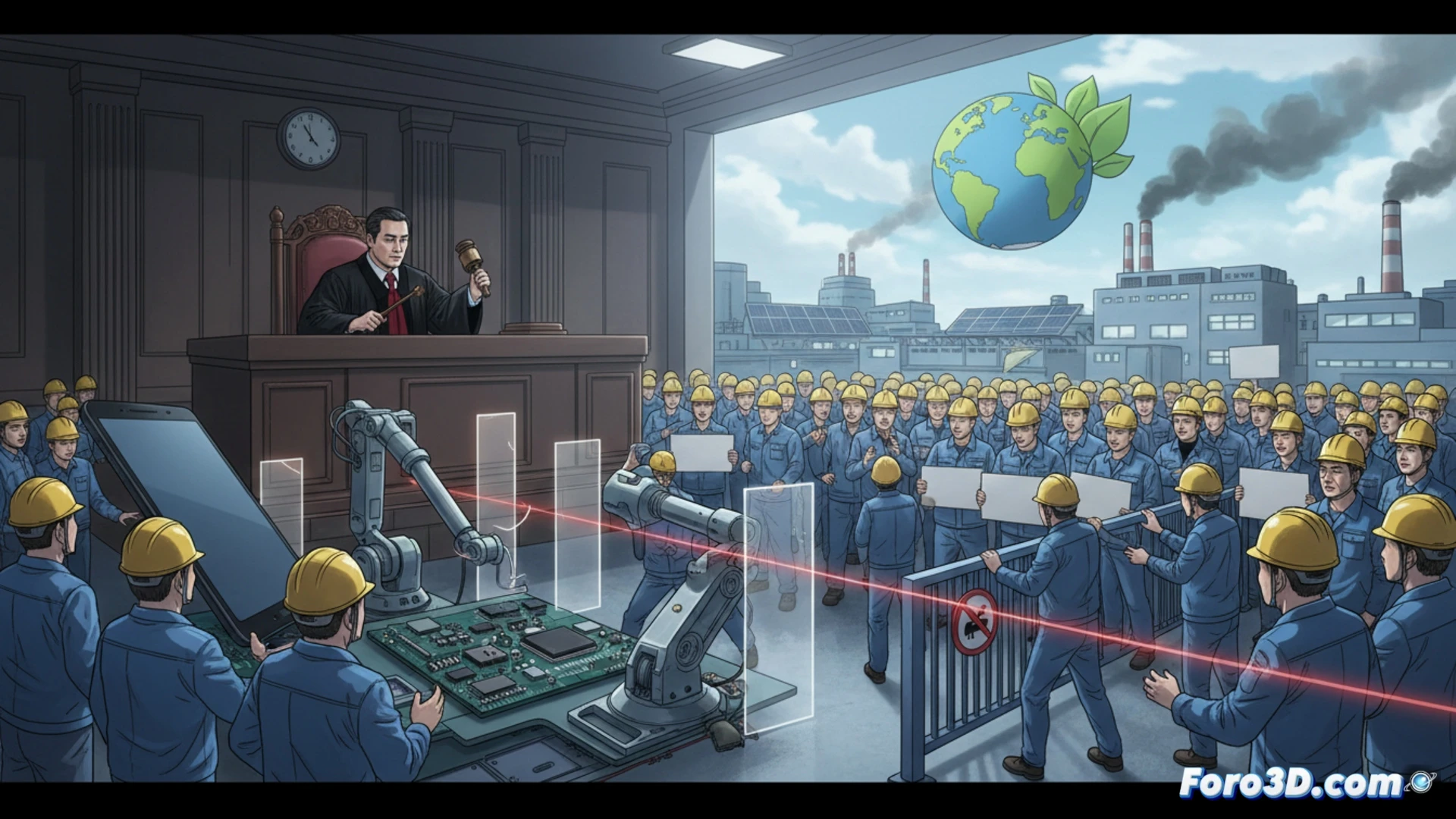
A South Korean court has intervened in Samsung Electronics' labor dispute, banning a massive strike of up to 50,000 employees scheduled for this Thursday. The decision does not cancel the strike but imposes strict restrictions: workers cannot damage equipment, block access, or leave machinery unattended, under the argument of preventing significant harm to the company and the environment.
Samsung reinforces protocols amid partial production stoppage ⚙️
The company has activated contingency plans in its semiconductor and display manufacturing lines, where automation allows critical processes to be maintained with remote supervision. However, the absence of personnel in maintenance tasks could affect the calibration of lithography equipment and diffusion furnaces. Samsung is evaluating rotating non-union staff to cover key positions, while the union criticizes that the judicial restrictions empty the right to protest of its content.
Strike yes, but orderly and without touching the chips 🚧
Korean justice has made it clear that workers can protest, as long as they don't touch anything, don't bother anyone, and, of course, don't stop doing their jobs. It's like organizing a party where you can dance, but without music, without guests, and without moving from your spot. Samsung breathes a sigh of relief: its machines will keep running, even if employees have to chant their demands in a low voice so as not to alter the decibel levels of the cleanroom.