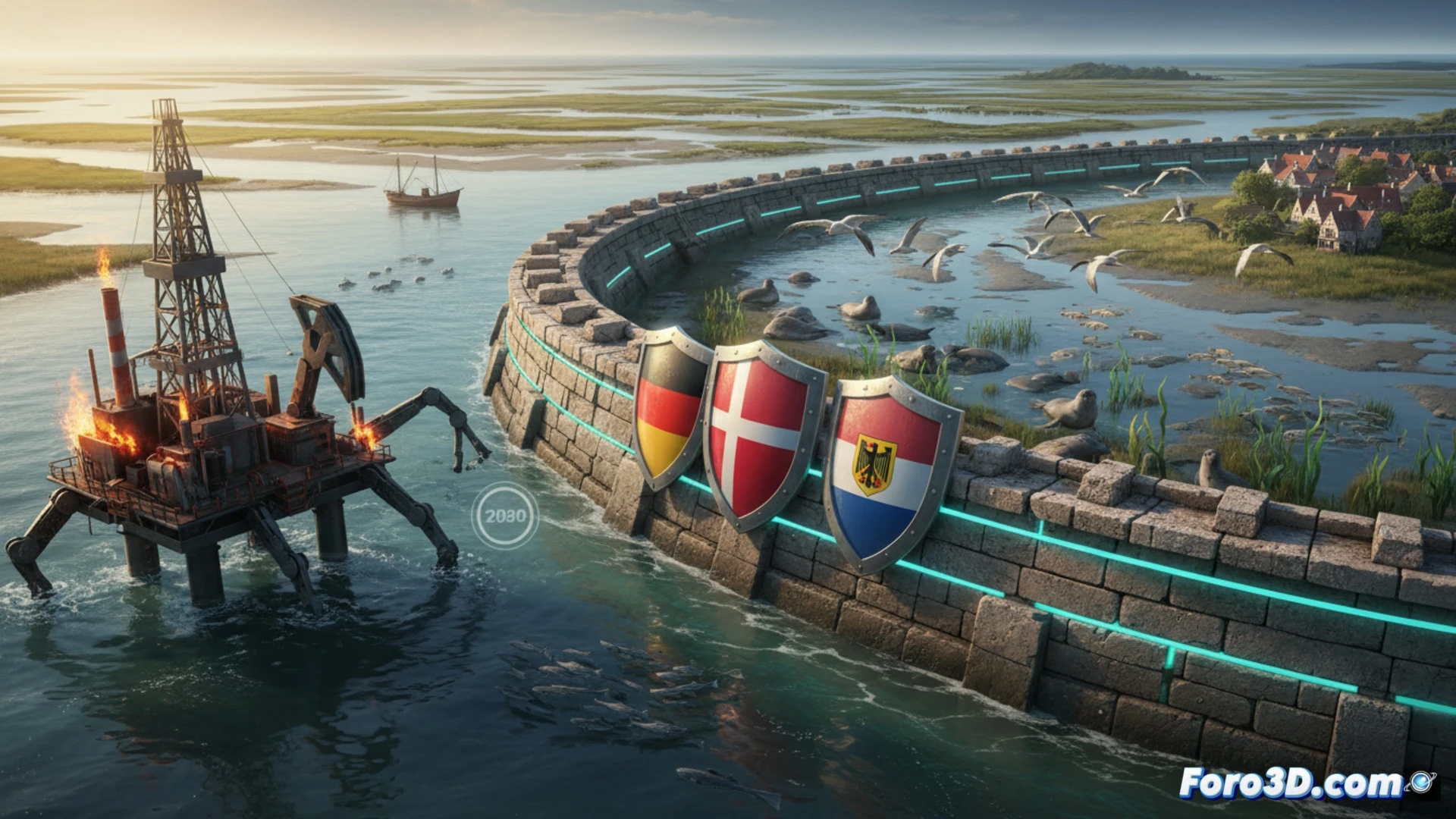
Germany, Denmark, and the Netherlands have signed an agreement in Esbjerg to strengthen the protection of the Wadden Sea, a UNESCO World Heritage natural area. The pact aims to preserve its biodiversity and natural dynamics, which are key for local tourism and fishing. International cooperation seeks to ensure a sustainable future for this ecosystem, although WWF demands stopping gas and oil extraction in the area by 2030.
Technology and monitoring for ecosystem conservation 🌊
The governments will implement advanced satellite monitoring systems and underwater sensors to measure changes in sedimentation and water quality. They plan to use drones and smart buoys that record data on migratory birds and fish schools in real time. These tools will allow adjusting navigation routes and limiting industrial fishing in sensitive areas. The digital management of the area aims to balance human activity with the sea's natural dynamics, without resorting to magical solutions.
Gas and oil: the elephant in the Wadden room 🛢️
While ministers smile for photos in Esbjerg, oil companies are fine-tuning their extraction schedules. WWF calls for shutting off the taps by 2030, but no one mentions that some contracts expire in 2045. It seems protecting world heritage is easy, as long as we don't touch shareholders' pockets. In the end, the Wadden Sea will remain a natural paradise... as long as gas prices don't rise.