A recent study from the Baylor Uterus Transplant Center in Dallas, the largest to date, analyzes 44 procedures performed between 2016 and 2026. Of the 44 women, 27 successfully gave birth. This advancement, which offers an option for women with absolute uterine factor infertility (one in 500), would not be possible without precise surgical planning. This is where 3D technology, from anatomical modeling to printing replicas, becomes an indispensable ally.
Vascular modeling and pre-surgical planning with 3D printing 🏥
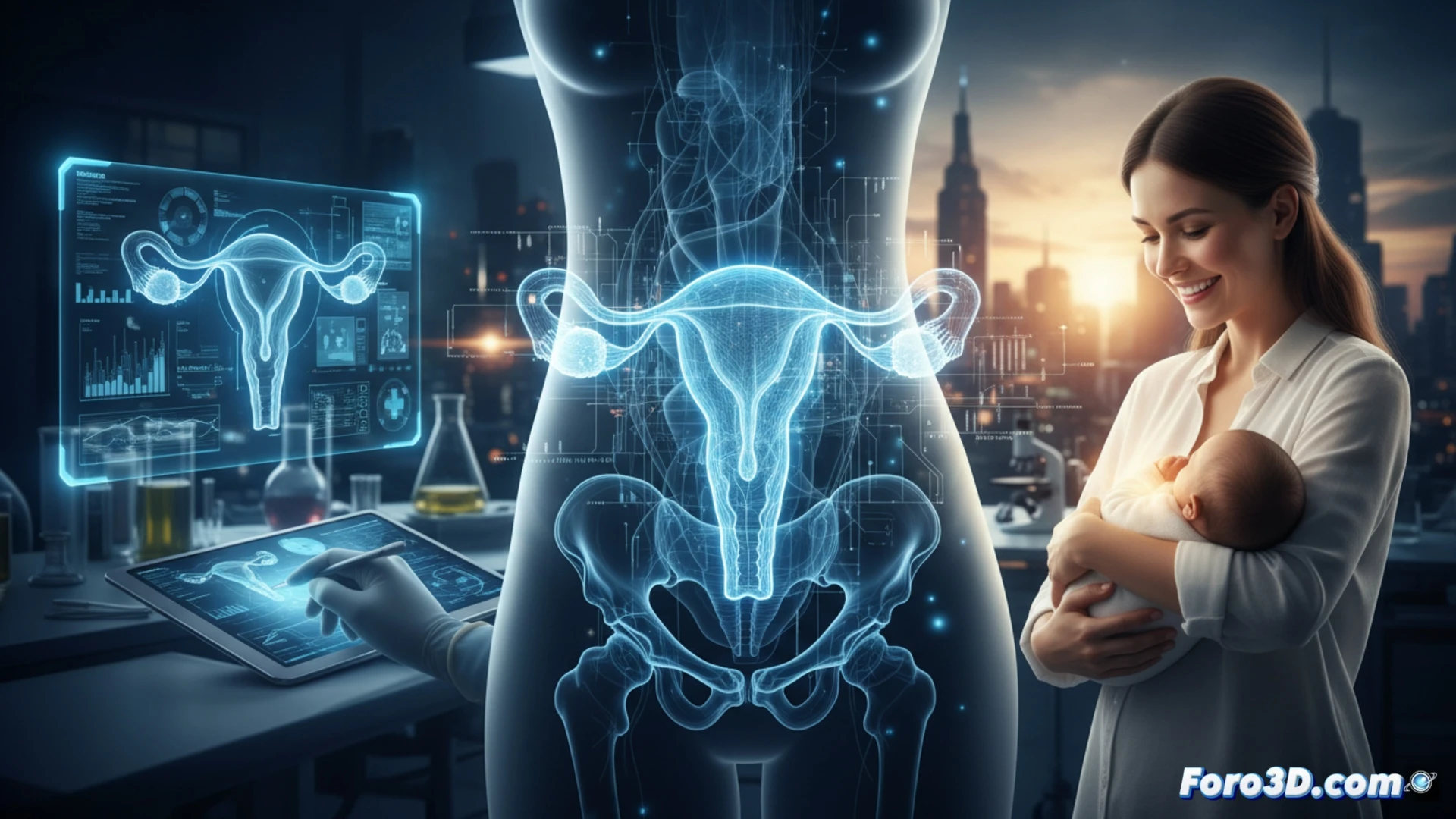
The key to success in these transplants lies in the vascular connection. The donated uterus must receive adequate blood flow through anastomosis of small-caliber arteries and veins. To achieve this, the Baylor team uses high-resolution MRIs to generate digital 3D models of the recipient's pelvis and the donated uterus. These models allow visualization of the exact vascular anatomy, identification of anatomical variants, and planning of surgical cuts. Additionally, physical replicas of the uterus and blood vessels are printed, allowing surgeons to simulate the procedure and practice the connections before the actual surgery, reducing ischemia time and complications.
Beyond surgery: precision that saves lives 🩺
The study reports that 37 of the 44 women had a functional uterus one month after transplant, and 31 achieved pregnancies. Although eight patients experienced complications such as gestational diabetes, the newborns had healthy Apgar scores. 3D technology not only facilitates safer surgery but also allows for better selection of donors and recipients. By visualizing anatomical compatibility before the operation, the risks of thrombosis or graft failure are minimized. This approach demonstrates that 3D biomedicine is not a luxury but a fundamental tool for complex procedures where every millimeter counts.
Would you use this digital twin for surgical planning?