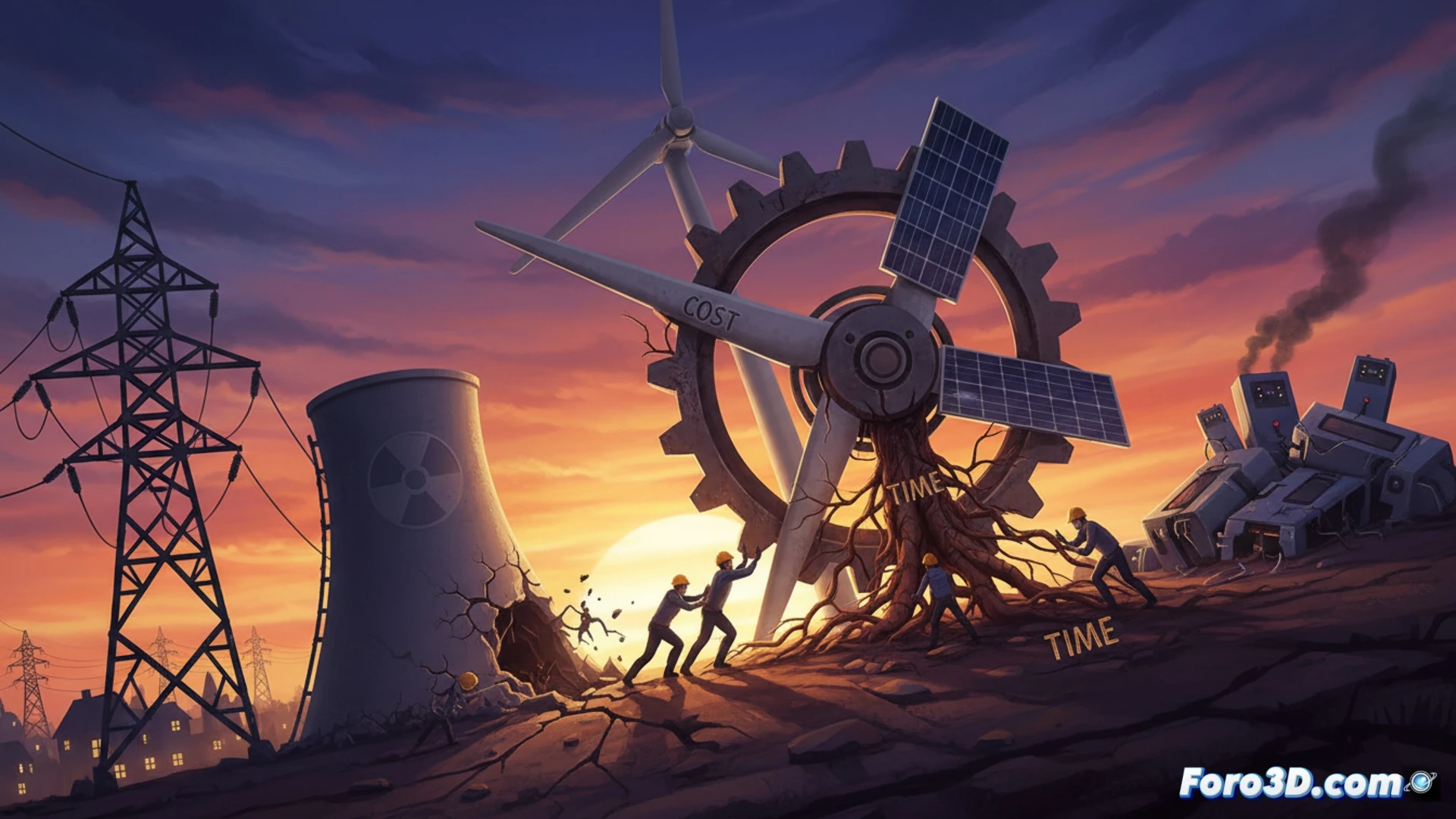
The scheduled closure of nuclear power plants in several countries has triggered a slower and more expensive energy transition than anticipated. Dependence on intermittent renewables, such as solar and wind, has failed to cover the stable base demand that nuclear fission once provided. The result is a more expensive and less reliable energy mix, according to grid operator data.
Storage and the grid are not keeping pace ⚡
Large-scale battery technology and transmission infrastructure have not matured at the necessary pace to replace nuclear baseload generation. The charge and discharge cycles of current batteries have limitations in duration and cost per kilowatt-hour. Additionally, building new high-voltage lines to connect remote wind and solar farms faces bureaucratic and permitting delays, further increasing the cost of the process.
The electricity bill laughs at green plans 💸
While politicians discuss ambitious timelines, the average consumer watches their electricity bill skyrocket. It seems the strategy was simple: shut down reliable and cheap nuclear plants to replace them with windmills that only work when the wind blows and solar panels that take the weekend off. In the end, the only thing that has made a rapid transition is the price of electricity—upwards.