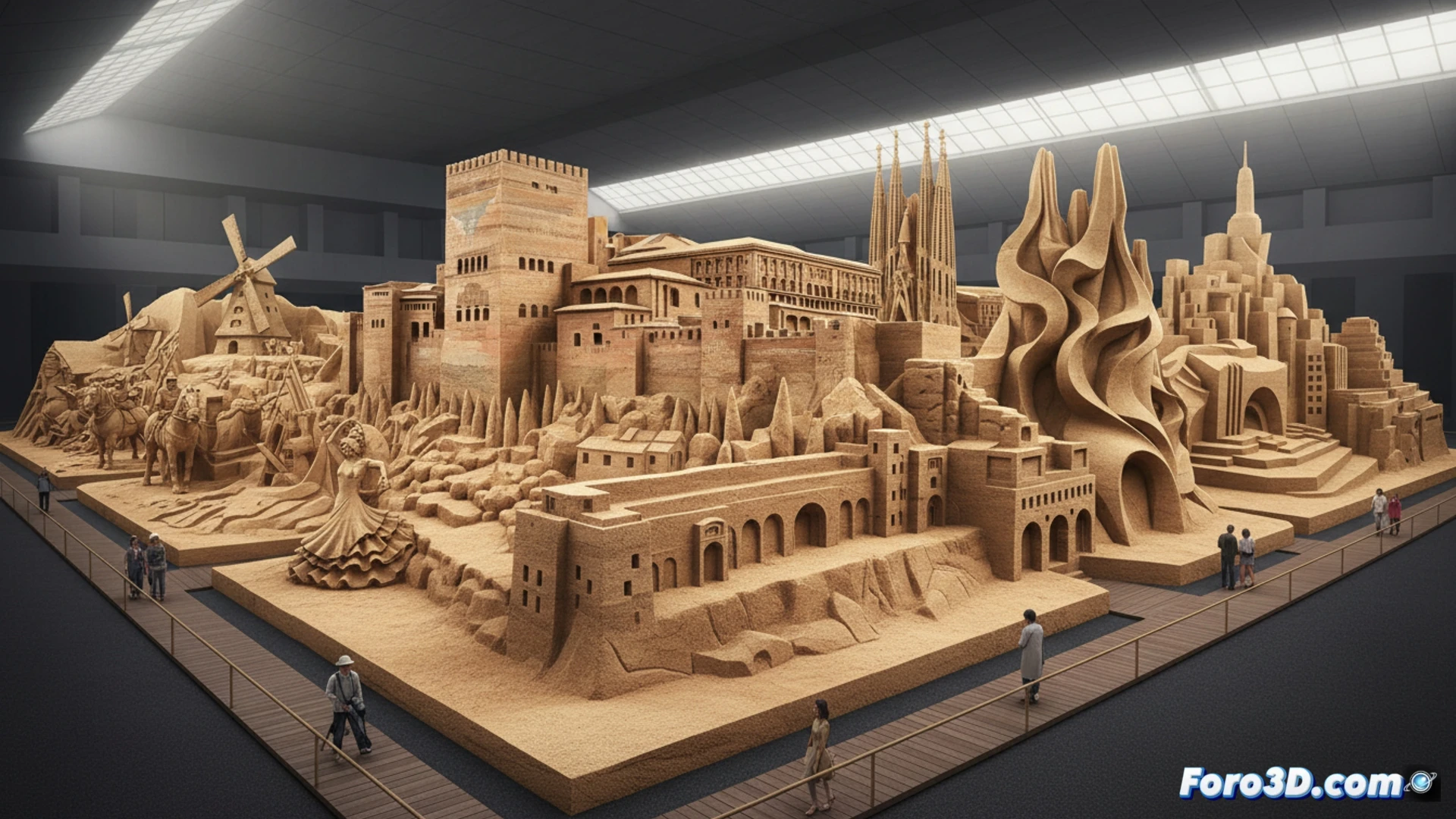
The Tottori Sand Museum presents an exhibition that covers different periods of Spanish culture, from the Alhambra to the modern era. Each sculpture is made with compacted sand and water, achieving detailed realism. The exhibition reinforces the museum's goal of representing world civilizations, attracting international visitors interested in ephemeral art.
Compaction and stabilization technique for sandy structures 🏗️
The artists use a layer-by-layer compaction technique with water and manual pressure, forming solid blocks on wooden structures. For fine details, they use precision tools such as spatulas and brushes. Temporary stabilization is achieved with a mixture of sand and organic glue, which withstands wind and light rain. Each piece requires between two and four weeks of work, depending on its complexity.
When Spanish sand travels to Japan without moving 🤧
The exhibition demonstrates that to travel to Spain you no longer need a plane or a visa: a bucket of sand and a pair of skilled hands are enough. Of course, if someone sneezes near the Sagrada Familia made of sand, they can erase centuries of history in a second. The Japanese visitors, polite and discreet, keep a safe distance. No one wants to be the one to turn the Sand Museum into a pile of wet dirt.