If you grew up watching OVAs from the 80s and 90s, you know Toshiki Hirano without realizing it. This director and animator defined an era with his unique visual style: characters with fine, elegant features twisting within grotesque worlds. From the vampire Miyu to the warriors of Iczer-1, his work explores physical transformation and personal sacrifice with a rawness few dared to show.
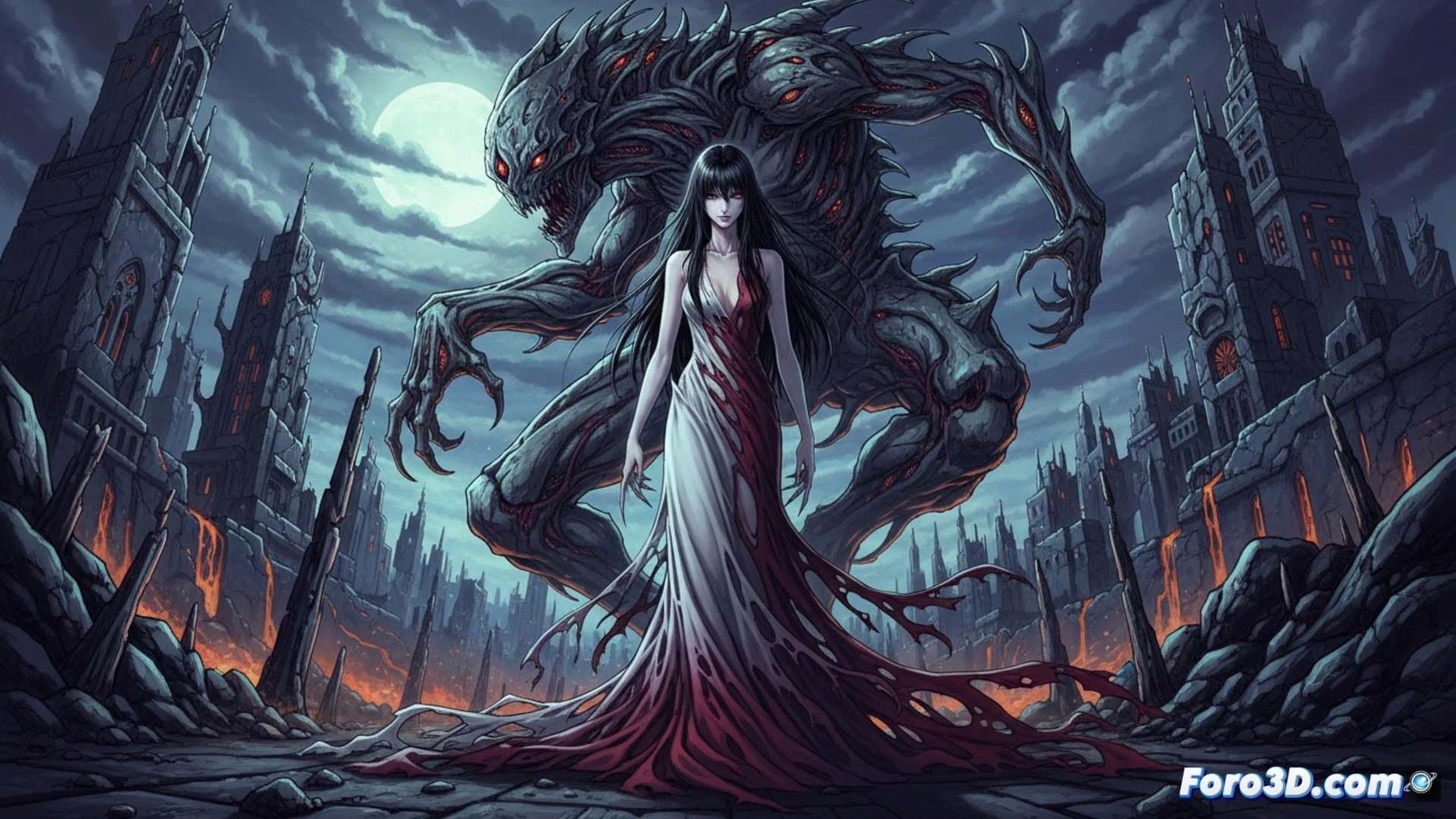
Limited animation as a signature style: the craft behind the visual chaos 🎬
Hirano knew how to make the most of tight OVA budgets. His limited animation technique was not a flaw, but a conscious choice: fixed frames with precise movements at key moments. In Iczer-1, for example, transitions between human and biomechanical forms are achieved with fades and quick cuts that avoid drawing every intermediate frame. In Vampire Princess Miyu, dark backgrounds and the use of flat shadows reduce costs while creating an oppressive atmosphere. This approach, similar to that of Madhouse studio in its early days, prioritizes visual narrative over realistic movement.
When body horror becomes your retirement plan 💀
If Hirano learned one thing in the 80s, it's that Japanese audiences love watching someone turn into a tentacle monster. That's why he repeated the formula in Iczer-1, Iczer-2, and even in some magical girl OVA that no one remembers. The trick was simple: a pretty heroine, an elegant design, and when you least expect it, boom, grotesque transformation. It worked so well that he even slipped his dark touch into Magic Knight Rayearth, though there the producers asked him to tone it down a bit. The man knew horror sells, and it sells even better if the victims have pretty faces.