Toshiaki Komura, a veteran of Toei Animation, has dedicated his career to capturing the physical essence and spirit of overcoming challenges in manga such as Kinnikuman Nisei and Digimon Frontier. His style is distinguished by marked action lines and exaggerated movements that convey the energy of sports combat, turning every scene into a visual torrent.
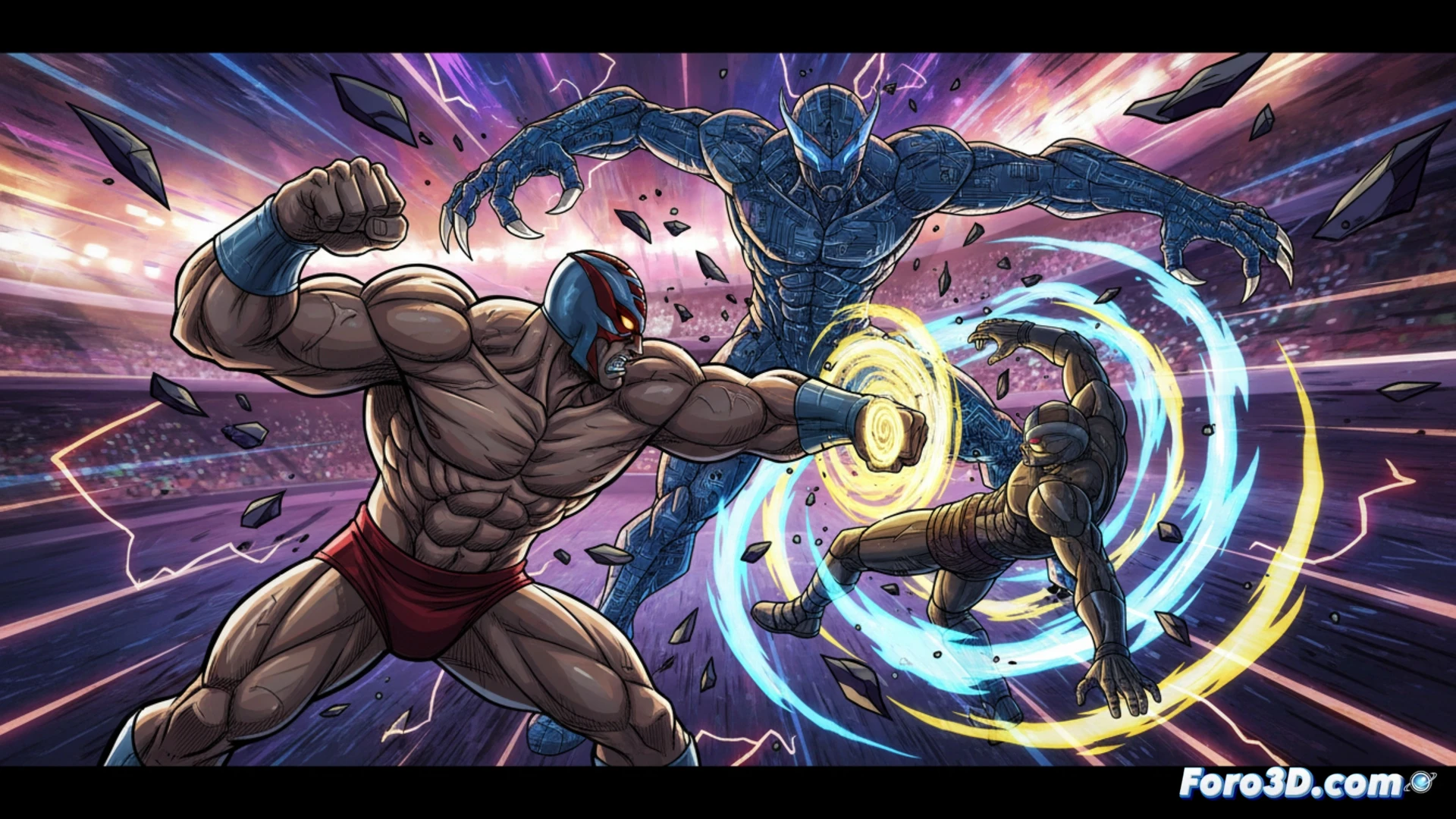
The art of animating muscles: action lines and keyframes 💪
Komura prioritizes clarity of movement over realism. His technique relies on intensive use of diagonal action lines that guide the viewer's gaze during punches and jumps. In Ultimate Muscle, keyframes are spaced out to create a sense of impact, while in-between frames are compressed, achieving an illusion of speed. This method, inherited from the limited animation of the 80s, allows maintaining a frenetic pace without sacrificing the legibility of the fight. The result is a visual choreography that prioritizes the emotion of the moment over anatomical fluidity.
When animating Kinnikuman leaves your arms like spaghetti 🥊
Imagine spending eight hours drawing a fighter with pectorals the size of a car and legs that look like Roman columns. Toshiaki Komura did it for years, and he probably now has a wrist that squeaks every time it rains. But hey, if you don't exaggerate the muscles until they look like inflated sausages, how are you going to sell action figures? In the end, his technique is simple: if the character doesn't break the floor when falling, you haven't put enough passion (nor overtime) into the storyboard.