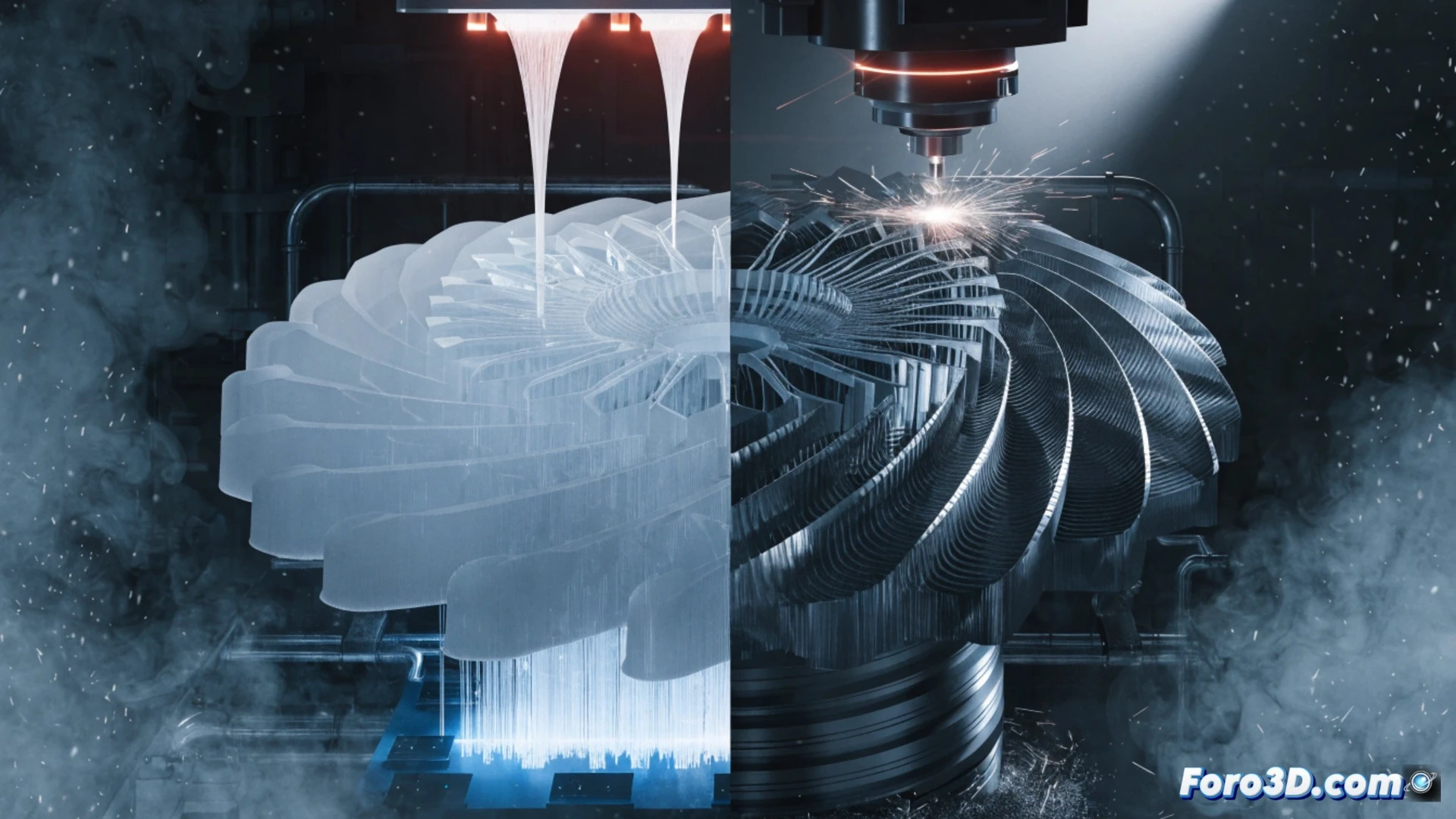
3D technology has arrived at the lathe workshop to change the way of working. With 3D modeling and printing, it is possible to create prototypes of parts before machining them in metal, saving material and time. For example, a lathe operator can design a complex gear on the computer, print it in plastic to verify fits, and then program the CNC lathe to manufacture the final version in steel.
Programs and workflow for the modern lathe operator 🔧
The process begins with CAD software like Fusion 360 or SolidWorks to model the part. Then, a slicer such as Cura or PrusaSlicer is used for 3D printing the prototype. Once validated, the design is exported to a CAM like Mastercam or Fusion 360 CAM, which generates the G-code for the CNC lathe. Tools like Blender are used for organic geometries. This workflow reduces errors and allows testing complex shapes without wasting metal or breaking tools.
The day the lathe operator printed his own dinner 🍝
Sure, now the lathe operator not only makes metal parts but also 3D prints the phone holder while eating. The problem is when the 3D printer jams and the lathe waits, and the lathe operator ends up with a deformed holder and an unfinished part. But hey, at least the melted plastic smells better than cutting oil. 3D technology doesn't replace the trade; it just adds more things that can go wrong.