Tomomi Mochizuki is a director who has moved through almost every anime studio, from Ghibli's Ocean Waves to the youthful energy of Kimagure Orange Road. His cinema is defined by a calm naturalism, where conflicts don't explode but instead seep into the routine. Mochizuki doesn't seek epicness, but rather to capture the texture of daily life and the honesty of adolescent feelings.
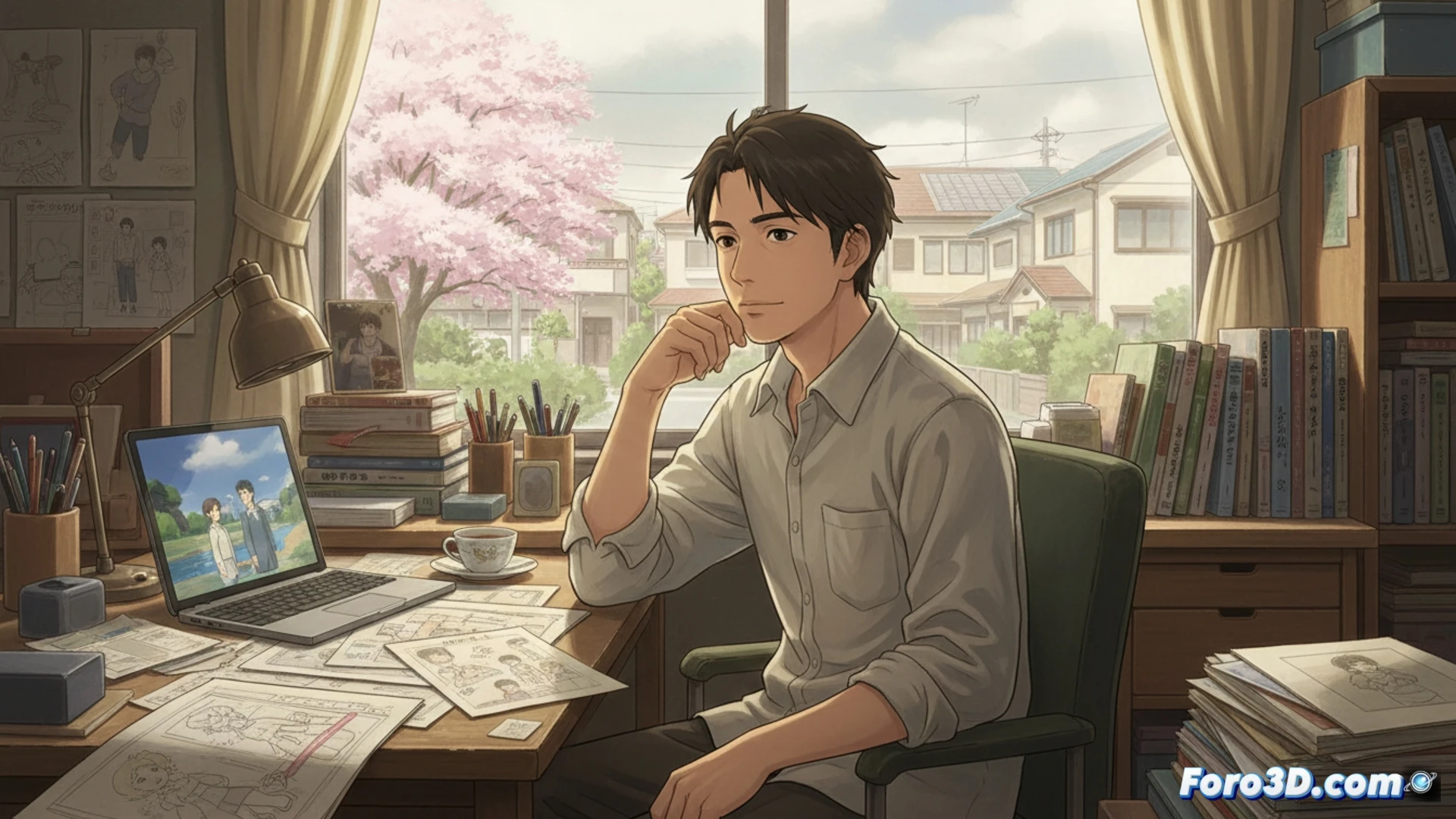
Animation as an invisible camera: Mochizuki's technical approach 🎬
Mochizuki applies a subtle direction of actors that prioritizes the breathing between dialogues. In Ocean Waves, the use of long shots and silences creates a sense of real time, avoiding the fast-paced editing typical of shōnen. His work on Kimagure Orange Road demonstrates mastery of the transition between the comedic and the melancholic, using detailed backgrounds that anchor emotion to a specific space. Every redundant gesture of a character is a narrative choice.
House of Five Leaves: when the samurai gets bored of the drama 🗡️
In House of Five Leaves, Mochizuki presents us with a samurai so inept that the real suspense is whether he'll manage to pay the rent. The rōnin no longer cut off heads, but rather discuss budgets for kidnappings. The series turns the epic of feudal Japan into an office drama with katanas. In the end, the biggest conflict isn't a duel, but deciding if the group's boss deserves a raise. Pure Mochizuki: the epic lies in the tedium.