Tomoki Kyoda, chief director of Eureka Seven, defends traditional animation in the mecha genre against the advance of CGI. His vision combines coming-of-age dramas with battles featuring organic and detailed robots, creating an epic that prioritizes hand-drawn movement over digital textures. With works like RahXephon, Kyoda has positioned himself as a benchmark for animated craftsmanship in the industry.
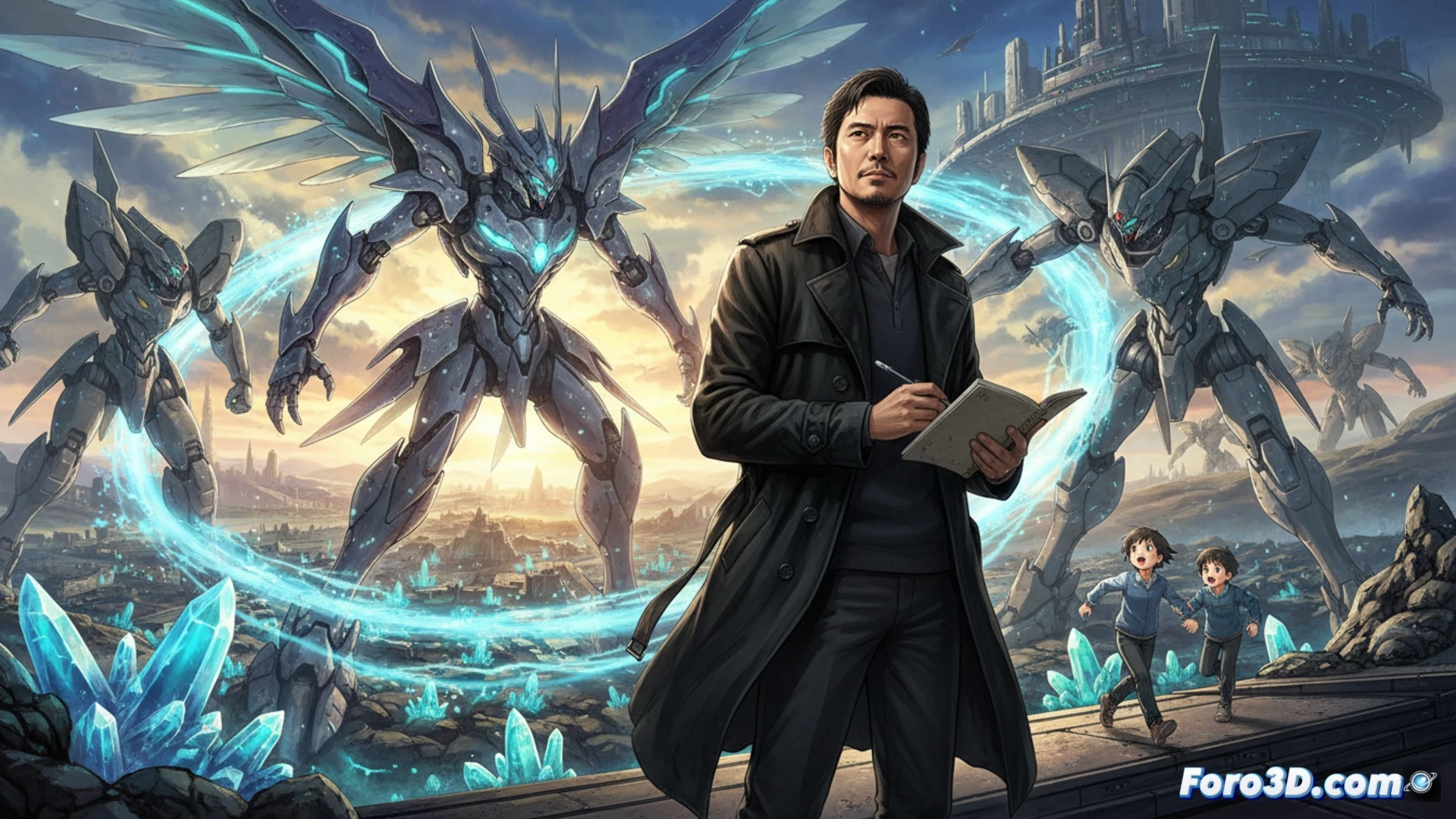
The artisanal resistance: why hand-drawn strokes still dominate in mecha ✍️
Kyoda argues that traditional animation offers a dynamism and expressiveness that CGI fails to replicate in combat sequences. In Eureka Seven, the mechanical designs of the LFO (Light Finding Operation) prioritize organic lines and fluid movements, avoiding the rigidity of 3D models. The director contends that frame-by-frame animation allows for more complex choreography and a more coherent visual integration with the environment, something that CGI tends to simplify in pursuit of technical realism.
When the pencil is faster than the render (and cheaper, they say) 😅
Kyoda must be watching current mecha series with CGI and thinking: where did the 24 hours of work per second of animation go?. While some studios save time with generic 3D models, he insists that a hand-drawn robot better conveys the pilot's sweat. Or that, or maybe the pencil turned out cheaper than buying a Maya license.