In the world of anime, few directors dare to explore the spiritual without falling into sermonizing. Tomokazu Tokoro, responsible for works like Haibane Renmei and Hellsing Ultimate, uses silence and the environment to question existence. His style is calm, almost contemplative, and his narrative is sustained by religious symbols and ethereal atmospheres that invite reflection rather than action.
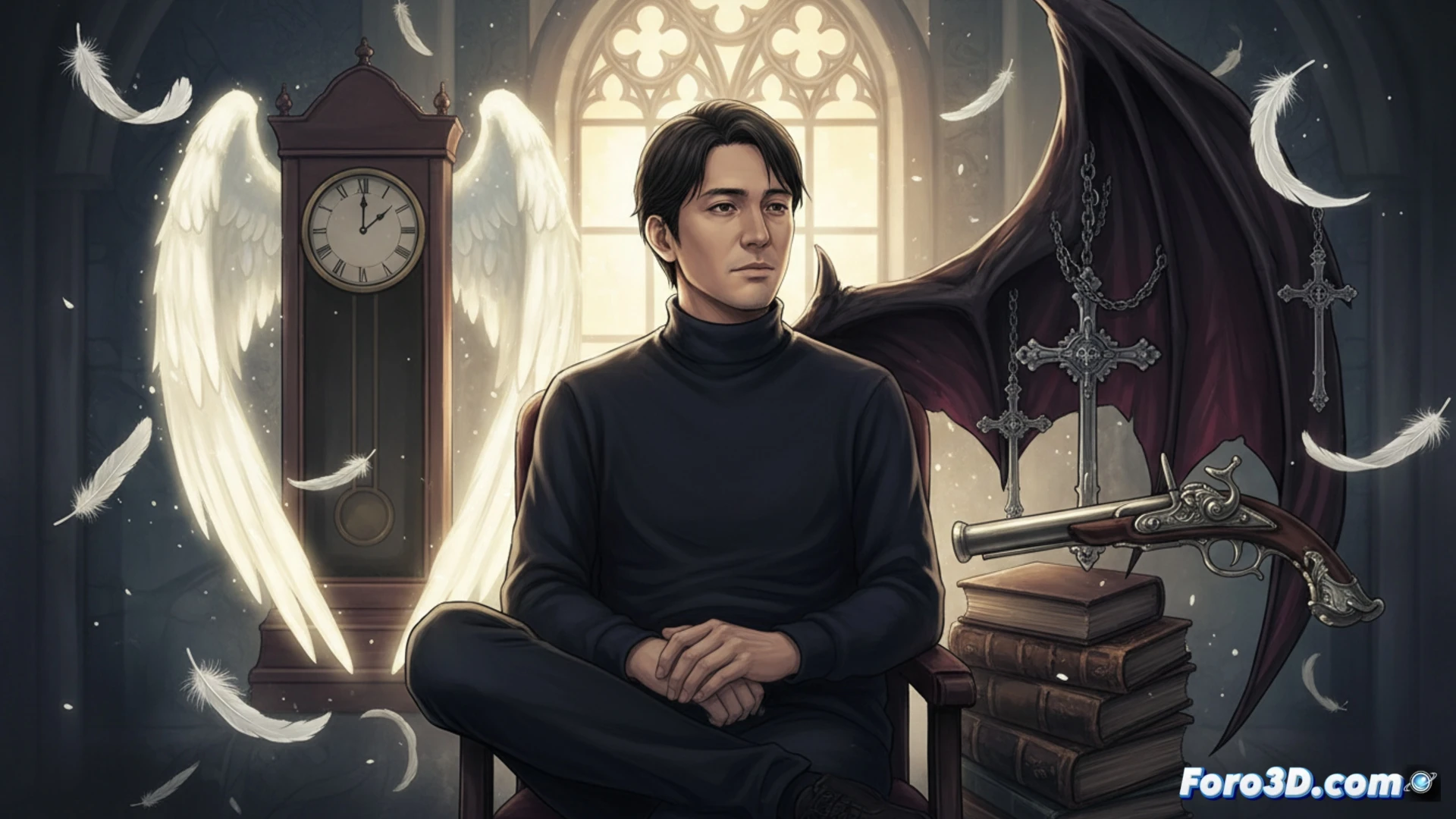
How Tokoro builds atmospheres with pauses and empty spaces 🎐
Tokoro directs with an economy of dialogue that forces the viewer to read between the lines. In Haibane Renmei, the long shots of gray skies and empty streets are not filler: they are the vehicle to convey loneliness and redemption. His use of ambient sound and silence avoids emotional saturation. In Hellsing Ultimate, that same restraint contrasts with the violence, creating a slow pace that enhances the weight of each scene. There are no flashy technical gimmicks; the camera moves slowly, almost as if it were breathing.
The director who makes you meditate while a vampire explodes heads 🩸
Ironically, the same Tokoro who invites you to reflect on original sin in Haibane Renmei is the one who choreographs massacres in Hellsing Ultimate. One expects Alucard, between bites, to stop and contemplate the meaning of life. But no: Tokoro applies his contemplative style to blood, making a decapitation seem almost poetic. It's as if the director says: look, this death also has its own silence. And one, popcorn in hand, nods without quite knowing why.