The Chidorigafuchi National Cemetery in Tokyo was the site of a solemn ceremony to receive the remains of 193 people who died overseas during World War II. The remains were recovered by Japanese government teams in various areas of the Pacific and Asia. The ceremony was attended by Prince Akishino and his wife, as part of the state effort to repatriate and honor its fallen citizens, a process that has been ongoing for decades and faces logistical and diplomatic challenges.
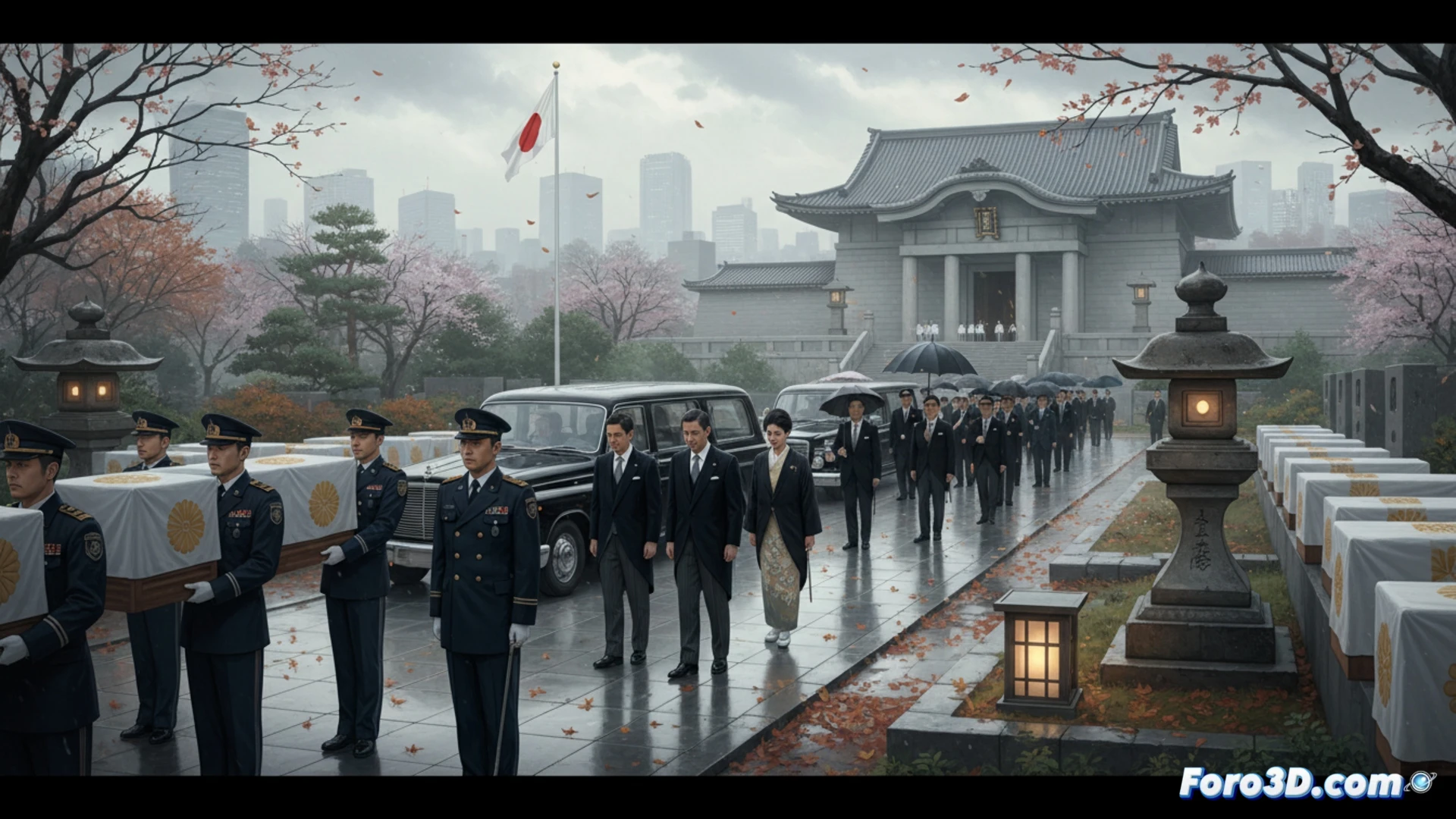
Drones and sensors to locate remains in hostile zones 🛸
The recovery of remains from former battlefields relies on modern technology. Japanese teams use drones with multispectral cameras to detect alterations in the terrain and ground-penetrating sensors that identify metallic objects or cavities at depths of up to three meters. In areas of dense jungle or remote islands, high-precision satellite positioning systems are used to map historical coordinates. These methods reduce search time but do not replace the manual labor of excavation and forensic analysis.
GPS cannot find lost honor 🧭
While drones scan jungles and sensors beep over possible remains, one wonders if technology can also locate the common sense of those who started the war. 80 years later, Japan is still picking up the pieces of a decision that left more than two million dead. At least rescue teams no longer use paper maps and compasses; now they get lost with satellite signals, which is faster for finding bones, but just as slow for finding answers.