For decades, the thymus was considered a vestigial organ in adults, a biological relic that atrophied after childhood. However, a massive study published in Nature has turned this belief on its head. Analyzing computed tomography scans from over 25,000 patients, researchers discovered that the health of this small gland, located behind the breastbone, is a direct indicator of life expectancy and response to cancer treatments.
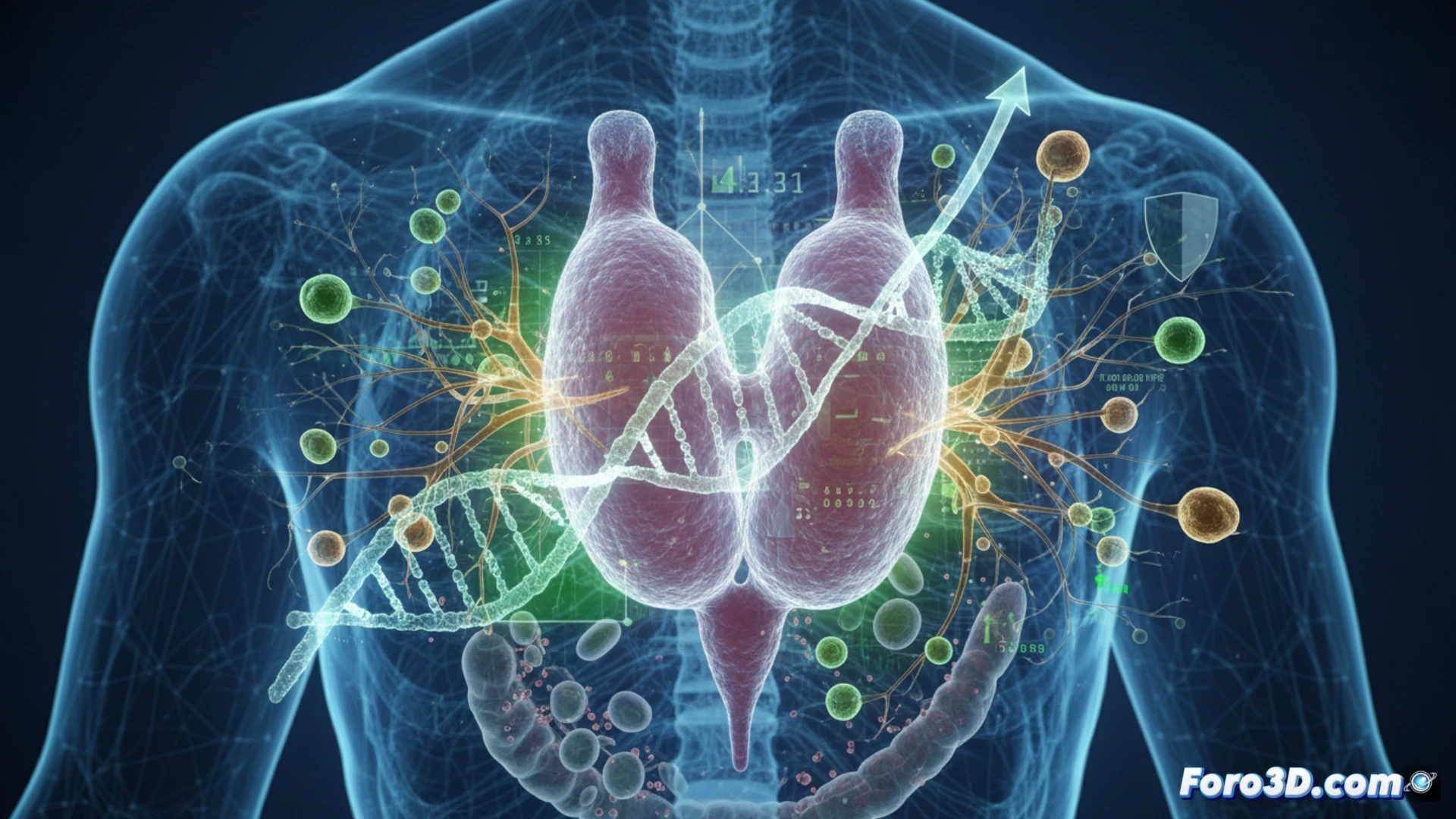
Volumetric reconstruction of the thymus: from obscurity to clinical parameter 🧬
The key to the study lies in the use of chest computed tomography (CT), a technology that allows visualizing and quantifying the thymus in 3D. Researchers segmented the images to calculate the organ's volume and density, creating detailed volumetric maps. A healthy thymus, with high density and preserved volume, correlated with lower overall mortality, especially from cardiovascular diseases. In oncology, the finding is critical: patients with a robust thymus showed a better response to immunotherapy and a lower incidence of lung cancer. This 3D reconstruction allows, for the first time, using the thymus as a predictive biomarker in personalized medicine.
The rebirth of an organ: implications for preventive medicine 🔬
This study not only vindicates the thymus but also opens the door to a new era in prevention. The ability to assess its status through a simple chest CT could be integrated into routine check-ups, offering a window into the patient's immune health. The 3D visualization of an atrophied thymus versus a functional one will become a key educational and diagnostic tool. In the near future, the health of this forgotten gland could be as relevant as blood pressure or cholesterol in risk assessment.
Since thymus atrophy directly correlates with immune aging, what biomaterials or 3D bioprinting strategies are being explored to regenerate its structure and function in adults, and how would this impact longevity prediction?
(PS: If you 3D print a heart, make sure it beats... or at least doesn't cause copyright issues.)