Additive manufacturing with earth promises sustainable construction, but faces issues with flow and strength. Researchers from Colorado and Columbia have published a method in Nature Communications that uses biopolymers to optimize 3D printing of these materials. The approach, inspired by nature, aims to solve common failures in printing with clay and sand.
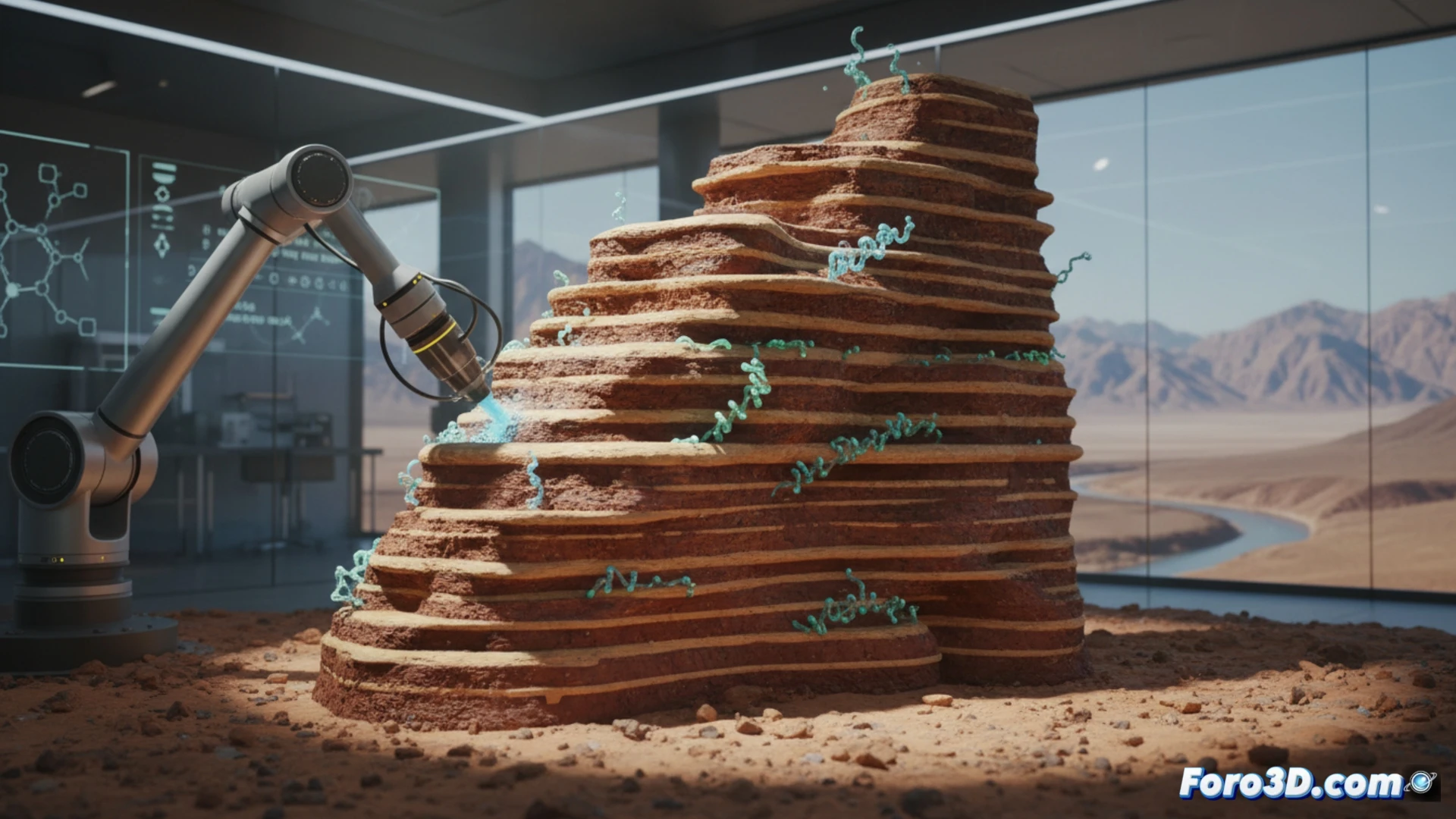
Multiscale optimization: from clay to printed wall 🏗️
The team developed a multiscale optimization framework that analyzes how different biopolymers interact with sand and clay minerals. From the microscopic level, they selected the most promising formulations to scale them up to 3D printed structures at the macroscopic scale. The goal was to improve printability, stability of the fresh material, and processing speed, without resorting to synthetic additives. The results show a viable path for more reliable earth construction.
Goodbye to poorly mixed mud: science saves your adobe house 🧱
Finally, science is getting serious about mud. Until now, building with earth was a matter for mass experts (and not pastry ones). This study shows that, with the right biopolymers, your future adobe home won't crumble with the first rain. And best of all: you can boast that your house is as organic as your yogurt, but with more structural strength than a sponge cake soaked in milk.