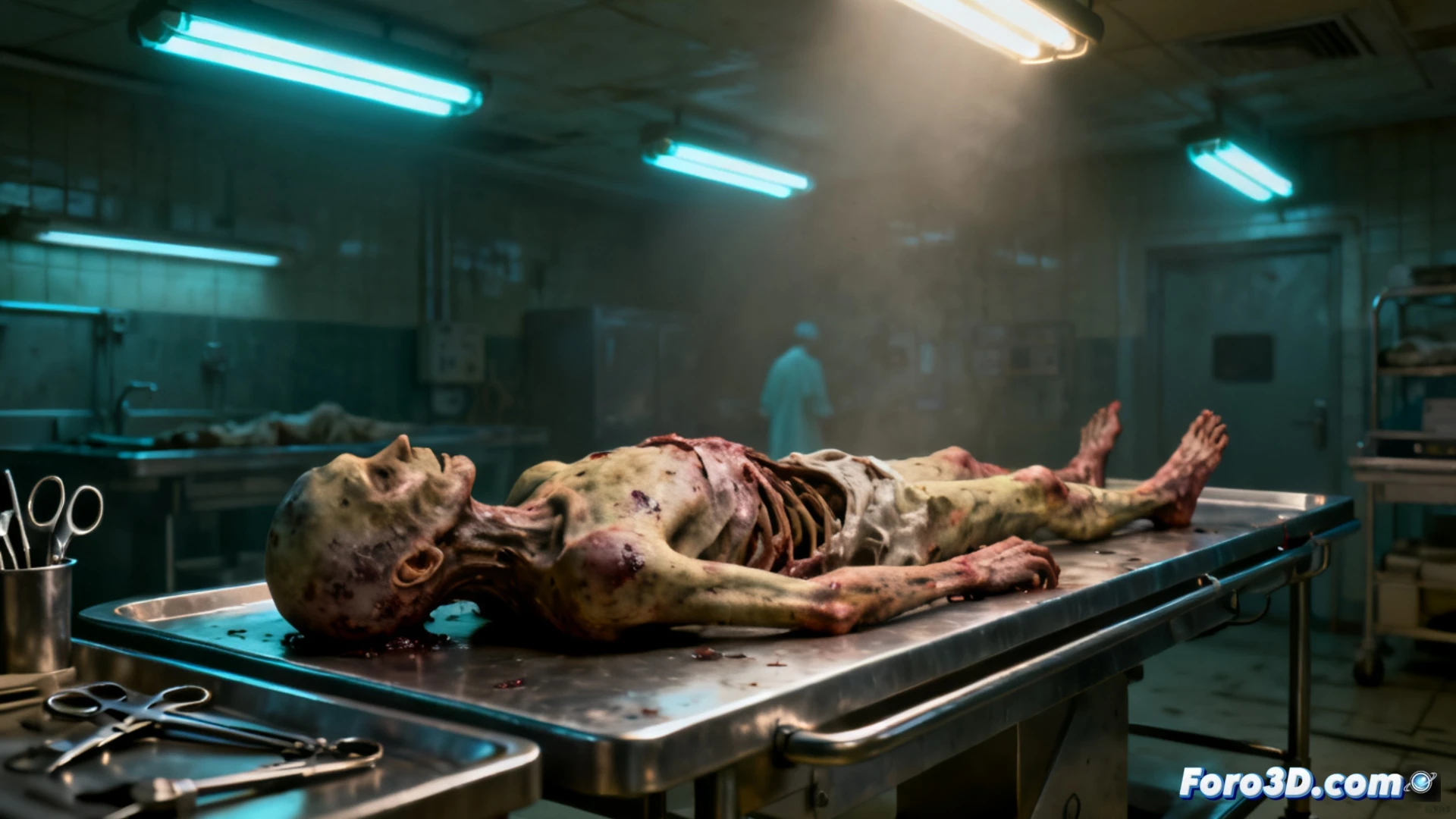
We analyze the graphics engine and modeling tools behind The Mortuary Assistant, an indie horror game that has captured attention for its oppressive atmosphere. The game uses Unity with extreme cinematic post-processing, combined with hyper-realistic corpse models created in Blender and ZBrush. The secret to its technical success lies in how it exploits the uncanny valley effect and volumetric lighting to generate constant discomfort in the player.
Volumetric Lighting and Post-Processing in Unity for Horror 🎮
The development team configured a rendering pipeline in Unity based on the Universal Render Pipeline (URP) with custom color grading adjustments. The key lies in the use of point lights with soft shadows and a volumetric fog system that reacts to the player's flashlight. To achieve the cinematic look, they applied a post-processing profile that includes aggressive vignetting, subtle chromatic aberration, and film grain. These effects, combined with high-resolution textures in the interiors, create a sense of grime and decay without the need for excessive geometry. Optimization was achieved through the use of LODs automatically generated in Blender for the furniture and scene objects, reducing the polygon count by 60% without losing visual detail in areas of direct interaction.
The Art of Discomfort: Modeling Corpses with ZBrush 🦴
The uncanny valley effect is the main narrative tool of The Mortuary Assistant. The developers sculpted the bodies in ZBrush, applying subtle asymmetries to faces and limbs, avoiding perfect realism to trigger the player's emotional alert. In Blender, they performed retopology and UV mapping, ensuring that skin textures with subsurface scattering (SSS) worked in real-time. The result is corpses that look too real to be 3D models, but slightly off in their stiffness, generating a psychological tension that reinforces the exploration and embalming gameplay.
What specific dynamic lighting techniques in Unity and high-detail modeling in ZBrush were used in The Mortuary Assistant to achieve the feeling of unease and realism in its claustrophobic environments?
(PS: shaders are like mayonnaise: if they break, you have to start all over again)