The Lost Wild is shaping up to be a unique proposal within the horror and survival genre. Its main technical strength lies in a systemic artificial intelligence that gives dinosaurs reactive behavior to environmental stimuli such as light and sound. Far from being simple enemies with predefined paths, these creatures respond in real-time to the player's actions, creating an organic and terrifying stealth experience. This approach promises to revolutionize predator-prey interaction in independent video games. 🦖
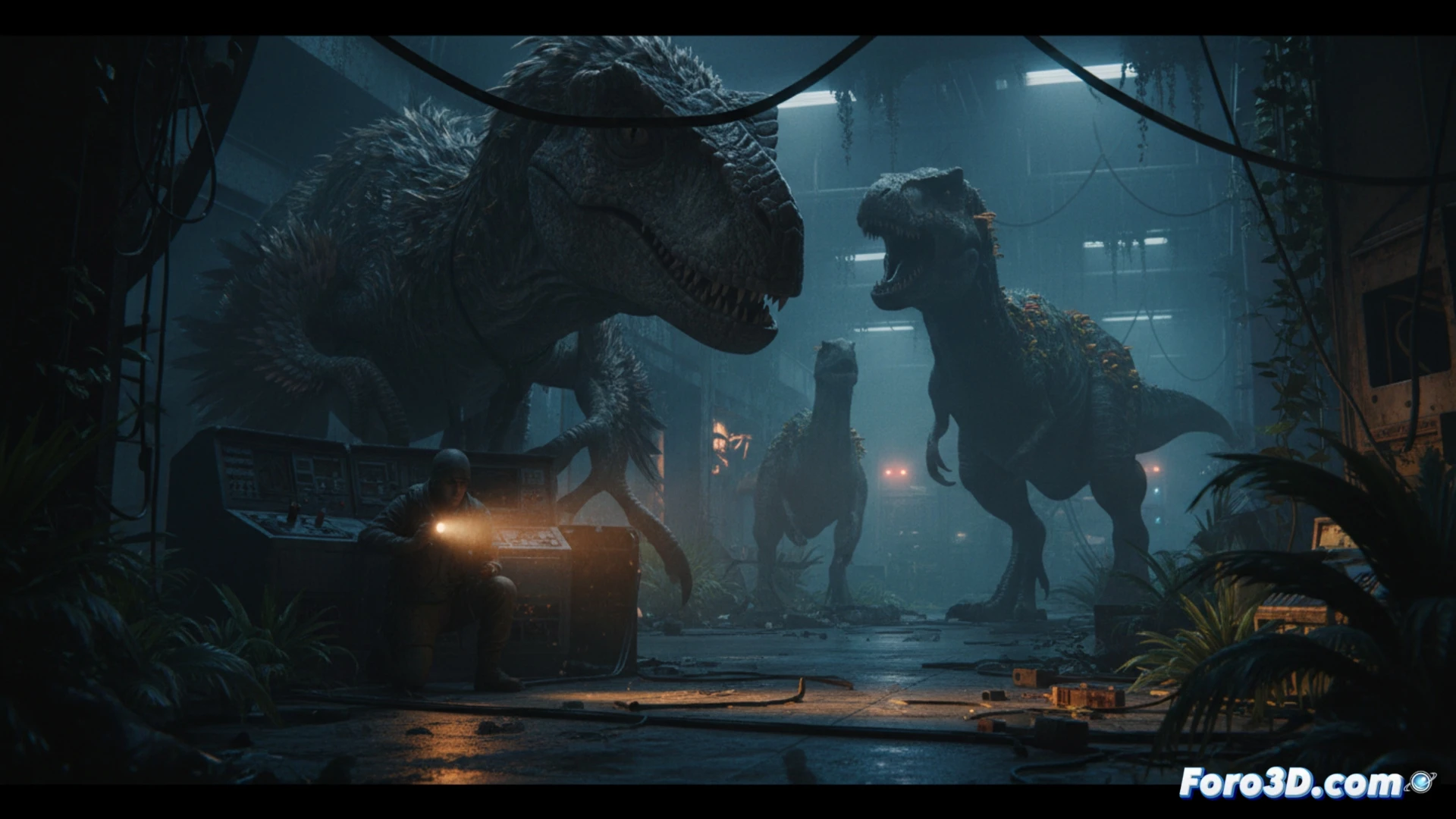
Technical pipeline and stimulus simulation in Unreal Engine 4 🎮
The development of The Lost Wild illustrates a solid technical pipeline for indie studios. Dinosaur models are sculpted in Autodesk Maya, where topology is optimized to ensure smooth performance in Unreal Engine 4. Textures and materials are created in Substance Designer, allowing for procedural generation of skin variations, moisture, and dirt. The real challenge lies in programming the AI. The team implements a perception system based on collision volumes and line traces that detect the player's light intensity (using the emissivity channel of materials) and the volume of their footsteps (via a spatial audio system and a noise emitter actor). Dinosaurs have an alert state that scales from curiosity to active hunting, always prioritizing the nearest or most intense stimulus source. To optimize performance, it is recommended to limit the number of agents with complex AI in the scene and use Behaviour Trees with Cooldown decorators to avoid unnecessary calculations each tick.
Tips for indie: reactive stealth and asset optimization 🛠️
To replicate this system, indie developers should prioritize modularity. Creating a centralized sensor manager that processes stimuli and distributes them to enemies prevents overloading the engine with redundant logic. Regarding assets, it is crucial to use LODs (Levels of Detail) generated from Maya and compressed texture atlases from Substance Designer to maintain visual quality without sacrificing frames. The key to horror in The Lost Wild is not graphical brute force, but the credibility of the AI. A dinosaur that hesitates, sniffs, and reacts to turning on a flashlight generates much greater tension than any pre-programmed jumpscare.
How does The Lost Wild manage to implement a systemic AI system in Unreal Engine 4 that makes dinosaurs behave unpredictably and reactively to the environment without relying on predefined animations or routines, and what technical challenges does this approach present for the horror and survival genre?
(PS: game jams are like weddings: everyone is happy, no one sleeps, and you end up crying)