The development of The Last Oricru presents an interesting case study in the fusion of visual genres. Using Unreal Engine 4 as a foundation, the team has managed to integrate elements of medieval fantasy with sci-fi technology, creating a unique visual contrast. The key lies in volumetric lighting, which allows seamless transitions between stone castles and metallic spaceships, maintaining aesthetic coherence through real-time light control.
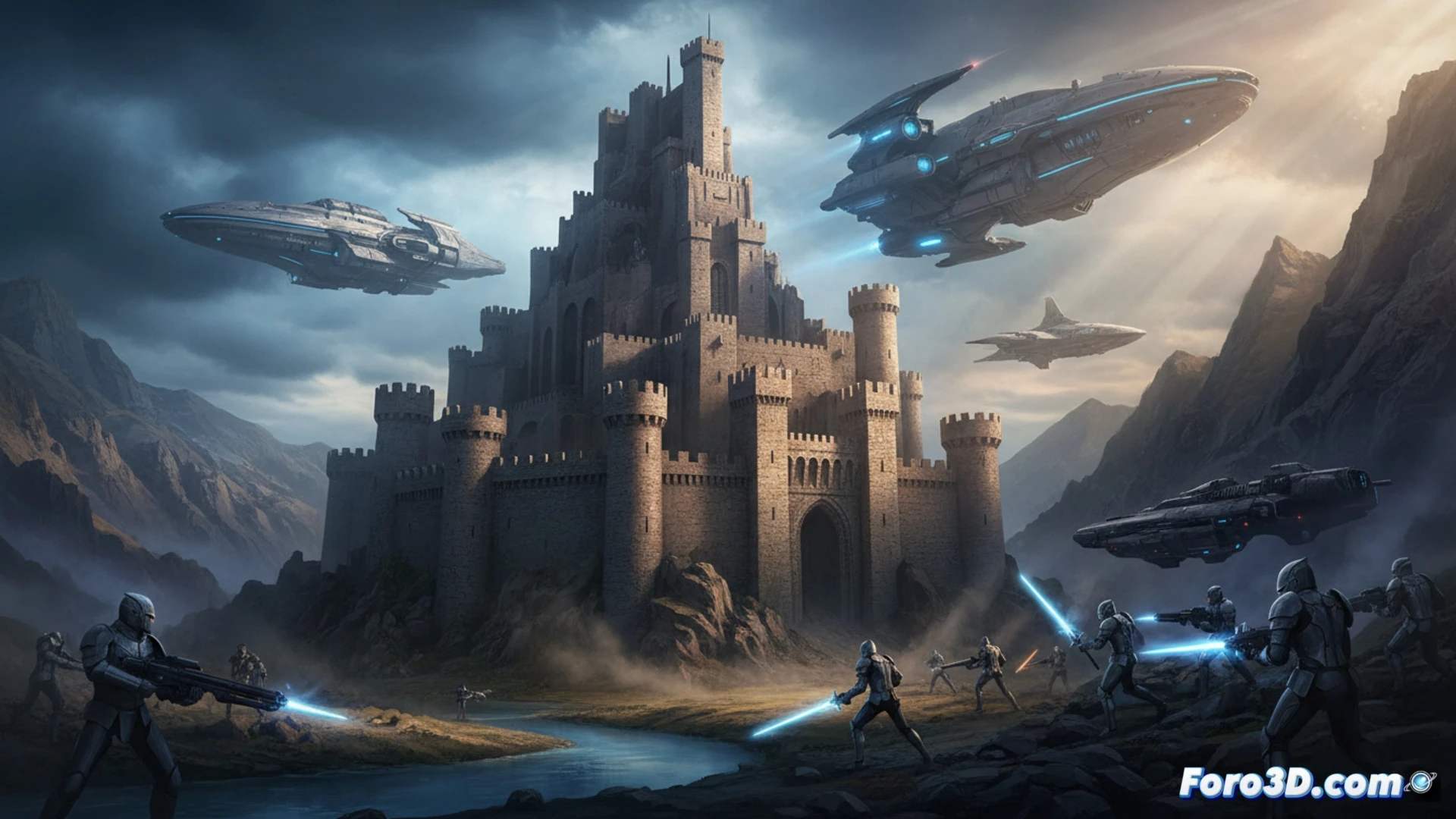
Technical pipeline: Maya, Substance Painter, and real-time optimization 🛠️
The production pipeline relies on Maya for high-poly modeling of armor and mechanical structures, while Substance Painter handles PBR materials, differentiating organic textures (stone, wood) from technological surfaces (alloys, circuits). Optimization in Unreal Engine 4 is achieved through LODs generated in Maya and baked ambient occlusion maps. The dynamic lighting system, combined with light volumes, allows scenes to change atmosphere without sacrificing performance—a typical challenge in titles that alternate between dark castle interiors and neon-lit hangars.
Lessons for developers: Visual cohesion without losing identity 💡
The Last Oricru demonstrates that mixing styles does not require sacrificing visual identity if the workflow is planned. The decision to use volumetric lighting as a narrative glue allows the player to perceive both worlds as part of the same ecosystem. For other developers, the lesson is clear: the graphics engine does not limit creativity, but rather channels it. Tools like Substance Painter and Maya offer the flexibility needed to experiment with contrasts, as long as the technical artist understands how light interacts with each surface in real time.
What lighting and post-processing techniques in Unreal Engine 4 allow for the coherent integration of medieval and science fiction elements without the visual contrast breaking the player's immersion in The Last Oricru?
(PS: game jams are like weddings: everyone is happy, no one sleeps, and you end up crying) 🎮