The development of The Last Faith, a work by the studio Kumi Souls Games, represents a fascinating case study within the indie niche. The Unity engine acts as the backbone, hosting a technical fusion that challenges the orthodoxy of traditional pixel art. The project's key lies in its hybrid workflow: while the environment and minor enemies are built with detailed pixel art in Photoshop, the final bosses are born as polygonal models in 3ds Max, then pre-rendered and converted into 2D sprites.
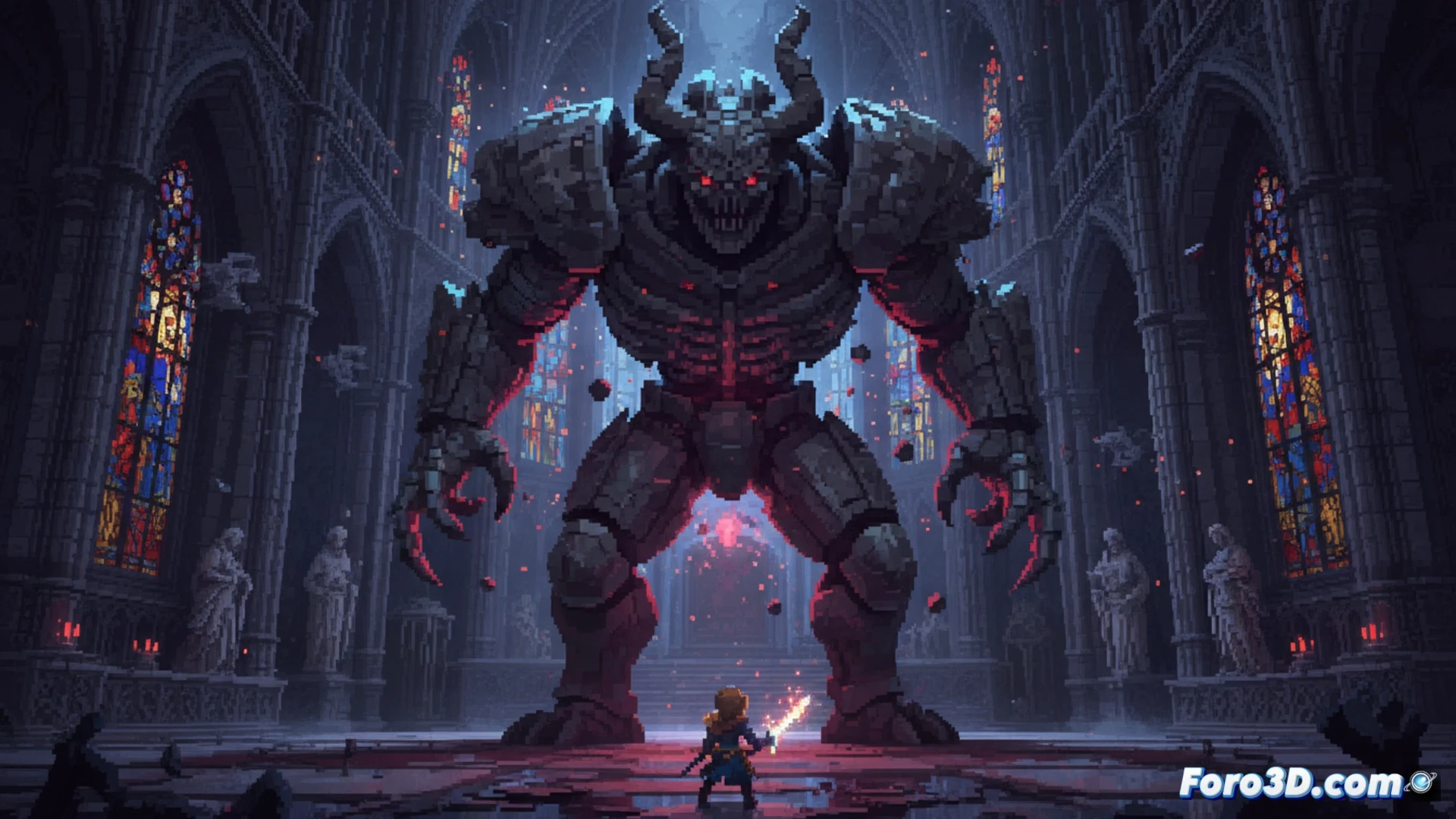
Hybrid workflow: 3ds Max, Photoshop and Unity 🎮
The decision to model the bosses in 3D stems from a need for complex animation and precise volumetry. In 3ds Max, artists sculpt and animate the gigantic enemies, applying high-resolution textures. Subsequently, they render each animation frame from multiple angles, exporting image sequences that are processed in Photoshop to reduce the color palette and apply a pixel art filter consistent with the rest of the game. This process eliminates the need to manually draw each animation frame for the bosses, saving months of work. Once imported into Unity as sprites, the engine applies its dynamic 2D lighting system over these assets. The projected light interacts with the sprites as if they were cutout planes, allowing for soft shadows and fog effects that overlay the pixel art without breaking the retro aesthetic.
Visual optimization without sacrificing indie performance ⚡
Kumi Souls Games' strategy demonstrates that resource limitation does not have to translate into a visual limitation. By using pre-rendered 3D models only for the bosses, it avoids having to load complex polygonal meshes in real-time, which reduces CPU and GPU consumption. This allows Unity to handle dynamic 2D lighting in the rest of the scene without slowdowns. The result is a game that looks detailed and cinematic in its key moments, but runs smoothly on modest hardware, a valuable lesson for any developer seeking a balance between artistic ambition and technical efficiency.
What was the technical process followed by Kumi Souls Games to ensure that the 3D models rendered in Unity maintained the aesthetic and animation of traditional pixel art without losing the fluidity of 3D?
(PS: shaders are like mayonnaise: if they break, you have to start all over again)