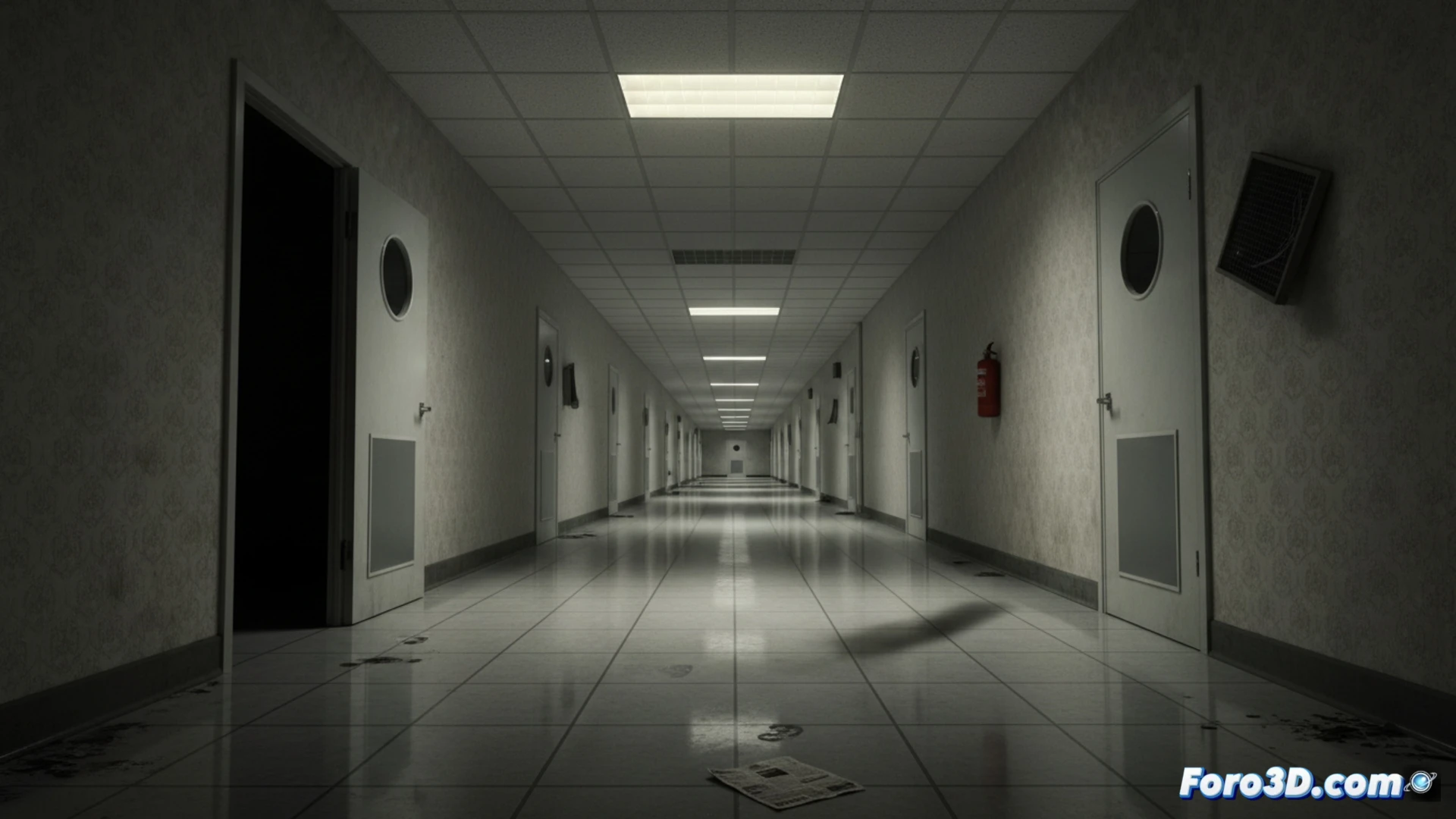
Minimalism has never been so terrifying. The Exit 8, developed by an independent studio in Unreal Engine 5, proves that you don't need monsters or frantic action to generate panic. Its proposal is simple: walk through an infinite Japanese subway corridor and detect anomalies. The trick lies in the technical execution. Every concrete texture, every reflection on the tiles, and every shadow have been calibrated so that the human brain feels like it's in a real space, but slightly off. That precision is what turns an empty setting into a psychological horror experience.
Lumen Lighting and Megascans: the formula for unsettling realism 🎭
The Lumen graphics engine of Unreal Engine 5 is the technical pillar of this title. Dynamic global illumination allows light to bounce naturally off concrete surfaces and the white subway tiles, creating a claustrophobic yet familiar atmosphere. Quixel Megascans assets provide the roughness and realistic wear that could make any game frame pass for a real photo of Shinjuku station. The key to the horror lies not in jumpscares, but in the breaking of that realism: a sign that changes position, a shadow that doesn't match the light source, or a flickering reflection. The developer has used the blueprint system to program these subtle variations, forcing the player into a constant state of hypervigilance.
Less is more: level design lessons for independent studios 🧩
The Exit 8 is a masterclass in optimization and art direction. Instead of filling the level with objects, the studio focused on a single modular corridor, but with such meticulous lighting that every step feels unique. For independent developers, this is a valuable lesson: limiting the play space allows resources to be concentrated on visual quality and core mechanics. Using Lumen without needing high-end hardware, texturing with Megascans to save time on asset creation, and programming logical anomalies with blueprints is a viable recipe for launching a horror title with a reduced budget but enormous technical and narrative impact.
As an independent developer, what specific technical challenges of Unreal Engine 5 did you face to maintain performance and realistic lighting in such a repetitive and enclosed environment as the infinite corridor of The Exit 8?
(PS: game jams are like weddings: everyone is happy, no one sleeps, and you end up crying)