We analyze the success story of The Case of the Golden Idol, a game that proves the Unity engine is not only for photorealistic graphics. This indie title combines a grotesque painting aesthetic with static scene reading mechanics, reclaiming the essence of 90s graphic adventures. For indie developers, this project is a lesson in how to optimize an artistic pipeline with accessible tools like Photoshop and 2D/3D rendering techniques in Unity.
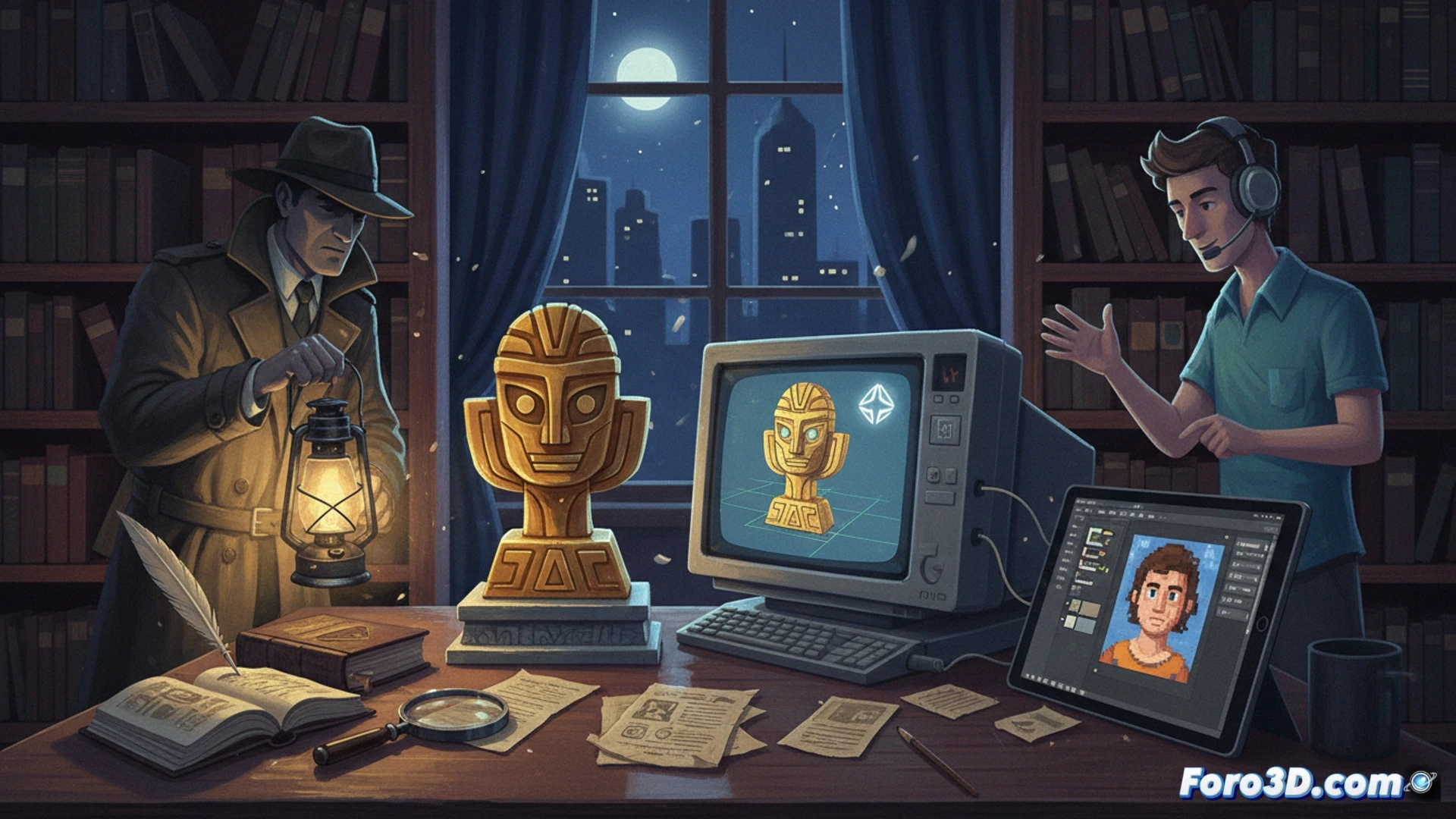
Technical Pipeline: Static Art and Optimization in Unity 🎨
The visual secret of The Case of the Golden Idol lies in its treatment of scenes as digital paintings. Artists use Photoshop to create backgrounds with textured brushstrokes and stylized characters, mimicking the grotesque aesthetic of 90s graphic novels. In Unity, these images are imported as high-resolution sprites, but the engine applies smart compression and texture atlases to maintain performance. The scene reading gameplay is implemented through invisible interactive zones (2D colliders) that trigger keyword collection events. To avoid lag, developers use Unity's object pooling system to manage hundreds of interactive elements without saturating memory, and employ state animations (Animator Controller) for smooth transitions between static planes.
Lessons for Indies: Less is More in Puzzle Design 🧩
The success of this title lies in prioritizing narrative over technical complexity. The puzzles do not rely on complex physics, but on observation and deductive logic, drastically reducing development time in Unity. For independent creators, the lesson is clear: use Photoshop to create a strong artistic identity and Unity to orchestrate interaction without needing advanced shaders. This approach allows launching visually striking games with small teams, demonstrating that optimization is not only technical but also conceptual by limiting mechanics to the essentials.
What specific Unity and Photoshop techniques allowed The Case of the Golden Idol to achieve its retro graphic style without sacrificing the narrative puzzle gameplay?
(PS: game jams are like weddings: everyone is happy, nobody sleeps, and you end up crying)