DNA kits for personalized nutrition promise to tell you which foods make you gain weight based on your genes, but current science does not support that these home recommendations are more effective than a standard balanced diet. At Foro3D, we analyze this gap between marketing and evidence, and propose an interactive 3D infographic that debunks the myths with visual data. 🧬
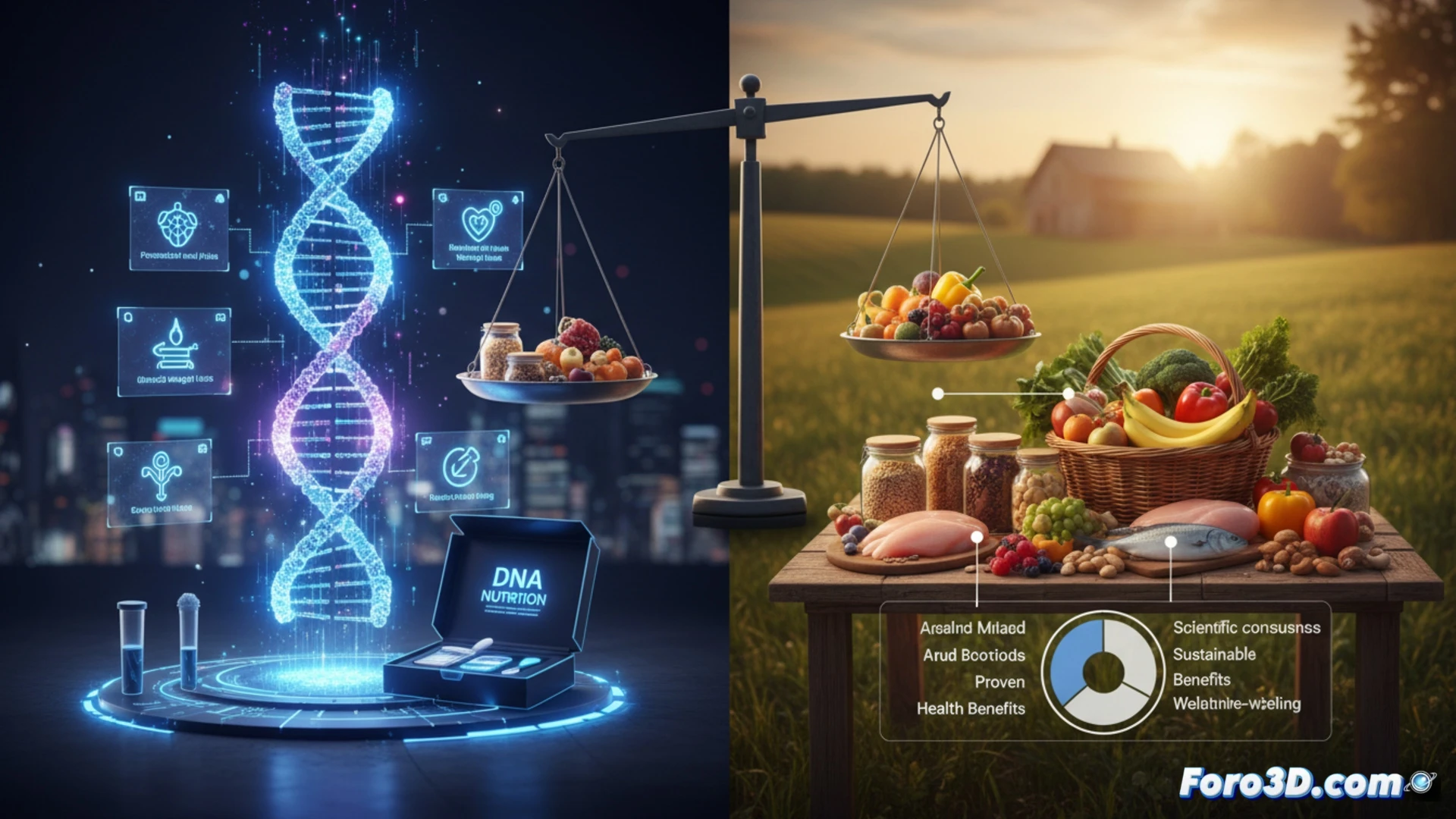
3D modeling of simulated metabolism vs. real genetics 🥦
Our 3D infographic will compare two scenarios side by side: a standard balanced diet, represented by food models in neutral colors showing macronutrients and micronutrients, versus the recommendations of a home genetic test, with color codes based on supposed markers (such as FTO or MC4R). An animated graph will highlight the lack of statistical correlation between these genes and real effectiveness, using data from controlled studies. The user will be able to rotate the models and see how the simulated metabolism responds similarly in both cases, thus debunking the marketing of extreme personalization.
The danger of delegating your health to a saliva tube ⚠️
3D food education must prioritize transparency over novelty. These tests, by offering false certainties, can lead to ignoring key factors such as total caloric context or food quality. Our interactive model not only informs but empowers the consumer by showing that a balanced diet, based on vegetables, lean proteins, and whole grains, remains the most scientifically supported tool for weight control.
Can a DNA test for personalized nutrition truly offer more benefits than a balanced diet based on general principles of healthy eating, or is it just an expensive fad without solid scientific backing?
(PS: virtual reality for kids: where carrots taste like pizza (if you program the shaders right))