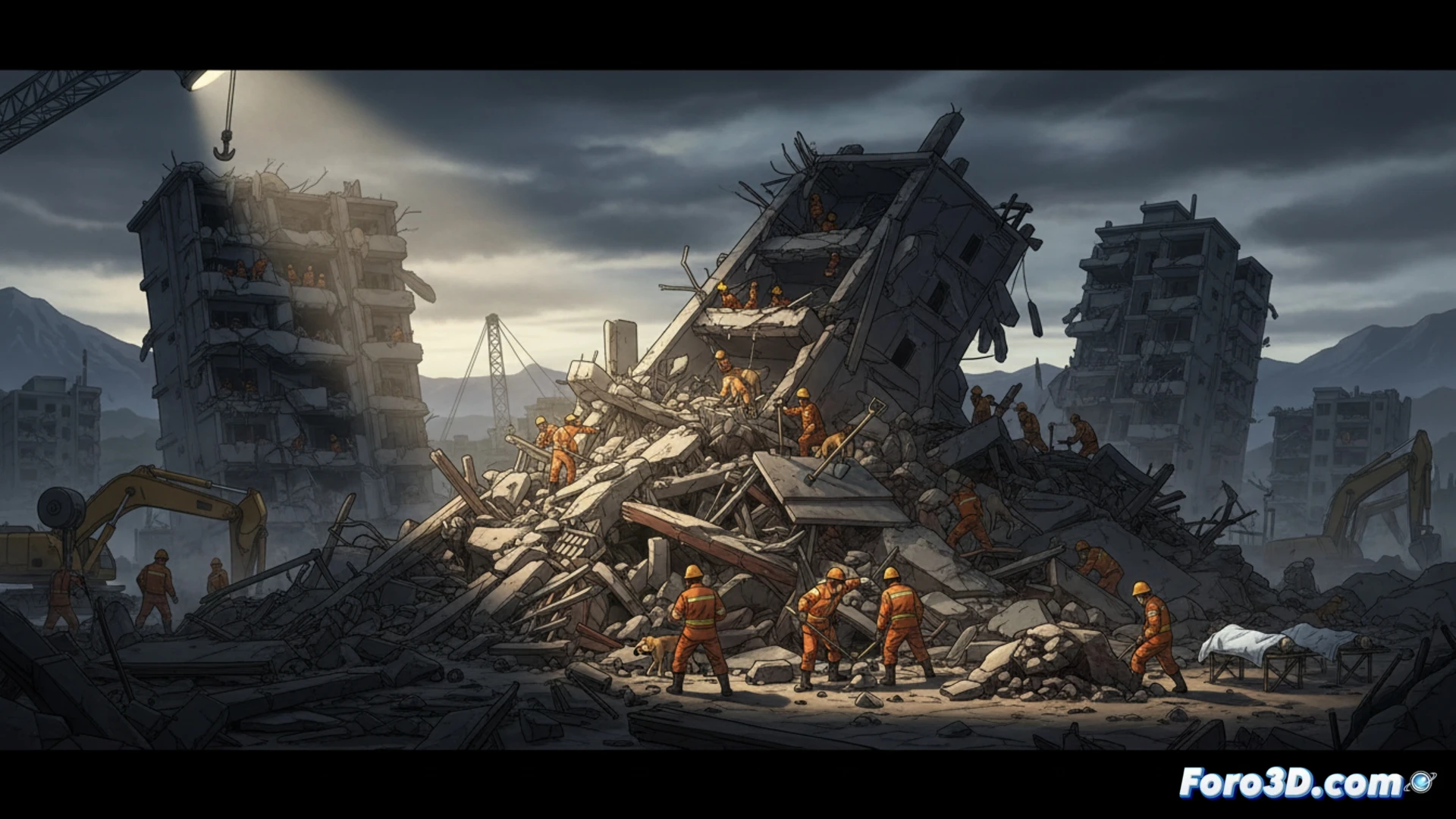
In the early hours of Monday, a 5.2 magnitude earthquake struck the city of Liuzhou in southern China, with an epicenter just eight kilometers deep. The movement left a toll of two dead and one missing person. Authorities mobilized over fifty firefighters and 315 personnel for rescue efforts, while emergency teams work against the clock among the rubble.
Seismic alerts and sensors: how technology measures chaos 🌐
The China Seismological Network Center recorded the event with a network of monitoring stations that detect P and S waves in real time. These sensors, based on broadband accelerometers, allow calculating magnitude and depth with reduced error margins. However, the usefulness of this data depends on the transmission speed to early warning systems. In densely populated areas, a few seconds of notice can make the difference between evacuating or being trapped.
The tremor that woke up Liuzhou and the firefighters from their coffee ☕
While the 315 deployed personnel ran with helmets and flashlights, neighbors went out in their pajamas to the street wondering if it was a drill or the end of the world. The curious thing is that, despite the moderate magnitude, the earthquake caused more media stir than a data leak on a Chinese social network. That said, at least the firefighters confirmed that their morning coffee remained intact, although the cup trembled.