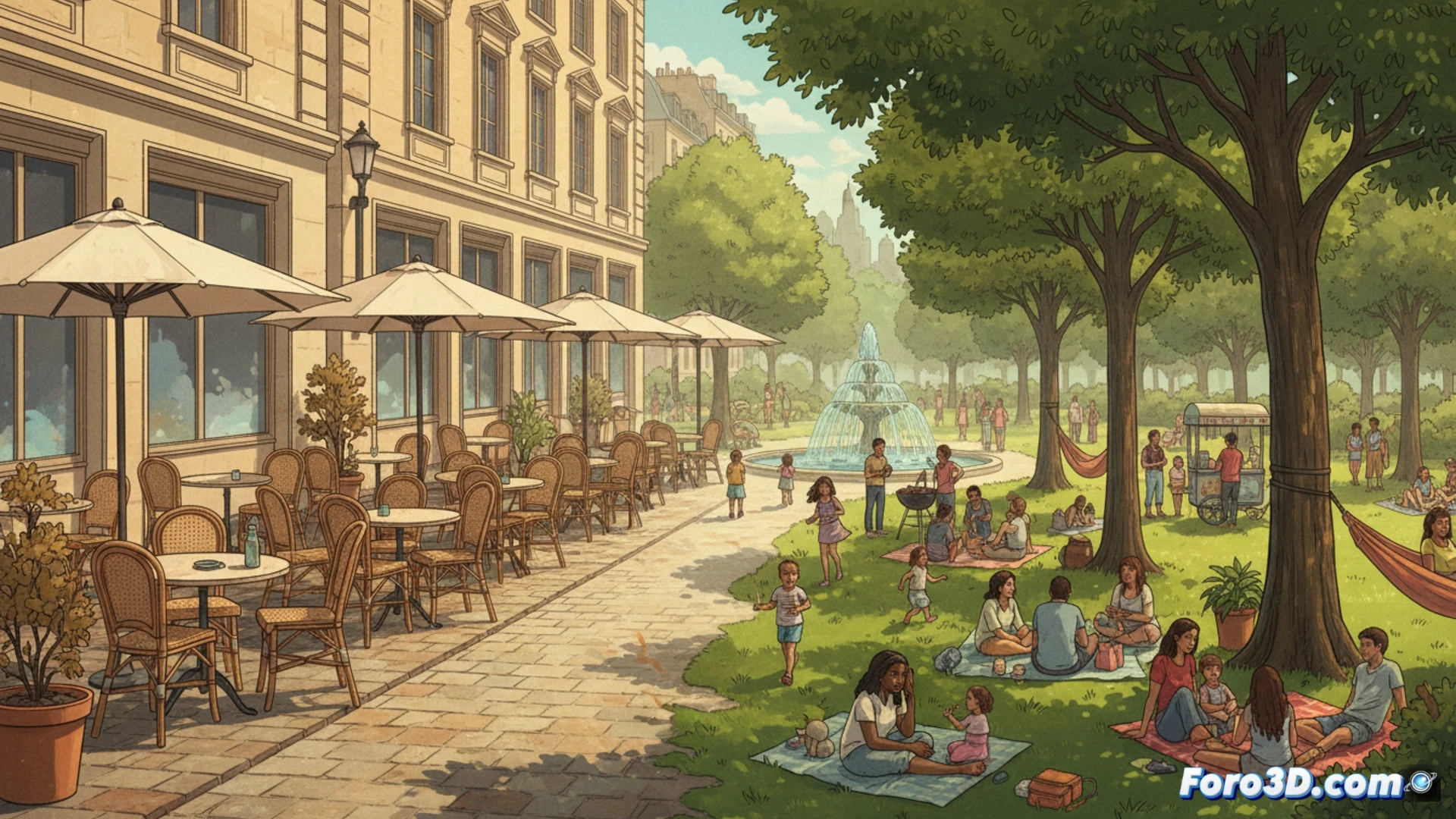
The summer midday reveals an urban paradox: while downtown terraces remain deserted, parks become massive refuges. People seek shade under trees, lying on the grass, fleeing the radiant asphalt. This phenomenon is not random, but a logical response to the distribution of heat in the city and the lack of spaces with pleasant microclimates.
Asphalt as a radiator: the urban physics of heat 🌡️
Concrete and asphalt accumulate heat during the morning and release it at midday, creating heat islands that raise ambient temperature by 4 to 7 degrees compared to green areas. Parks, with their vegetation and shade, reduce temperature through evapotranspiration. Data from thermal sensors show that the difference between a terrace on a paved street and a bench under a tree can exceed 10 degrees. The technical solution involves integrating more vegetation and reflective materials into urban furniture.
The lazy strategy: lying in the shade wins by a landslide 😎
The citizen has done their math: paying 4 euros for a coffee on a terrace where the sun melts even the umbrella, or stretching out for free on the grass with a tupperware of tortilla. The decision is so obvious that even the pigeons have changed their route. While terrace owners look to the sky hoping for a miracle cloud, an unofficial synchronized nap championship has been organized in the park. Thermodynamics never fails: grass always beats cobblestone.