A steam leak at a geothermal plant caused injuries to personnel after the rupture of an expansion joint. Subsequent analysis revealed that the failure was not sudden, but the result of repetitive thermal cycles that degraded the steel. 3D thermography, combined with simulation software, made it possible to map stress concentration zones and model material fatigue, offering a precise methodology to prevent disasters in critical infrastructure.
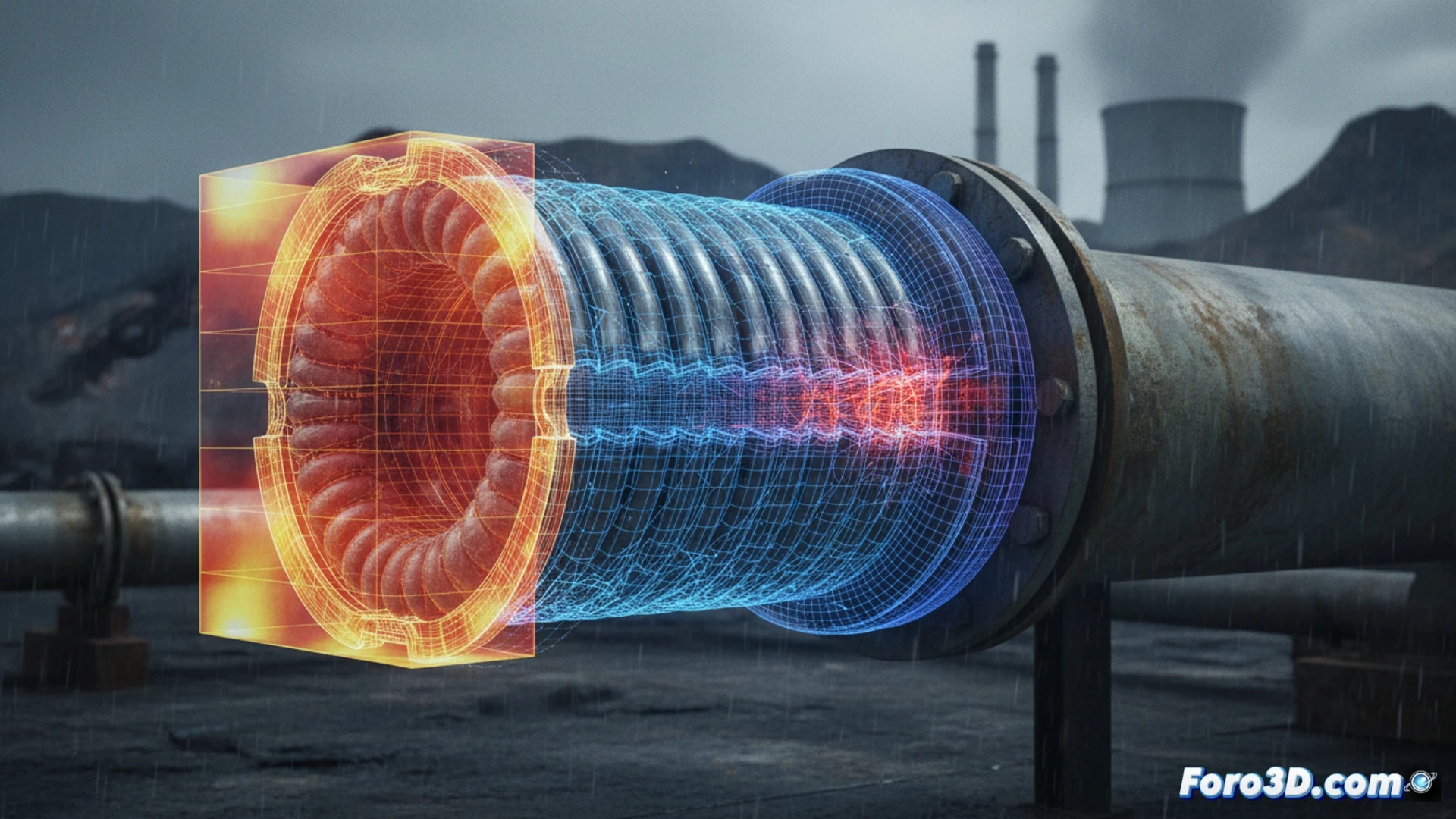
Forensic Workflow: From Thermography to Mechanical Simulation 🔧
The process began with capturing thermal data using FLIR Tools, generating a surface temperature map that revealed anomalous gradients in the joint. These point clouds were imported into MeshMixer to clean noise and reconstruct a precise 3D mesh of the component. The solid model was transferred to SolidWorks Simulation, where cyclic loads based on actual temperature data were applied. The simulation revealed that thermal fatigue had exceeded the yield strength of the steel in the crack zone. Finally, Blender was used to render animations of the degradation process, facilitating technical communication of the failure to maintenance teams.
Failure Prevention in Geothermal Infrastructure ⚠️
The combination of 3D thermography with predictive simulation offers a crucial advantage: detecting microcracks before they become catastrophic leaks. For geothermal plants, it is recommended to integrate periodic monitoring with FLIR Tools and update fatigue models in SolidWorks Simulation whenever anomalous thermal cycles are recorded. Visualization in Blender also allows training personnel in identifying failure patterns. Investing in this workflow not only saves lives but drastically reduces unplanned downtime costs.
How can 3D thermography applied to expansion joints identify thermal fatigue concentration points that are not detectable through traditional numerical simulations in a geothermal plant
(PS: Material fatigue is like yours after 10 hours of simulation.)