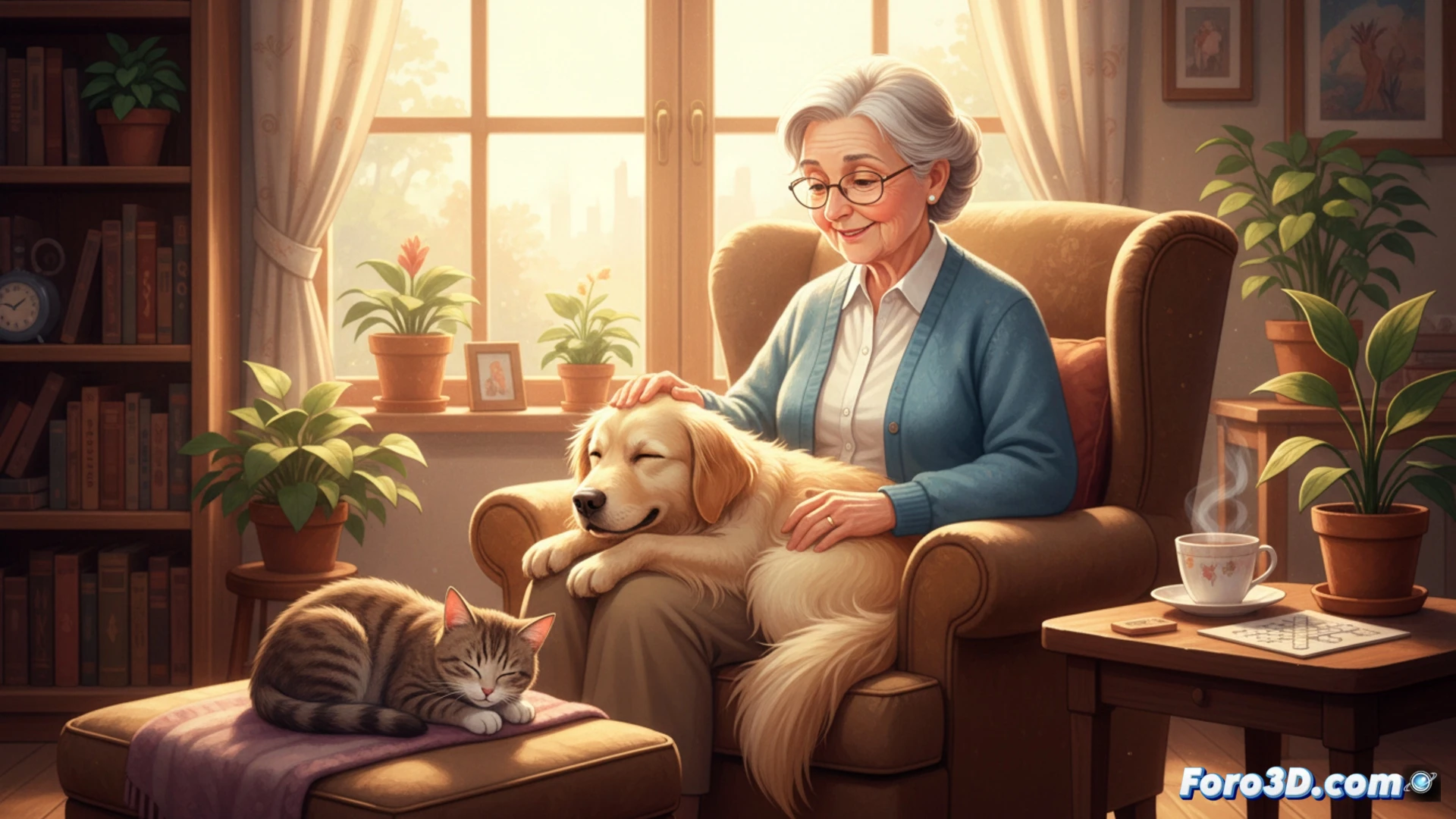
Therapies assisted by trained dogs or cats are gaining ground in geriatric centers. It's not just about companionship: regular contact with the animal reduces loneliness and depression in older adults. By petting the animal, oxytocin and serotonin are released, hormones that decrease stress and anxiety. These physical and emotional benefits make these sessions a valuable tool within rehabilitation plans.
Innovation in interaction: sensors and animal behavior 🐾
From a technical standpoint, current developments aim to optimize these sessions. Biometric sensors are used in collars to measure the animal's pulse and temperature, synchronized with the patient's data. This allows adjusting the duration and type of interaction. For example, if the dog shows signs of stress, the session is paused. Research is also being done on apps that record the patient's progress, linking variables such as the frequency of petting with cortisol reduction. The goal is to create replicable and measurable protocols.
When the dog is smarter than the therapist 😅
All very nice, but the real problem comes when the dog, after measuring your heart rate, decides that today is a nap session on the couch instead of exercises. Or worse yet, when the cat, with its fine sensitivity, diagnoses you with stress and then ignores you for an hour. Oh, and the apps: very useful, until the animal marks you as a preferred user because you stole a cookie. In the end, technology reveals that the patient isn't the only one who needs rehabilitation.